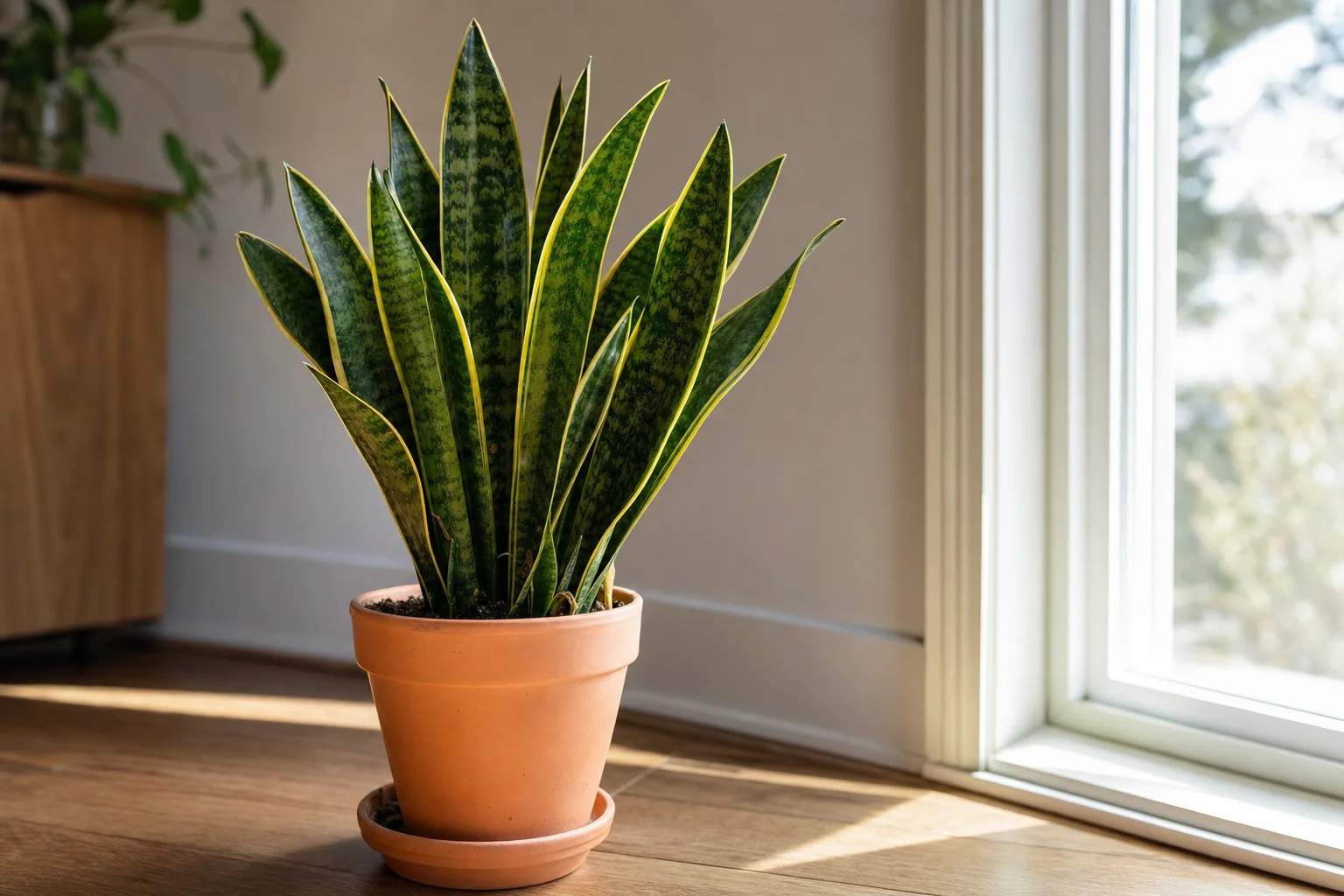
Snake plant care might be the easiest kind of houseplant care there is. Give a Sansevieria bright-to-low indirect light, let the soil dry out fully between waterings, and pot it in something fast-draining, and it’ll reward you with years of hands-off growth. Most struggling snake plants aren’t suffering from neglect — they’re suffering from too much attention, usually in the form of overwatering. The real skill here is learning when to leave the plant alone. This guide walks through light, watering, soil, repotting, feeding, propagation, and the problems you’re most likely to run into, so you can build a routine that actually fits your home and your schedule.
Key Takeaways
- Snake plants tolerate low light but grow fastest in bright, indirect light.
- Water only when soil is dry 2–3 inches down; overwatering is the top cause of problems.
- Reduce watering significantly in fall and winter and keep plants above 50°F (10°C).
- Use fast-draining cactus or succulent soil in a pot with drainage holes.
- Repot only when roots fill or push through the pot, ideally in spring.
- Snake plants are mildly toxic to pets and children, so place them out of reach.
Quick-Start Snake Plant Care Checklist
Bookmark this checklist for quick reference, then read on for the reasoning behind each point. If you’re not sure which snake plant you actually have — a tall Sansevieria trifasciata, a compact bird’s nest type, or a cylindrical variety — that distinction changes how often you should water. Snap a photo with Plant ID by Innotent and it’ll identify the exact species and variety, then hand you AI-generated watering, light, and fertilizer guidance built around it. It’s free to try for a limited number of identifications, and it’s currently available on iPhone and iPad.
- Light: Tolerates low light but grows fastest in bright, indirect light
- Water: Only when the soil is fully dry a few inches down
- Temperature: Stays happiest above 50°F (10°C), away from cold drafts
- Soil: Fast-draining cactus or succulent mix in a pot with drainage holes
- Feeding: Light liquid fertilizer once a month, spring through summer only
- Repotting: Only when roots fill or circle the pot, ideally in spring
How Much Light Does a Snake Plant Need?
Snake plants tolerate everything from dim corners to bright, indirect sun, which is exactly why they turn up in windowless offices and bathrooms alike. Low light won’t kill a healthy plant, but growth slows down considerably, and variegated varieties — the ones with yellow or white leaf edges — tend to fade back toward solid green over time. If you want faster growth, or you want a variegated plant to hold onto its markings, place it a few feet from a bright window instead of tucking it into a dark corner. The one condition worth avoiding is direct, scorching afternoon sun, which can bleach or burn the leaves.
Snake Plant Watering: The Soil-Dryness Test
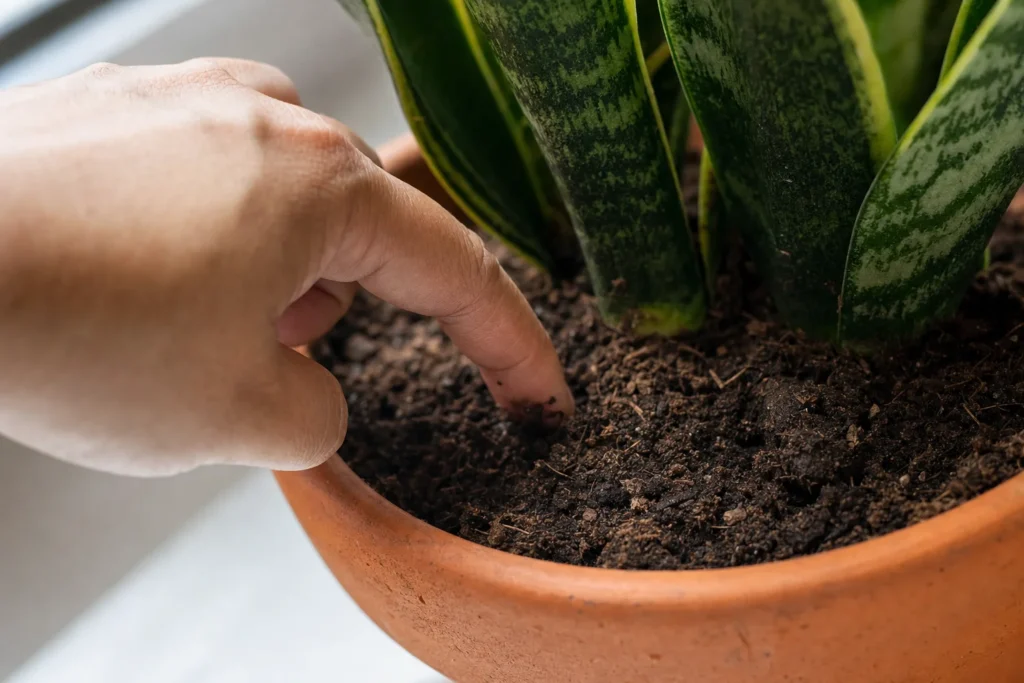
Skip the fixed schedule and use a simple test instead: push a finger 2–3 inches into the soil, and water only once that depth feels completely dry. Then saturate the soil thoroughly and let every bit of excess drain away. Snake plant roots rot far faster from sitting in water than from being left dry a little too long, which is why this test — not a date on the calendar — should decide when you water.
Snake Plant Winter Care
Water much less often once temperatures drop and the days get shorter, since growth slows way down through fall and winter. Stretch out the interval, keep the plant away from cold, drafty windowsills, and hold the room above 50°F (10°C). Prolonged chill combined with wet soil is one of the fastest ways to trigger root rot.
Soil, Pots & Repotting
Snake plants need fast-draining soil — a cactus or succulent mix, or a standard potting mix cut with perlite or coarse sand, works well. Whatever pot you choose, make sure it has a drainage hole; standing water at the bottom reliably causes root rot. Plastic and glazed ceramic pots hold moisture longer, which suits people who tend to under-water, while unglazed terracotta dries out faster and can help correct a habit of overwatering. Snake plant roots grow aggressively enough that they can occasionally crack a terracotta pot, so give the plant a little extra room if you go that route. You’ll know it’s time to repot when roots circle tightly around the root ball or push out through the drainage hole; move up just 1–2 inches in pot diameter, ideally in spring, using a fresh, fast-draining mix.
Feeding Your Snake Plant
Fertilizer is optional for snake plants, not essential. During spring and summer, a light monthly dose of balanced liquid houseplant fertilizer, diluted to half strength, gives the plant a boost while it’s actively growing. Skip feeding entirely in fall and winter — the plant isn’t putting out new growth then, so it won’t use the extra nutrients anyway.
How to Propagate a Snake Plant
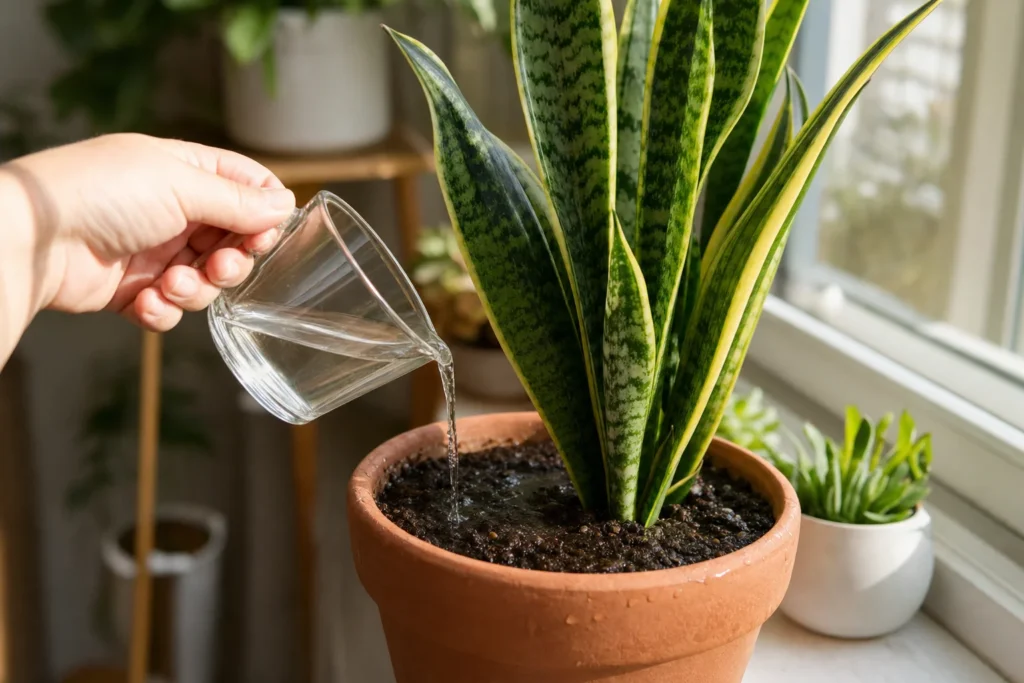
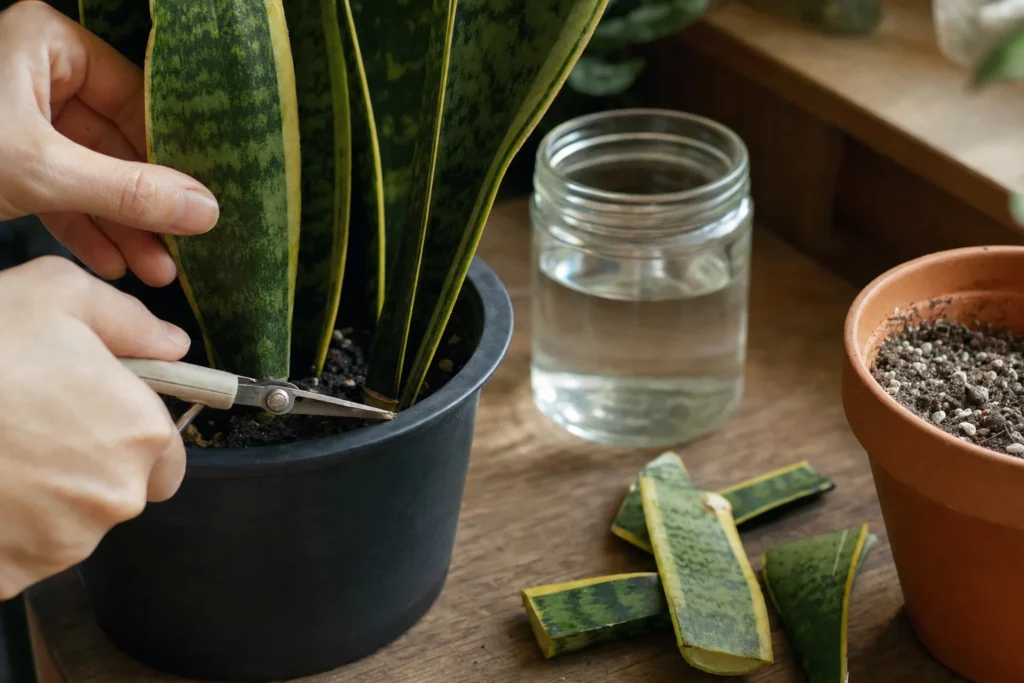
Propagating a snake plant is a cheap way to fill more pots or share cuttings with friends, and it works whether you root cuttings in water or straight into soil. Either method starts the same way: pick a healthy, mature leaf and make a clean cut, then follow the steps below.
Troubleshooting Common Snake Plant Problems
Most snake plant problems trace back to watering, but the symptoms point in opposite directions depending on whether you’re giving it too much or too little — the table below breaks down each sign and its fix. If you’ve already ruled out watering and light and still aren’t sure what’s going on, Plant ID by Innotent’s disease diagnosis feature assesses severity and suggests a treatment plan from a photo of the affected leaves — useful when spots or discoloration don’t fit neatly into either the overwatering or underwatering pattern.
Snake Plant Varieties: Bird's Nest, Sansevieria & Mother-in-Law's Tongue
All of these names describe the same easy-care plant family. ‘Sansevieria’ is the older botanical name, ‘mother-in-law’s tongue’ is a common nickname for the tall, sword-leaved Sansevieria trifasciata, and ‘bird’s nest snake plant’ refers to compact rosette varieties like Sansevieria trifasciata ‘Hahnii.’ The core care routine — bright-to-low indirect light, dry-between-waterings, fast-draining soil — stays the same across varieties. The main adjustment is for bird’s nest types: their smaller pots hold less soil, so they dry out faster and may need checking more often than a tall, floor-standing plant.
Indoor vs. Outdoor Snake Plant Care
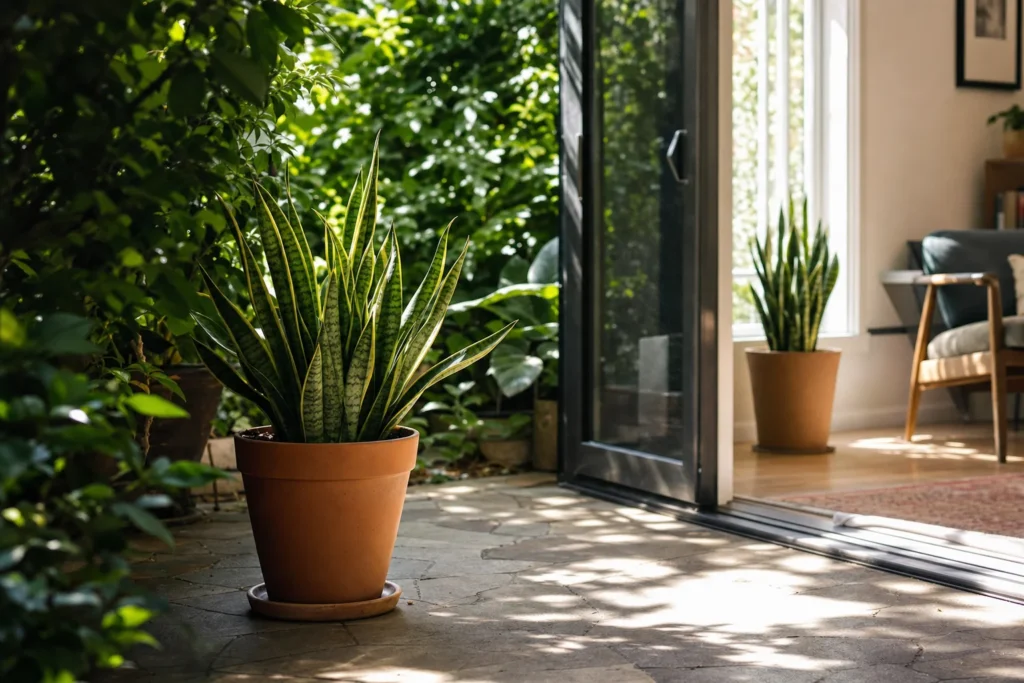
Snake plants are grown almost exclusively as houseplants, but many growers find they tolerate a summer outdoors in a warm, dry, partly shaded spot across much of the US. Bring them back inside well before nighttime temperatures approach 50°F (10°C) — cold combined with damp outdoor soil is a fast route to root rot. Indoors, the same light and watering principles apply year-round, which is why snake plants remain one of the most forgiving choices for apartments, offices, and low-light rooms.
A Note on Pets and Children
Snake plants are mildly toxic if chewed or swallowed, so keep them out of reach of curious pets and small children. This isn’t a reason to avoid the plant, but it’s worth factoring into where you place it in the home.
The Bottom Line on Snake Plant Care
Snake plant care comes down to a short list of habits: bright-to-low indirect light, water only when the soil is truly dry, fast-draining soil, and a light hand with fertilizer. Get those basics right and a snake plant will forgive an occasional missed watering far more readily than an overzealous one. For ongoing help — tracking watering schedules, saving care notes for each plant, or getting a reminder before the soil dries out — Plant ID by Innotent’s virtual garden and personalized reminders take the guesswork out of long-term care.
Seasonal Snake Plant Watering Guide
| Season | How Often to Check Soil | Typical Watering Interval |
|---|---|---|
| Spring & Summer (active growth) | Every 1–2 weeks | Every 2–3 weeks, once soil is fully dry |
| Fall | Every 2–3 weeks | Every 3–4 weeks |
| Winter (dormant) | Every 3–4 weeks | Every 4–6 weeks, or less in cool rooms |
Snake Plant Symptom Troubleshooting
| Symptom | Likely Cause | Fix |
|---|---|---|
| Yellow, mushy leaves | Overwatering or root rot | Stop watering, trim affected leaves, check roots and repot in fresh, dry soil if mushy or brown |
| Wrinkled or curling leaves | Underwatering | Water thoroughly and check again in a few days; leaves should plump back up |
| Brown leaf tips | Underwatering, low humidity, or fertilizer buildup | Trim brown tips, water more consistently, and flush soil occasionally to clear mineral buildup |
| Soft, collapsing base | Advanced root rot | Remove the plant, cut away all mushy roots, and repot healthy sections in dry, fresh soil |
How to Propagate a Snake Plant
- Choose a healthy, mature leaf and cut it off cleanly near the base with a clean tool.
- Optional: cut a shallow V-notch in the bottom edge to encourage more root growth.
- For water propagation, place the cutting in a jar with a few inches of water, positioned near bright light, and change the water whenever it looks cloudy.
- For soil propagation, insert the cut end into a small pot of damp, fast-draining soil and keep the soil lightly moist while roots establish.
- Wait for roots to reach about 1–2 inches long before potting a water-rooted cutting into soil.
- Once new growth appears, resume the normal watering routine for an established snake plant.
Frequently Asked Questions
Where is the best place to put a snake plant?
Anywhere with bright, indirect light works best, but snake plants also tolerate low-light corners, offices, and bathrooms reasonably well. Just avoid direct, scorching sun and cold, drafty spots.
What makes a snake plant happy?
Consistent neglect, honestly: bright-to-moderate indirect light, soil allowed to dry out completely between waterings, fast-draining soil, and warm room temperatures above 50°F (10°C).
What are the disadvantages of a snake plant?
It’s mildly toxic if ingested by pets or children, grows slowly compared to many houseplants, and can develop root rot quickly if the pot lacks drainage or the soil stays wet.
Do snake plants like to be touched?
Snake plants don’t need physical interaction to thrive, but wiping dust off the leaves with a damp cloth every so often helps them absorb more light and keeps them looking sharp.