
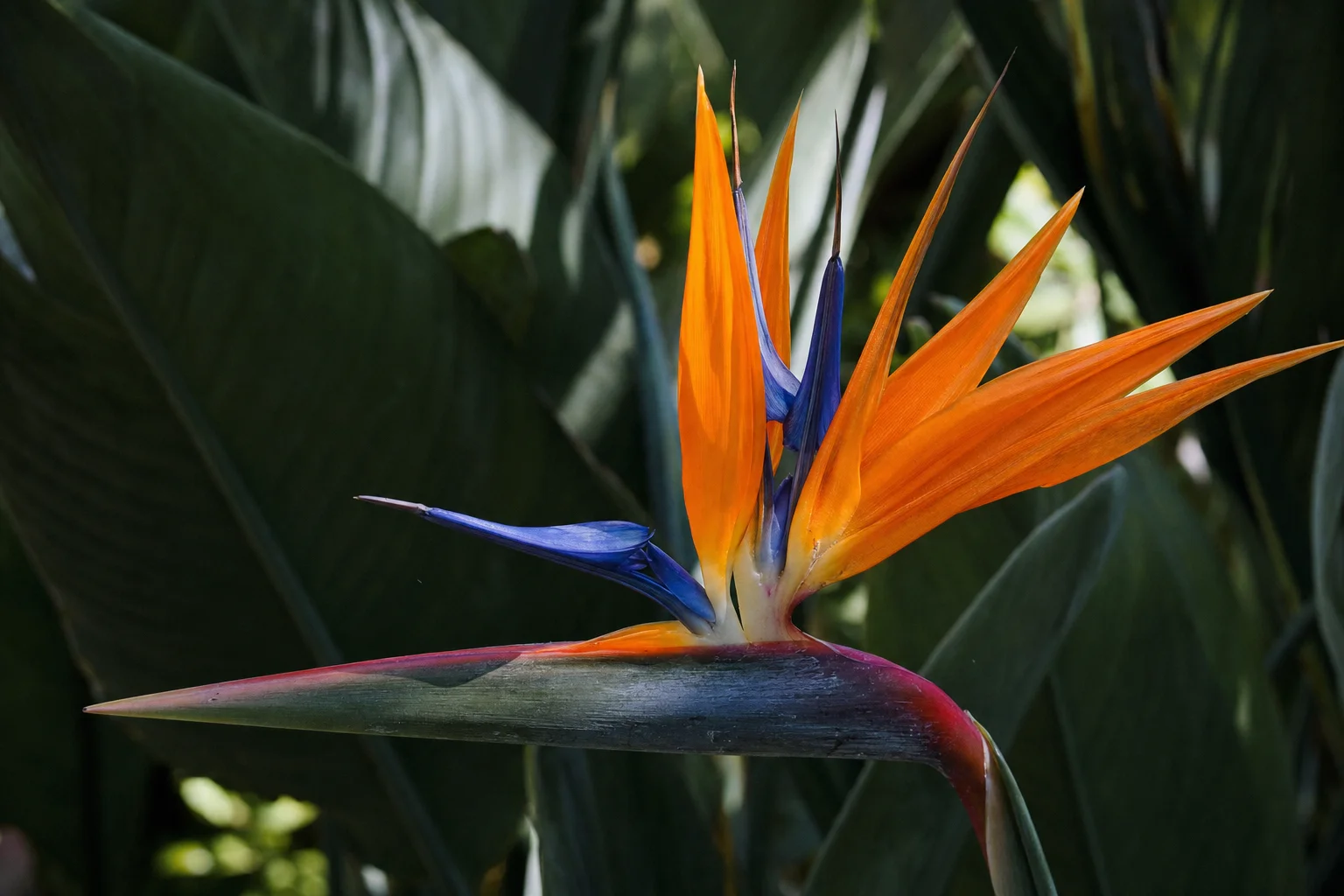
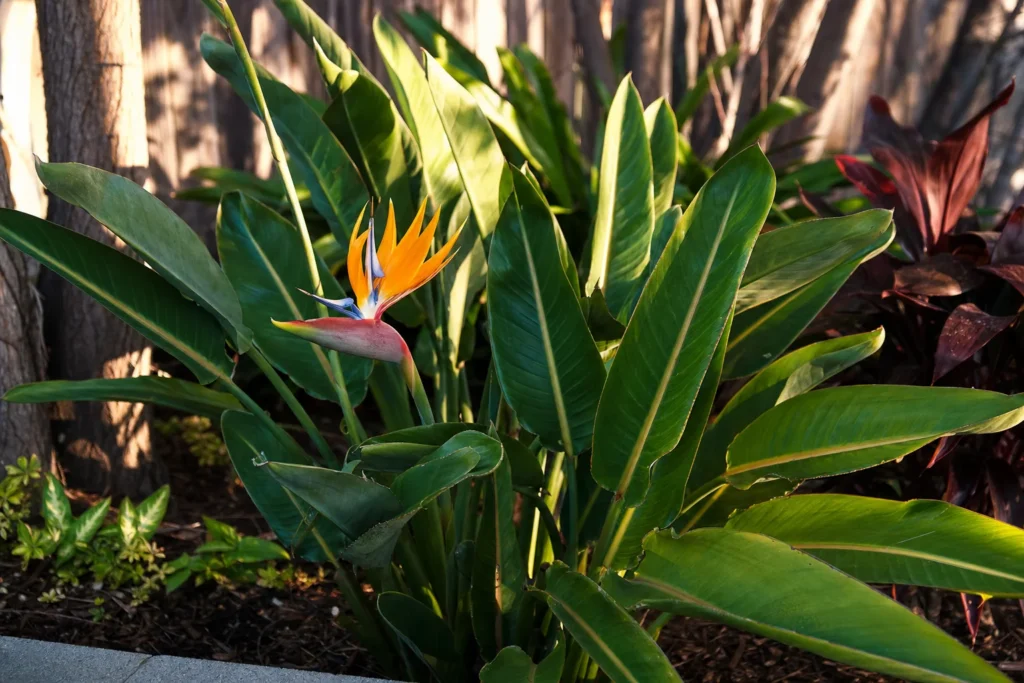
A bird of paradise plant is, botanically, a Strelitzia — a South African native closely related to the banana, with oversized paddle-shaped leaves and dramatic orange-and-blue flowers that look tropical despite tolerating real cold. Confusingly, “bird of paradise” also nicknames an unrelated group of plants: Mexican, red, yellow, and desert bird of paradise are all Caesalpinia shrubs, hardy and drought-tolerant but sharing nothing with true Strelitzia except the name. This guide covers care for either kind — light, soil, watering, fertilizer, and pruning — plus how to fix the browning and curling leaves that trip up even experienced growers.
Key Takeaways
- True bird of paradise plants belong to the genus Strelitzia; Mexican, red, yellow, and desert types are unrelated Caesalpinia shrubs.
- Give it full sun to partial shade outdoors, or your brightest window indoors — poor light is the top reason mature plants won’t bloom.
- Use fertile, well-draining soil, plant no deeper than the top of the root ball, and space outdoor plants at least 6 feet apart.
- Water generously during the growing season and taper off in winter, matching fertilizer frequency to whether it’s in a pot or the ground.
- Browning leaves usually signal watering or temperature stress, while curling leaves point to underwatering or heat — treat them as separate problems.
Bird of Paradise Types at a Glance
| Type | Botanical Name | Mature Height | Notes |
|---|---|---|---|
| Orange bird of paradise | Strelitzia reginae | 3–5 ft | The classic clump-forming type with orange-and-blue flowers |
| White or giant bird of paradise | Strelitzia nicolai / S. alba | 15–30 ft | Tree-like with paddle leaves; more cold-tolerant than it looks |
| Mandela’s Gold | Strelitzia reginae ‘Mandela’s Gold’ | 3–5 ft | Same as the orange type, but with yellow sepals |
| Mexican, red, yellow & desert bird of paradise | Caesalpinia spp. | Smaller shrub habit | Unrelated drought-tolerant shrubs, not true Strelitzia |
Types of Bird of Paradise Plant: True Strelitzia vs. Look-Alikes
Before you can care for a bird of paradise plant correctly, it helps to know which one you have: a true Strelitzia, or an unrelated shrub that only borrows the name. The list below separates the two groups so you can match care to the right plant.
These look-alikes get mislabeled at nurseries more often than you’d think, so it’s worth confirming which one you own first. Plant ID by Innotent runs on a research-grade AI model refined over six-plus years and shown in independent academic studies to outperform PlantNet, iNaturalist, and Google Lens, covering more than 35,000 species and returning the correct match in its top three results 93% of the time — precise enough to separate a true Strelitzia from an unrelated Caesalpinia down to the variety. A limited number of identifications are free; the app is currently iPhone and iPad only.
- Strelitzia reginae bird of paradise plant (orange type): the classic clump-forming plant, 3–5 feet tall, with orange-and-blue crane-like flowers UF/IFAS bird-of-paradise description.
- White or giant bird of paradise plant (Strelitzia nicolai or S. alba): a much larger relative reaching 15–30 feet, with white flowers and a distinct trunk-like stem — more cold-tolerant than it looks.
- Mandela’s Gold: an S. reginae variety with buttery yellow sepals instead of orange, otherwise identical in size and care.
- Mexican, red, yellow, and desert bird of paradise plant (Caesalpinia species): despite the shared nickname, these are unrelated flowering shrubs with a smaller, hardier, more drought-tolerant habit than true Strelitzia.
Light and Placement for a Bird of Paradise Plant
Outdoors, a bird of paradise plant does best in full sun to partial shade — partial shade yields a taller plant with larger flowers, while full sun keeps it compact with blooms on shorter stems.
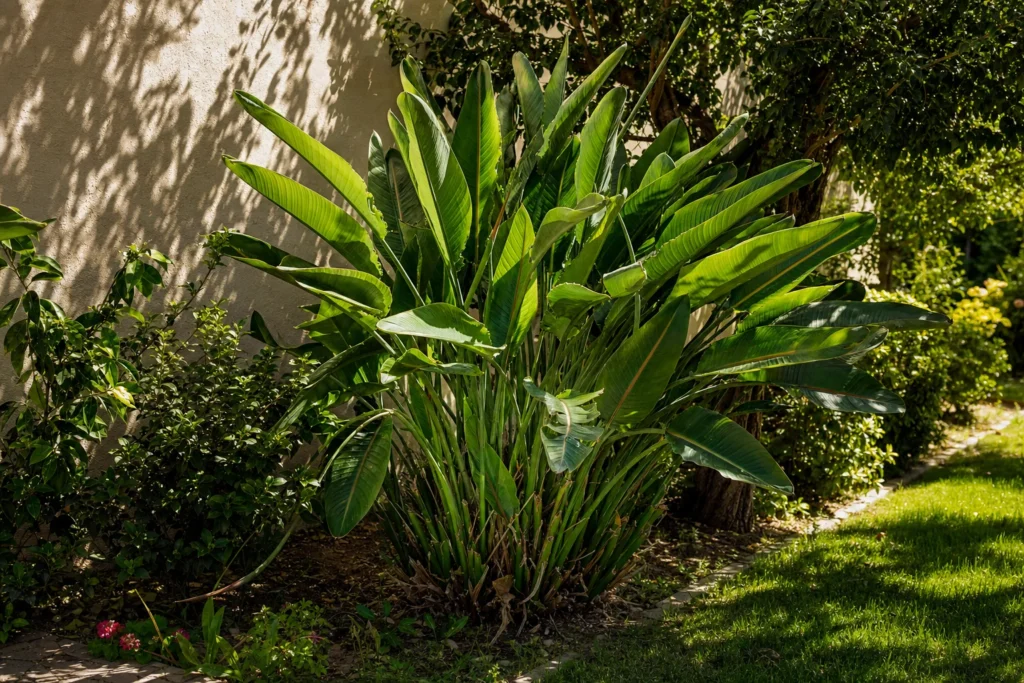
As an indoor plant, give it the brightest window you have; insufficient light is the top reason mature plants won’t bloom. Acclimate container plants gradually before moving them outside for summer, and bring them back in well before the first frost.
Soil for a Bird of Paradise Plant
The right soil for a bird of paradise plant is fertile, organic, and well-draining — heavy, waterlogged ground is the fastest way to cause root problems.
When planting outdoors, dig the hole two to three times as wide as the root ball and just as deep, keeping the top of the root ball level with the soil surface; planting too deep can delay flowering for years. Space plants at least 6 feet apart, since they bloom mainly along their outer edges.
How Often to Water a Bird of Paradise Plant
Outdoors, water generously through the warm growing season, then cut back to only when the soil has dried out during winter.
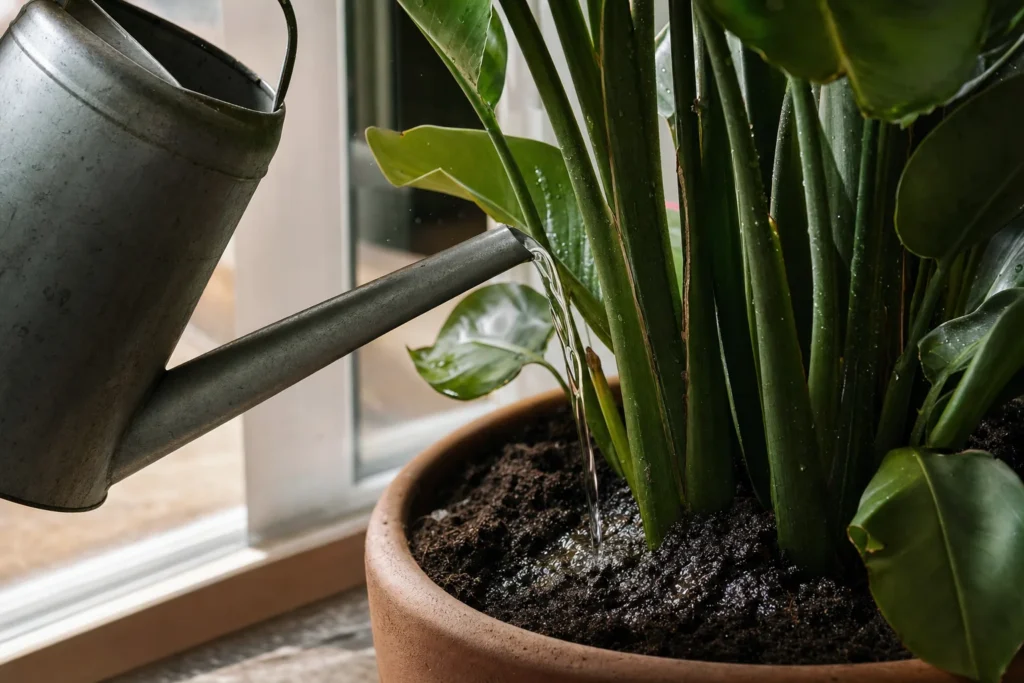
Indoors, the same logic applies at a smaller scale: keep the potting mix evenly moist in spring and summer, then let the top few inches dry between waterings once it cools. Consistency matters more than any fixed schedule, since both over- and underwatering show up quickly on the leaves.
Fertilizer for a Bird of Paradise Plant
Landscape plants need surprisingly little help — spread a granular or controlled-release fertilizer around the base every three months during the growing season.
Container and indoor plants are hungrier, since frequent watering washes nutrients out of a small volume of soil faster than it does in the ground. A diluted water-soluble fertilizer every two weeks in summer and about once a month in winter keeps a potted plant fed without overdoing it.
How to Prune a Bird of Paradise Plant
Pruning a bird of paradise plant is mostly about tidying spent growth, not shaping — it doesn’t need a hard cutback to perform well.
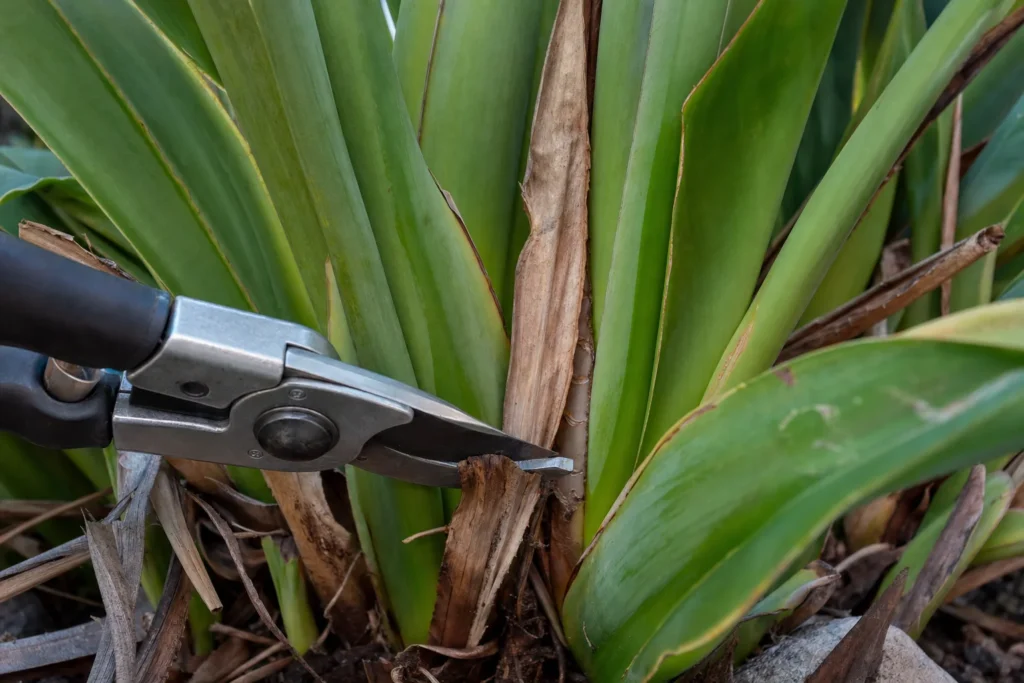
- Cut off any leaf that’s gone fully brown or died back, trimming at the base of its stalk with clean, sharp shears.
- Once a flower spike finishes blooming and dries out, remove the old stalk at its base to keep new blooms looking fresh.
- Wipe dusty leaves with a soft, damp cloth rather than a leaf-shine product, which can dull the natural matte finish.
- Resist repotting too often — the plant flowers best when its roots are a little crowded, so most years just refresh the top layer of soil.
Common Bird of Paradise Plant Problems
Most bird of paradise plant problems trace back to one of a handful of causes, and browning and curling leaves usually aren’t the same issue.
Bird of Paradise Plant Leaves Turning Brown
Bird of paradise plant leaves turning brown are most often a watering or temperature issue: inconsistent watering, low indoor humidity, or a cold snap can scorch leaf tissue. Established plants tolerate short dips to about 24°F, but anything colder — or a hard freeze during bud development — damages both leaves and flowers. Check watering consistency and keep plants away from cold drafts before assuming the worst.
Bird of Paradise Plant Leaves Curling
Bird of paradise plant leaves curling usually points to a different cause: underwatering or heat stress rather than cold. A plant that’s gone too long between waterings, or one baking in intense, unfiltered afternoon sun, rolls its leaves inward to conserve moisture. Deep, consistent watering and a little afternoon shade in hot climates typically resolves it within a few weeks.
Pests and Occasional Disease
Bird of paradise is relatively pest-resistant, but mealybugs, scale, spider mites, aphids, caterpillars, grasshoppers, and snails can all show up, and fungal leaf spot occasionally appears in humid conditions.
When it’s genuinely unclear whether you’re dealing with a pest, a fungus, or plain environmental stress, a photo uploaded to Plant ID by Innotent gets you a severity rating and a specific treatment plan, instead of guessing your way through the list.
Is a Bird of Paradise Plant Toxic to Cats?
Yes — as general safety guidance, a bird of paradise plant (Strelitzia) is considered mildly toxic to cats and dogs. Chewing on the leaves, flowers, or seeds can cause vomiting, drooling, or stomach upset. It’s rarely life-threatening, but the safest approach is to keep the plant somewhere curious pets can’t reach.
The Bottom Line on Bird of Paradise Plant Care
Every piece of bird of paradise plant care advice starts with knowing which plant you actually have — a true Strelitzia and a Caesalpinia shrub sharing the name need different routines. Once you’ve matched the species to the right light, soil, water, and feeding schedule above, most problems become preventable rather than something to troubleshoot later.
Once you’ve confirmed the species, Plant ID by Innotent can also generate AI-powered watering, light, and fertilizer guidance built around that exact plant — handy if its needs shift as it matures or the seasons change.
Frequently Asked Questions
Does a bird of paradise plant like shade or sun?
It tolerates both: partial shade produces a taller plant with larger flowers, while full sun keeps it compact with blooms on shorter stems. Either works as long as the light is consistent.
What is the most common problem with a bird of paradise plant?
Inconsistent watering causes most browning and curling leaves. Cold damage and low light — which stops mature plants from blooming — are the next most common issues.
Is bird of paradise a good indoor plant?
Yes, given a bright, sunny window. It’s forgiving otherwise, tolerating being pot-bound for years and needing only occasional feeding and pruning.
Where is the best place to put a bird of paradise plant?
Outdoors, give it full sun to partial shade and room to spread, since it blooms best without crowding from nearby plants. Indoors, the brightest window in the house works well.