
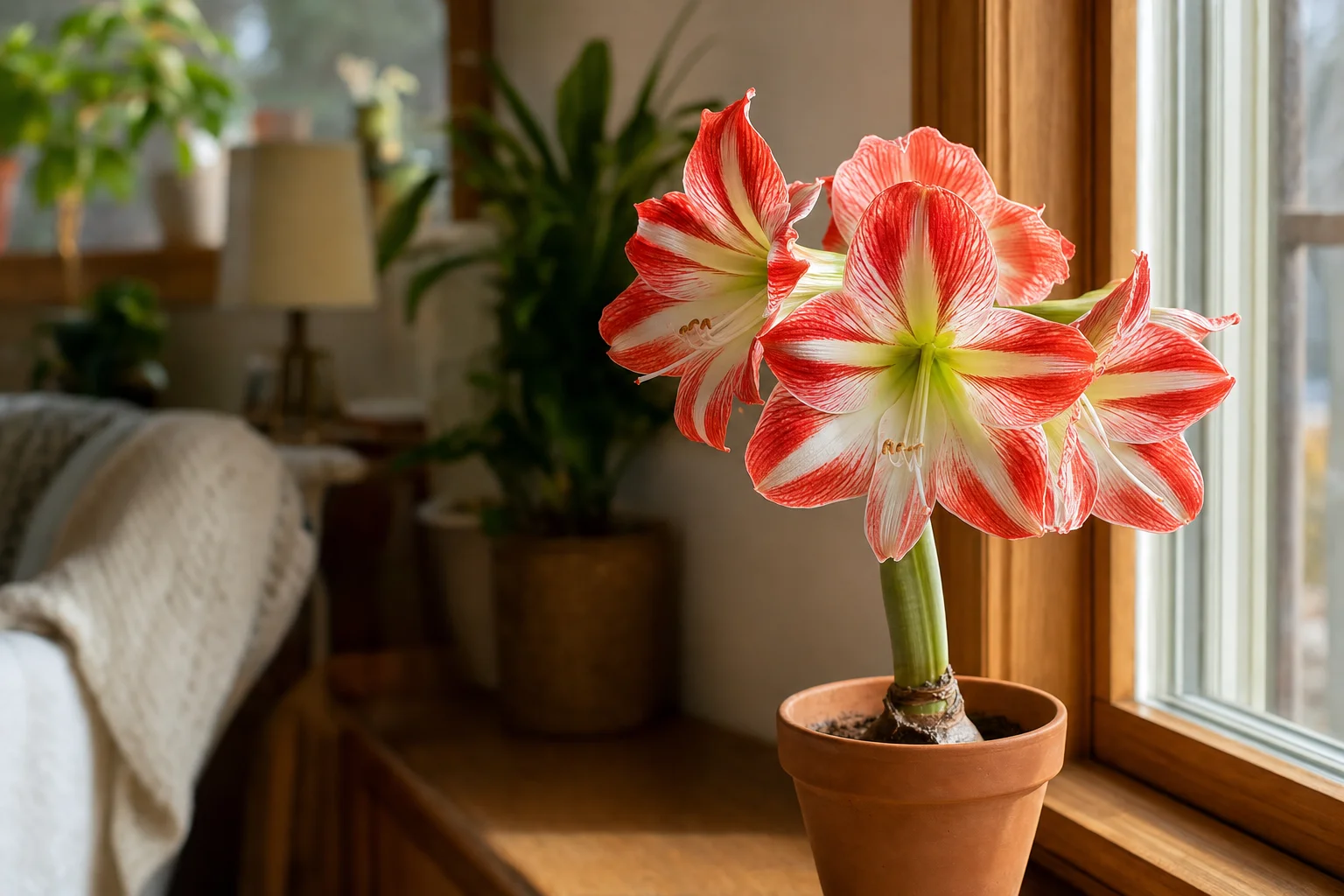
Amaryllis care comes down to four fundamentals: pot the bulb with about half of it exposed above the soil, water only when the top inch or two of soil is dry, give it the brightest light you have, and follow the plant through a predictable seasonal rhythm of indoor bloom, outdoor summer growth, and a fall dormancy rest that resets the entire cycle. Whether you’re working with a bare bulb, a wax-coated gift bulb, or a plant that already bloomed once, the sections below walk through each season so you know exactly what to do and when.
Key Takeaways
- Pot bulbs with about half to two-thirds of the bulb exposed above soil, and water only when the top 1-2 inches feel dry.
- Give amaryllis the brightest spot available; average room temperatures suit active growth just fine.
- Move mature bulbs outdoors once nights are reliably mild, acclimating gradually from shade to full sun.
- Force dormancy in fall by cutting back on water, then resting the bulb in a cool, dark spot for roughly two months to trigger reblooming.
- Waxed bulbs need no soil or water at all, just bright indirect light and an occasional turn.
- After blooming, keep the leaves intact and fed since they recharge the bulb for next year’s flowers.
Choosing and Potting Your Amaryllis Bulb
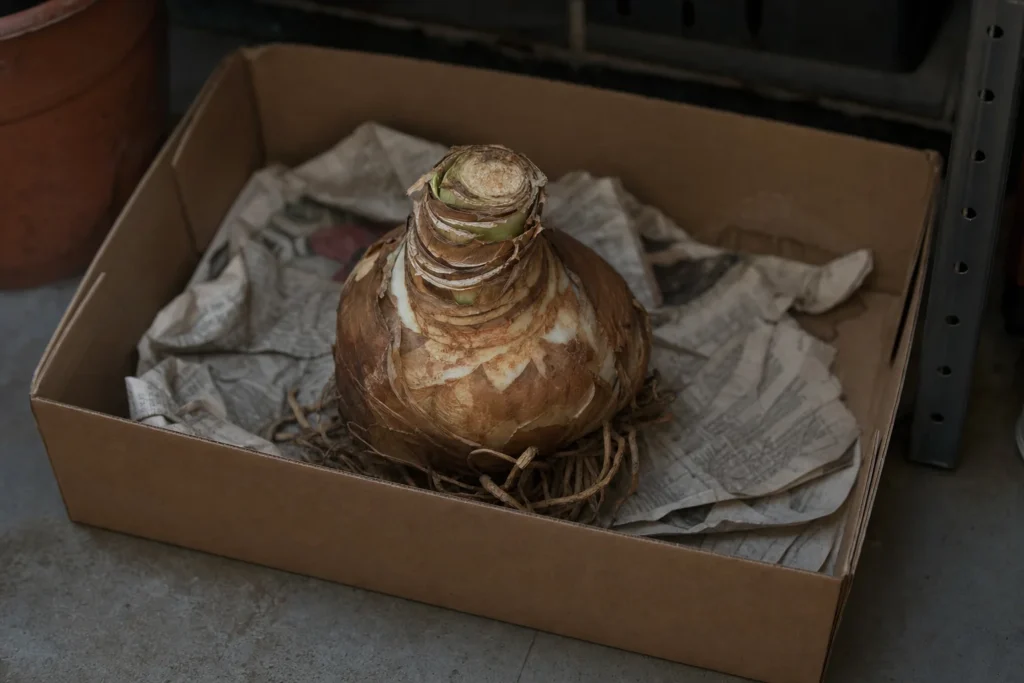
Amaryllis care starts before you pot the bulb: choose the largest, firmest bulb available, since size determines how many flower stalks it produces. Skip anything soft, moldy, or bruised.
Pot it in a container that’s just a bit wider than the bulb, with drainage holes, and fill it with a well-draining mix. Position the bulb so that half to two-thirds of it sits above the soil line, then water it in thoroughly and set the pot in a cool, bright spot UF/IFAS amaryllis planting guidance.
Many amaryllis bulbs, especially unlabeled holiday gifts, come without a variety name. If you want to know exactly which cultivar you’re growing, since some rebloom faster or need different feeding, Plant ID by Innotent can identify it to genus, species, and even cultivar level from one photo, then build AI-powered watering, light, and fertilizer guidance around that plant. It’s free to start and available for iPhone and iPad.
- Choose the largest, firmest bulb you can find; size drives bloom count.
- Skip anything with soft spots, mold, or visible bruising.
- Choose a pot just a bit wider than the bulb, with good drainage.
Watering and Light for Active Growth
Amaryllis watering comes down to one rule: let the top 1-2 inches of soil dry out before you water again, and let the pot drain fully every time so it never sits in standing water University of Minnesota Extension amaryllis watering guidance.
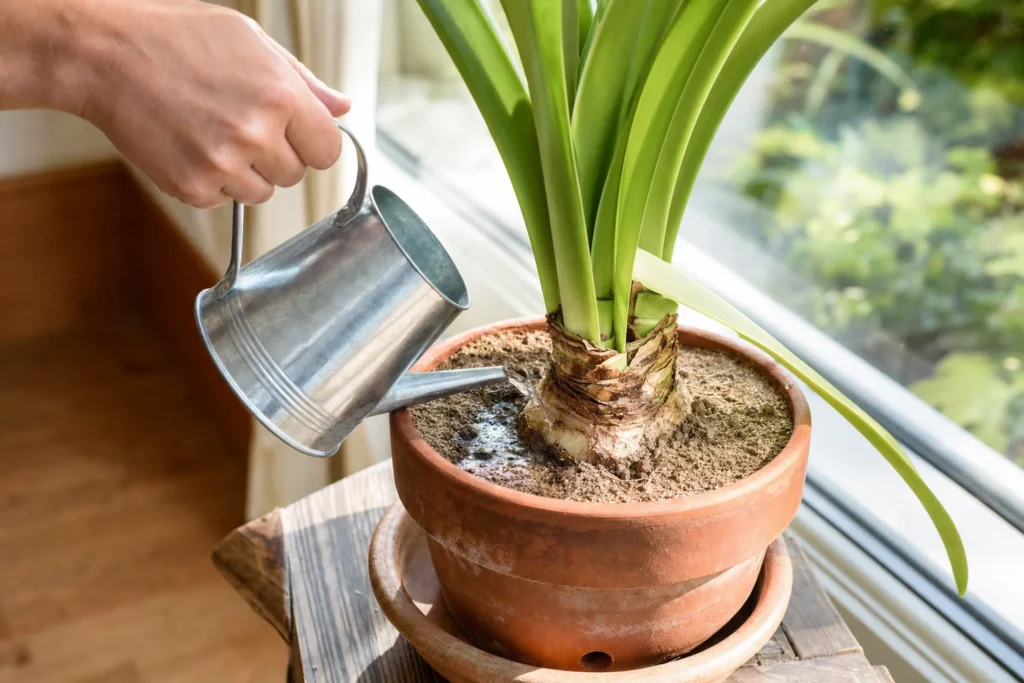
Give it the brightest window you have; a south- or west-facing spot works well indoors. Feed with a balanced, water-soluble fertilizer roughly once a month during active growth to support strong stalks and future blooms.
- Rotate the pot a quarter turn every few days so the stalk grows straight instead of leaning toward the light.
- Average room temperatures suit active growth just fine, no special heating needed.
- Blooms typically follow within a couple of months of potting, with exact timing depending on the bulb.
Amaryllis Care Outdoors in Spring and Summer
Once nighttime temperatures are reliably mild, amaryllis can move outdoors to soak up real sunlight for the season. This is the stretch where the bulb rebuilds the energy reserves it will spend on next year’s flowers, so don’t skip it if you want repeat blooms.
Acclimate the plant gradually rather than moving it straight into full sun. A few days in shade, followed by increasing sun exposure over the next couple of weeks, prevents leaf scorch.
- Start in a shaded spot for a few days before introducing sun.
- Gradually increase sun exposure over the following couple of weeks.
- Aim for a spot with plenty of direct sun once fully acclimated.
- Keep up regular watering and monthly feeding through summer.
Transitioning Indoors and Amaryllis Care in Winter
To rebloom an amaryllis, you need to force a dormancy rest each fall. Bring the plant back inside before the first frost, taper off watering as the season turns, and once the foliage yellows on its own, cut it back and move the bulb to a cool, dark location.
Extension sources disagree on the ideal dormancy temperature, some suggesting a slightly warmer range and others a cooler one. In practice both work; what matters most is consistent darkness, dry soil, and a rest period of roughly two months before you bring the bulb back into light and warmth.
If you’re timing blooms for the holidays, start the rest period roughly two months before you want flowers, then move the bulb back into a warm, sunny spot to begin that countdown.
Waxed Amaryllis Bulb Care
Waxed amaryllis bulbs need no soil and no water at all: the wax coating seals in enough moisture for the bulb to bloom on its own stored energy. Set it in bright, indirect light, and rotate it every few days to keep the stalk growing straight. Flower stalks typically emerge in 4-6 weeks, and a large bulb may send up two to four stalks, each blooming for up to three weeks Iowa State Extension waxed amaryllis bulb care.
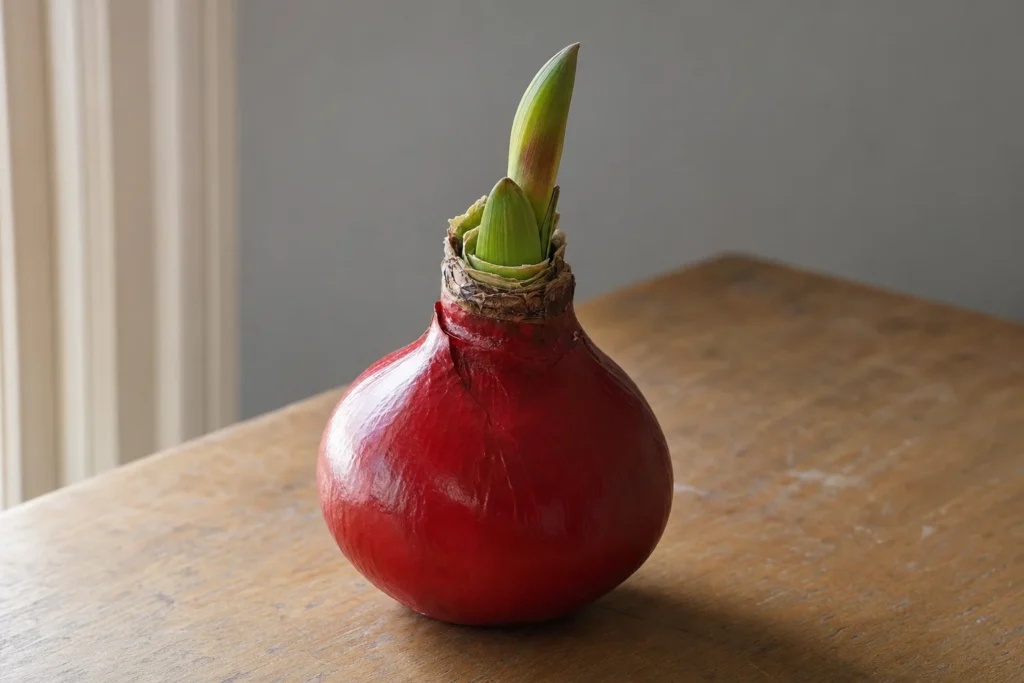
Waxed bulbs are built as single-use: once flowering finishes, most growers discard the bulb and remove the wax before composting, since it doesn’t break down well. Adventurous gardeners can try to rebloom one, though results are inconsistent.
Amaryllis Care After Blooming and Reblooming
When the flowers fade, cut the stem down to within an inch or two of the bulb’s neck, being careful not to nick the leaves, since those leaves recharge the bulb for its next round of blooms. Keep watering when the top inch of soil is dry and feed monthly with a balanced, water-soluble fertilizer through the rest of the growing season MSU Extension amaryllis fertilizing guidance.
Since amaryllis bulbs can rebloom for years when timing stays on track, keeping notes on when each bulb went dormant and returned to light makes the cycle easier to manage. Plant ID by Innotent’s virtual garden lets you log that timeline, save care notes for each bulb, and get a reminder when it’s time to bring a resting bulb back into the light, useful since the rest period needs to start weeks before you want flowers again.
Amaryllis Care Pays Off Over Many Seasons
Amaryllis care isn’t complicated once you know the rhythm: bright light and modest watering during growth, a real outdoor season in summer, a genuine dark rest in fall, and patience through each stage. Waxed bulbs simplify things even further, trading soil and water for a one-time bloom. Stay consistent with these seasonal steps and a single gift bulb can keep blooming for years.
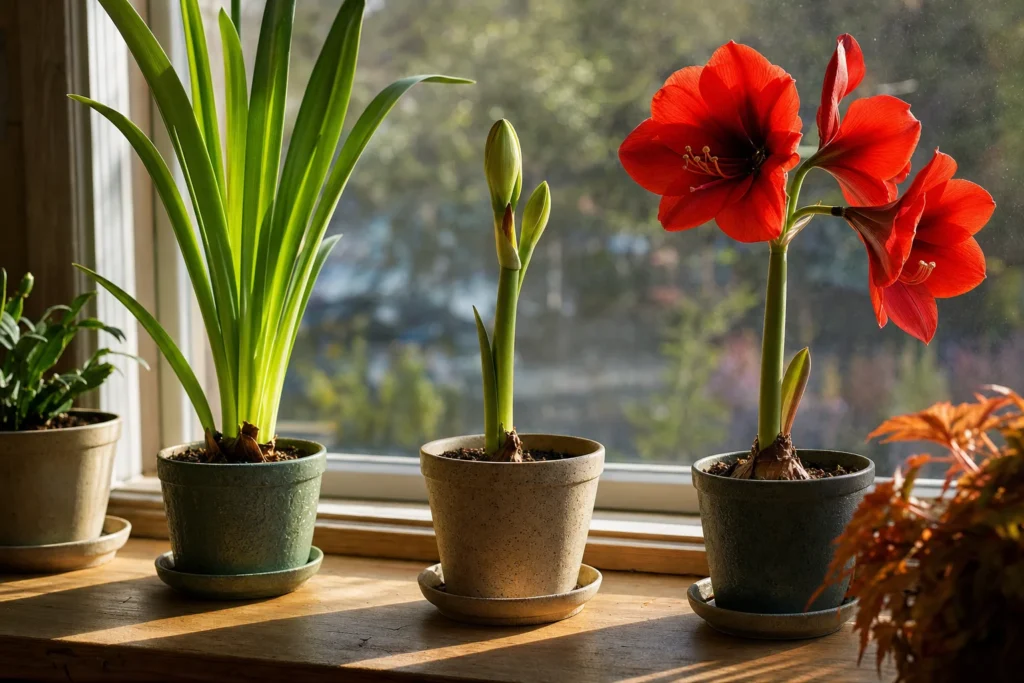
How to Pot an Amaryllis Bulb
- Select a healthy bulb: firm, blemish-free, and as large as you can find.
- Choose a pot just a bit wider than the bulb’s diameter, with a drainage hole.
- Fill halfway with well-draining potting mix and set the bulb pointed end up.
- Add more mix around the sides, leaving about half to two-thirds of the bulb exposed above the soil line.
- Water thoroughly once, then hold off until the top 1-2 inches of soil dry out.
- Place the pot in your brightest window; expect blooms within a couple of months, timing depends on the bulb.
Amaryllis Seasonal Care Calendar
| Season | Light | Water | Temperature |
|---|---|---|---|
| Active Growth (Indoors) | Brightest window available | Top 1-2 inches of soil dry between waterings | Normal room temperature |
| Outdoor Growth (Summer) | Full sun after gradual acclimation | Regular watering; don’t let soil fully dry out | Mild, frost-free nights |
| Fall Dormancy Prep | Reduce light as watering tapers off | Withhold water once foliage yellows | Room temperature until foliage dies back |
| Dormancy Rest (Winter) | Dark or very low light | None | Cool, roughly 40s-60s°F depending on the source, for about two months |
| Winter Reblooming | Bright, indirect light | Barely moist potting mix | Slightly cool indoor temperatures |
Frequently Asked Questions
What should I do with amaryllis bulbs after they bloom?
Cut the flower stalk down to an inch or two above the bulb’s neck once it fades, but leave the leaves in place since they’re recharging the bulb. Keep watering and feeding it on a normal schedule through the rest of the growing season so it has energy to bloom again next year.
How do I save my amaryllis bulb for next year?
Keep the foliage growing and well-fed through summer, then force a dormancy rest in early fall: stop watering until the leaves yellow on their own, cut them back, and store the bulb in a cool, dark spot for roughly two months. Afterward, move it back into a warm, sunny spot and resume watering to start a new bloom cycle.
Is Miracle-Gro or another specific fertilizer necessary for amaryllis?
No particular brand is required. A balanced, water-soluble fertilizer applied about once a month during active growth is enough to replenish the bulb. Skip fertilizing entirely while it’s dormant.
When should amaryllis go into the dark for dormancy, and for how long?
Move it to a cool, dark location once the foliage yellows on its own, typically in late summer or early fall, and leave it there for roughly two months. If you want blooms for the holidays, start that rest period accordingly, about two months before you’d like to see flowers.
How is waxed amaryllis bulb care different from a soil-grown bulb?
A waxed bulb needs no soil or water; the wax seals in enough moisture for it to flower using its own stored energy in bright, indirect light. As noted above, it typically blooms in 4-6 weeks and is designed for one-time use, though adventurous gardeners can attempt to save and rebloom it.