
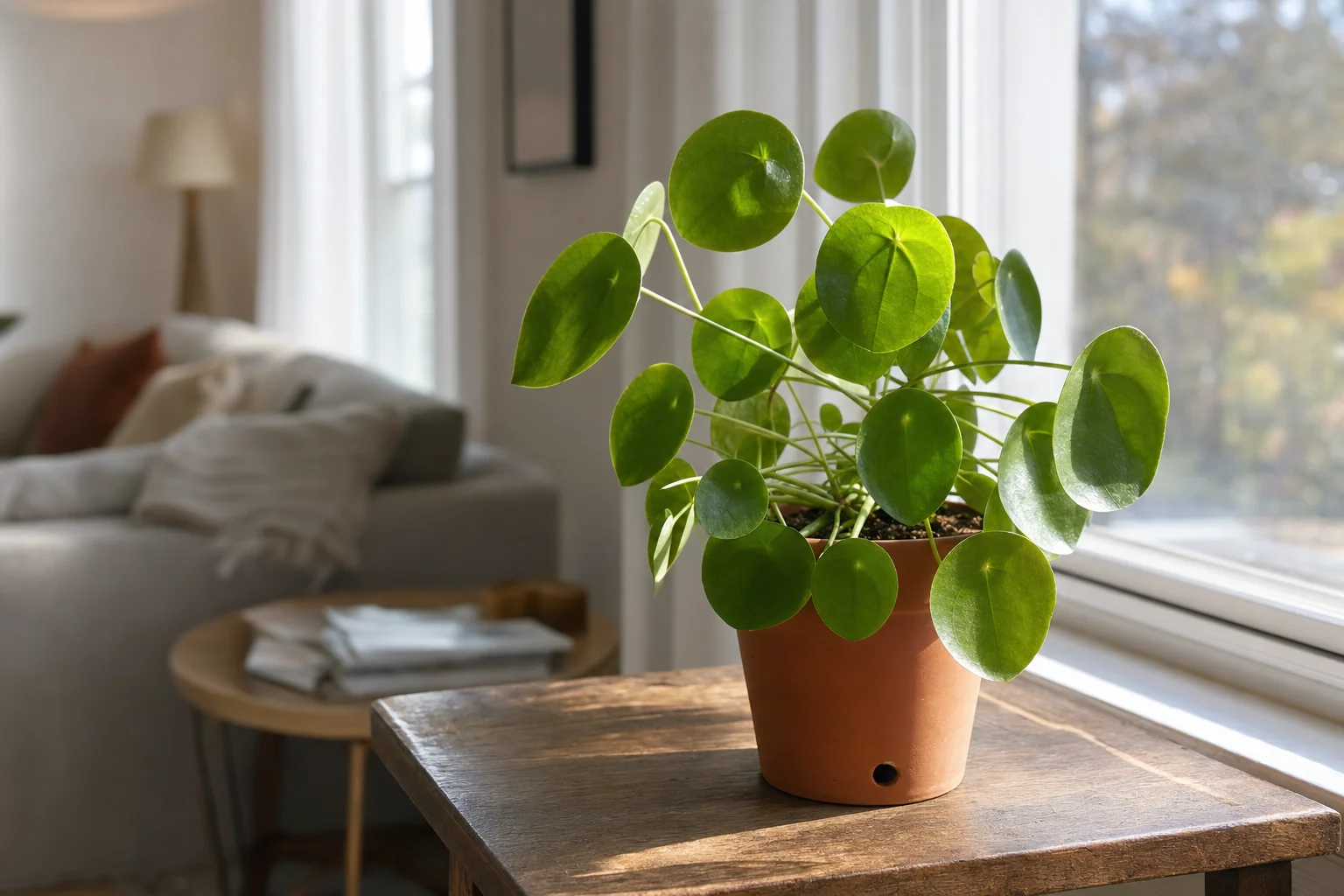
Chinese money plant care comes down to a handful of consistent habits: bright, indirect light; watering only when the top inch of soil is dry; a well-draining potting mix; warm room temperatures; and light feeding during spring and summer. Get those basics right and your Pilea peperomioides will keep producing its signature coin-shaped leaves with little fuss. This guide walks through light, water, soil, humidity, feeding, repotting, propagation, and how to troubleshoot the most common problems, whether this is your first houseplant or your fiftieth.
Key Takeaways
- Bright, indirect light and watering only when the top inch of soil is dry are the two most important habits for a healthy Chinese money plant.
- Use a well-draining mix with perlite or cacti soil, and always plant in a container with a drainage hole.
- Feed monthly with diluted fertilizer in spring and summer only, and repot every 1-2 years in spring.
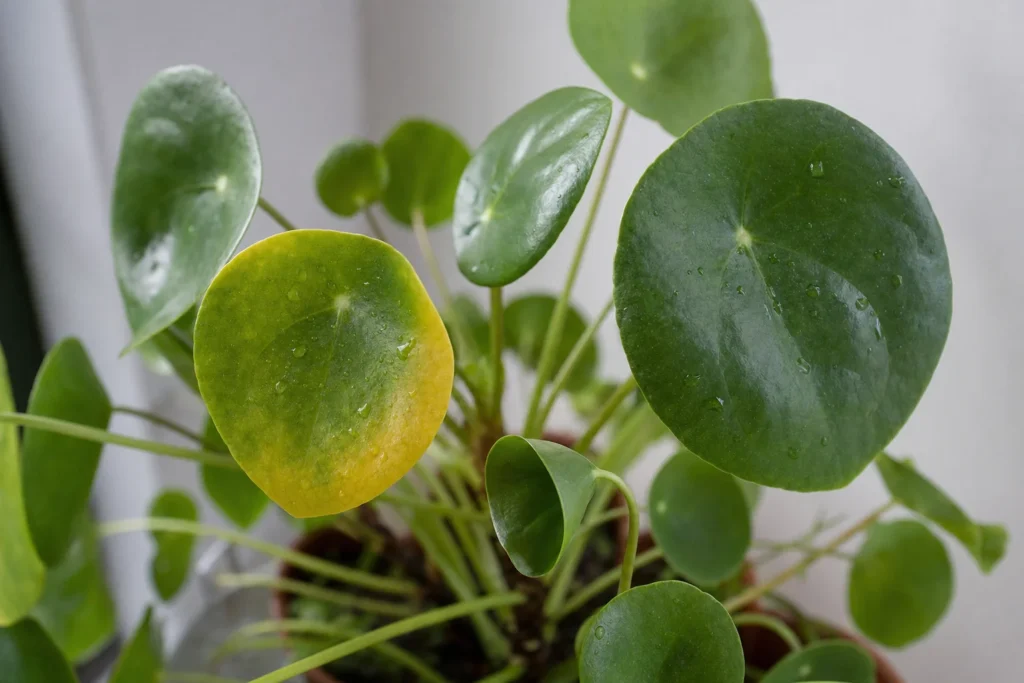
- Yellow leaves and leaf drop usually signal overwatering, not underwatering.
- Root cuttings and pups in water or soil, but move them into soil once roots form; long-term water growth isn’t ideal.
- Pilea peperomioides is non-toxic to pets and is best kept as a year-round houseplant in most U.S. climates.
What Is a Chinese Money Plant?
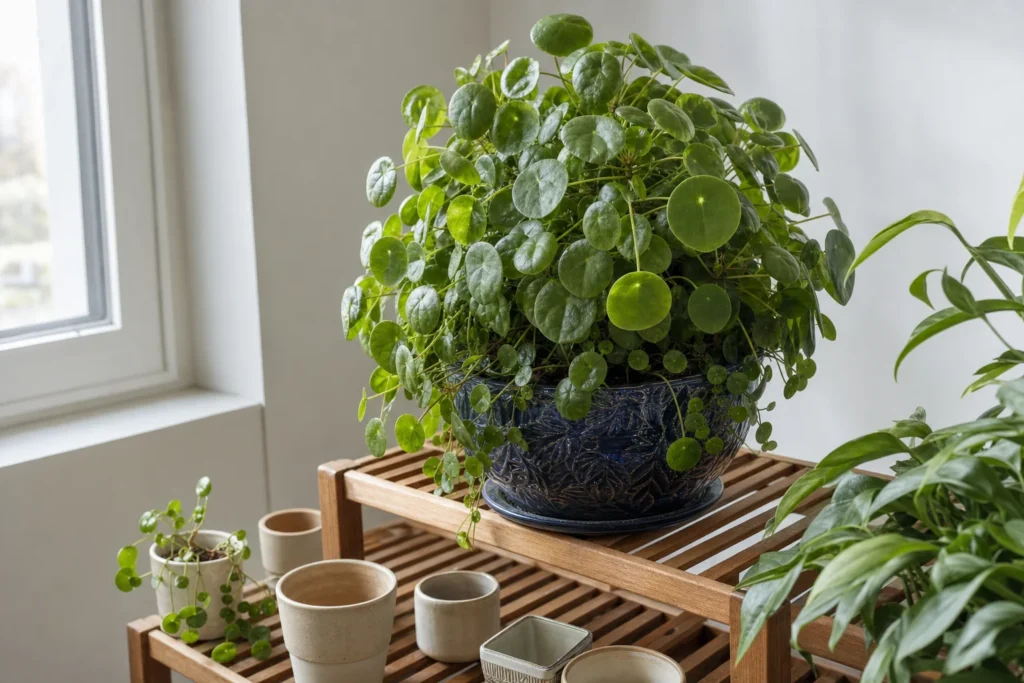
Chinese money plant is the common name for Pilea peperomioides, a compact, easy-care plant native to Yunnan province in southern China. Its glossy, coin-shaped leaves stack on slender stems, earning it nicknames like Pancake Plant, UFO Plant, and Pass-it-on-Plant for how readily it produces plantlets to share. It’s forgiving enough to have become one of the most popular U.S. houseplants over the past decade.
Confirm You Have a True Pilea Peperomioides
A few Pilea look-alikes get sold under the same ‘Chinese money plant’ label, and getting the ID wrong is one of the more overlooked reasons a care routine stalls out. Plant ID by Innotent settles the question from a single leaf photo: its AI model, refined over six-plus years and covering 35,000+ species, places the correct match among its top three results 93% of the time, down to variety and cultivar level. Once it confirms you have true Pilea peperomioides, it also builds watering, light, and fertilizer guidance around that exact plant. It’s currently iOS only, on iPhone and iPad.
Quick-Reference Chinese Money Plant Care Chart
Here’s the whole routine at a glance; RHS confirms the same baseline for light, drainage, and warmth RHS Plant Guide for Pilea.
Light Needs
Chinese money plants want bright, indirect light, a few feet back from an unobstructed window rather than sitting on the sill. Direct sun, especially through south- or west-facing glass, can scorch the glossy leaves, while too little light makes the plant stretch and grow leggy. Rotate the pot a quarter turn every week or so, since Pilea leaves naturally lean toward their light source.
Watering Your Chinese Money Plant
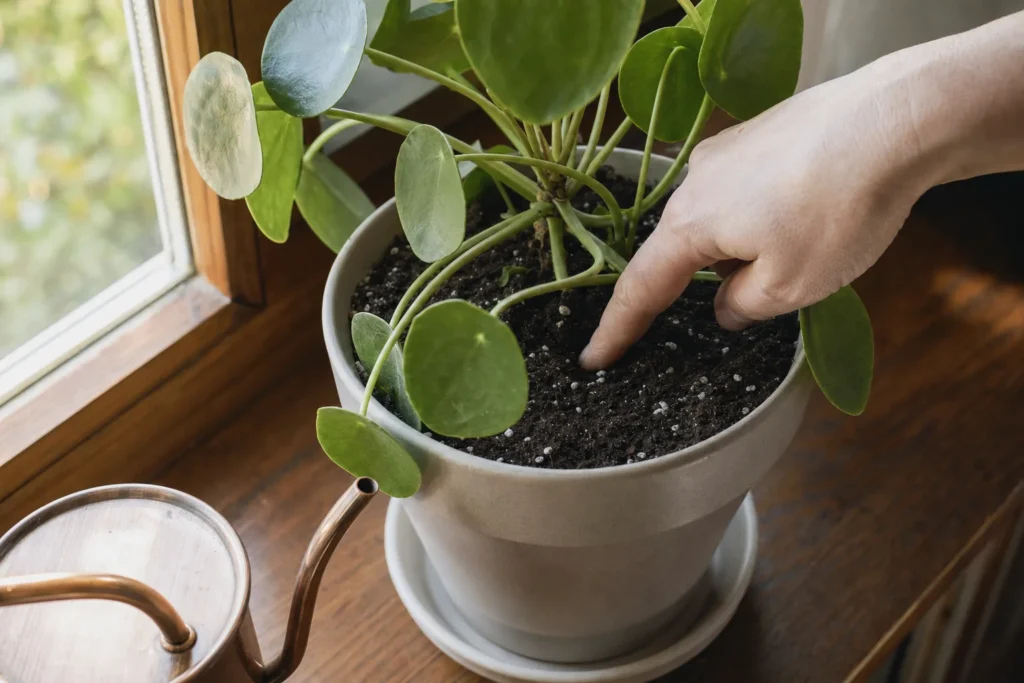
Water when the top inch of soil feels dry; press a finger in before reaching for the can. That’s typically about once a week in the growing season and every other week in winter, though pot size, light, and home humidity all shift the schedule. Water thoroughly until it drains from the bottom, then let the excess drain away completely; standing water is one of the fastest routes to root rot.
Soil and Drainage
A loose, fast-draining mix matters as much as your watering habits. Standard potting soil blended with perlite, or a cacti/succulent mix cut with regular potting soil, gives roots the aeration they need to dry out between waterings. Always use a pot with a drainage hole; without one, even careful watering can leave roots sitting in excess moisture.
Humidity Needs
Chinese money plants aren’t picky about humidity and do fine in typical household conditions, no humidifier or pebble tray required. An occasional misting or a wipe-down with a damp cloth keeps the leaves dust-free, which helps in winter when heating dries out indoor air.
Feeding (Fertilizing) Schedule
Feed only during the active growing season, spring through summer, with a diluted, balanced houseplant fertilizer about once a month. Skip feeding in fall and winter, when growth slows and the plant can’t use the extra nutrients. Overfeeding is a real risk here; too much fertilizer tends to leave leaves looking soft or limp rather than speeding growth.
Repotting
Plan to repot every one to two years, or sooner if roots circle the pot or growth stalls. Spring is the ideal window, since the plant is entering its growing season and recovers faster. Move up only one pot size at a time and refresh the soil completely rather than topping it off.
Propagation
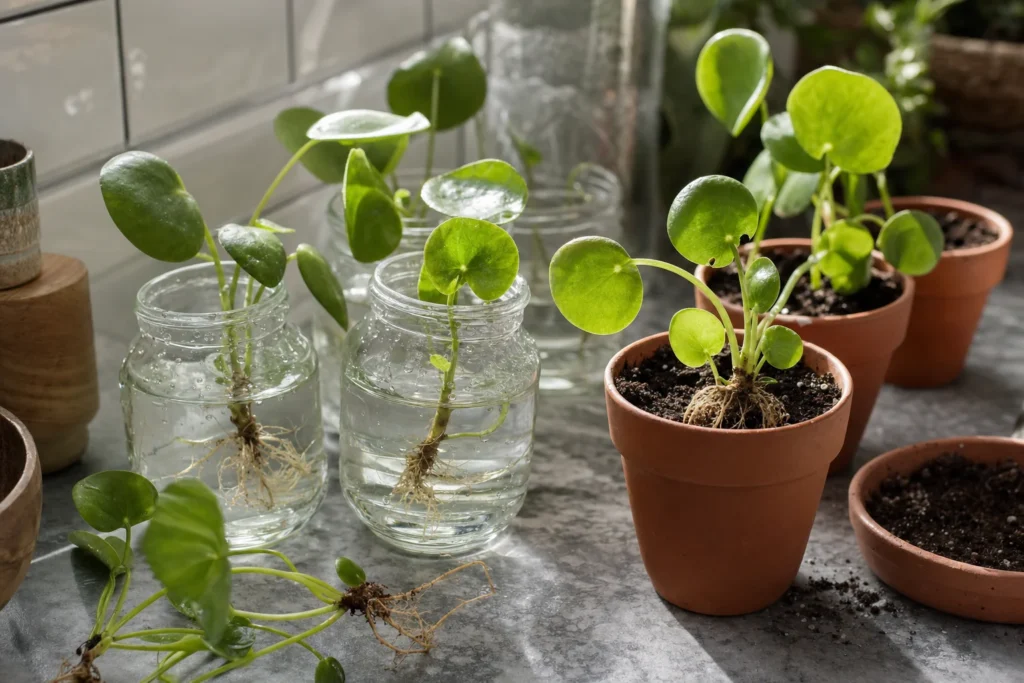
Few houseplants propagate as willingly as Pilea peperomioides. Mature plants send up baby plantlets from the base and roots; leave them in place for a fuller plant, or separate them into new pots. Stem cuttings work well too if yours hasn’t offset yet. Root cuttings and pups in water or straight into soil; water rooting lets you watch roots form, but it’s a temporary step. Left in water indefinitely, roots stay weaker than soil-grown ones, so pot up once roots reach an inch or two.
Pruning Tips
Chinese money plants don’t need heavy pruning. Snip yellowed or damaged leaves at the base with clean, sharp scissors, and trim leggy stems if you want a fuller shape. Sanitize your tools first to avoid introducing disease through a cut.
Chinese Money Plant Winter Care vs. Summer Care
Summer is the plant’s active growing season: water more often and feed monthly for the fastest leaf production. In winter, growth slows, so ease back on watering and stop fertilizing until spring returns. Keep the plant away from cold drafts, heating vents, and chilly windowpanes; Pilea does best in a warm, draft-free spot year-round.
Indoor vs. Outdoor Care
In most U.S. climates, treat a Chinese money plant as a year-round houseplant. It isn’t cold-hardy, so outdoors it risks temperature swings, harsh sun, and pests it isn’t equipped to handle. If you want to give it a summer outside, pick a shaded, sheltered spot and bring it back in well before nights turn cold.
Troubleshooting Common Chinese Money Plant Problems
Most problems trace back to light or water; catching the pattern early makes them easy to fix. The chart below maps common symptoms to their likely cause and a first fix to try.
When the cause isn’t obvious, say leaves are curling but neither light nor water seems off, Plant ID by Innotent’s diagnosis feature can assess severity and suggest a treatment plan from a photo of the affected foliage, useful if pests or a fungal issue are behind it rather than a simple care mismatch.
Is a Chinese Money Plant Safe for Pets?
Yes, Pilea peperomioides is considered non-toxic to cats and dogs, a solid choice if curious pets share your home. Still, discourage chewing on any houseplant, since nibbling leaves can cause mild stomach upset regardless of toxicity.
The Bottom Line on Chinese Money Plant Care
Get the fundamentals right, bright indirect light, water only when the topsoil dries out, well-draining soil, and light feeding in the growing season, and a Chinese money plant rewards you with steady growth and a steady supply of plantlets to share or repot. As that collection grows, save each new pot to Plant ID by Innotent’s virtual garden with its own care notes, handy once you’re tracking more than a few plantlets.
Chinese Money Plant Quick-Reference Care Chart
| Care Factor | What It Needs |
|---|---|
| Light | Bright, indirect light; avoid direct sun and deep shade |
| Water | When the top 1 inch of soil is dry, roughly weekly in summer and every 2 weeks in winter |
| Soil | Well-draining mix, such as potting soil blended with perlite or a cacti mix |
| Humidity | Average household humidity is fine; occasional misting is a nice-to-have |
| Temperature | 65-75°F (18-24°C) ideally; tolerates a broader 55-86°F range |
| Feeding | Diluted houseplant fertilizer monthly during spring and summer only |
| Repotting | Every 1-2 years, or once roots fill the pot, ideally in spring |
Chinese Money Plant Troubleshooting Chart
| Symptom | Likely Cause | Fix |
|---|---|---|
| Yellow leaves | Usually overwatering; occasionally normal shedding of older leaves | Let soil dry out further between waterings; remove yellowed leaves at the base |
| Leggy, stretched growth | Not enough light | Move to a brighter spot and rotate weekly for even growth |
| Leaves falling off | Overwatering, transplant stress, or natural aging of lower leaves | Check soil moisture and drainage first; a few lower leaves dropping over time is normal |
| Leaves curling inward or downward | Too much direct light or underwatering | Move out of direct sun and check whether the soil has gone completely dry |
| Leaves curling outward | Overwatering or a sudden care change | Ease up on watering and let the top inch of soil dry before the next drink |
How to Propagate a Chinese Money Plant
- Use a clean, sharp knife or shears to separate a baby plantlet from the base, or take a stem cutting a few inches long.
- Let the cut end sit out for a couple of hours to callus over, which helps prevent rot.
- Place the cutting in water or directly into a moist, well-draining potting mix.
- If rooting in water, wait until roots are 1-2 inches long, then transfer the cutting into soil.
- Keep the new plant in bright, indirect light and water when the top inch of soil dries out, just as you would an established plant.
Frequently Asked Questions
How do I keep my Chinese money plant happy long-term?
Consistency wins: bright indirect light, watering only when the topsoil is dry, well-draining soil, monthly feeding in the growing season, and repotting every year or two. Propagating the pups it produces keeps the plant renewing itself.
What’s the most common cause of yellow leaves on a Chinese money plant?
Overwatering is the top cause. Let the soil dry out more between waterings and remove yellowed leaves near the base; a few yellow leaves from natural aging now and then is normal.
Can I keep a Chinese money plant growing in water indefinitely?
It’s not recommended. Water rooting works for starting a cutting, but roots grown long-term in water tend to be weaker than soil-grown roots, so pot it up in well-draining soil once roots reach about an inch or two.
What is the average lifespan of a Chinese money plant?
There’s no single confirmed figure, but with consistent care and regular propagation, a Chinese money plant can keep producing new growth for many years, effectively renewing itself through the offsets it sends up.
Can I grow a Chinese money plant outdoors?
In most U.S. climates it’s best kept indoors year-round since it isn’t cold-hardy. It can spend warm months in a shaded, sheltered outdoor spot, but should come back in before temperatures drop.