Yes—a money tree indoor plant is one of the easiest, most rewarding houseplants you can grow. Botanically known as Pachira aquatica, this glossy-leafed tropical tree is prized for its braided trunk, low-maintenance reputation, and status as a feng shui good-luck symbol. It thrives indoors year-round in most US homes, tolerating average household humidity and a range of light levels once you settle into a consistent watering routine. One quick note before you dive into care: money trees are sometimes confused with an unrelated houseplant nicknamed the ‘Chinese money plant’ (Pilea peperomioides), so it’s worth confirming exactly which species you have before following any care advice, including this guide.
Key Takeaways
- A money tree indoor plant is easy-care and well-suited to most US homes, not just warm climates
- It needs bright, filtered light — not direct sun and not deep shade
- Water only when the top few inches of soil dry out, and always use a pot with drainage
- Feed with a balanced organic fertilizer at half strength every two weeks, but only from March through September
- Repot every two to three years into well-draining, organic-rich soil
- Dropped or yellowing leaves are almost always a reaction to drafts, moves, or watering swings, not a sign of a dying plant
Benefits and Drawbacks
Pros
- Resilient and low-maintenance once its light and watering routine are established
- Attractive braided trunk and glossy compound leaves add a tropical look to any room
- Valued in feng shui as a symbol of good fortune and prosperity
- Grows at a manageable, moderate pace indoors, typically reaching 3–6 feet
Cons
- Sensitive to cold drafts, air-conditioning vents, and sudden moves
- Drops leaves in protest when stressed, disturbed, or repotted
- Needs fairly consistent humidity (around 50%) to avoid crispy leaf edges
- Requires a careful watering balance — both over- and under-watering cause leaf problems
What Is a Money Tree Indoor Plant?
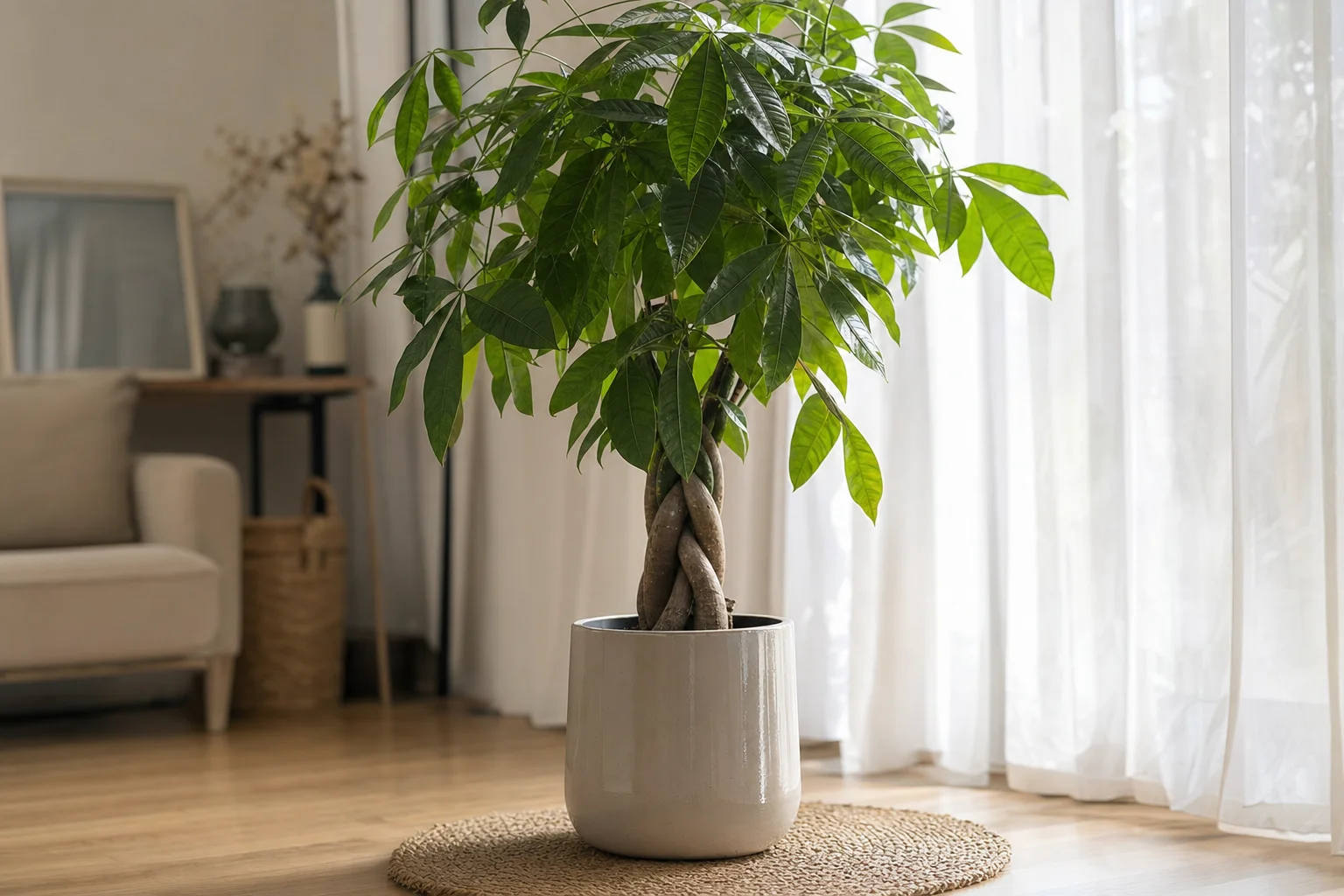
Pachira aquatica — also called money tree, Malabar chestnut, or Guiana chestnut — is native to tropical wetlands in Central and South America NYBG money tree guide. As a houseplant it typically grows 3 to 6 feet tall, with willowy, woody stems topped by large whorls of compound leaves. The braided trunk sold at most garden centers isn’t a natural growth habit — it’s created by weaving together the stems of several young plants while they’re still flexible, giving the mature specimen its signature twisted look.
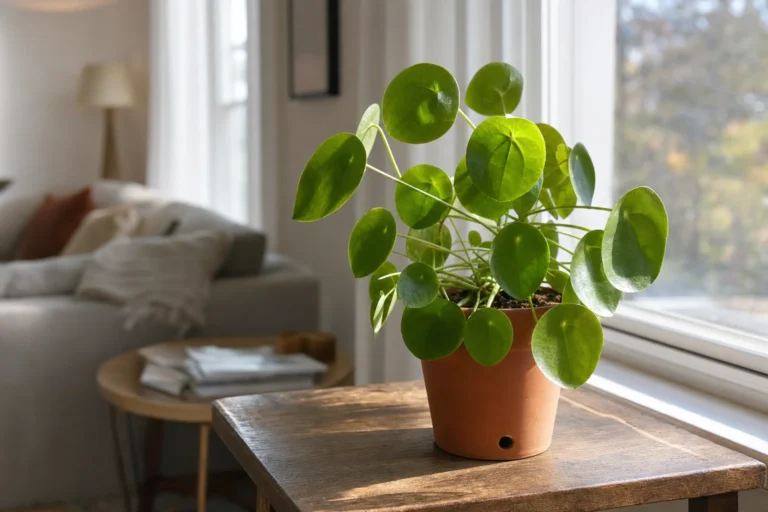
It’s easy to mix up a money tree with other ‘lucky’ houseplants sold under similar nicknames — most notably the Chinese money plant (Pilea peperomioides), a completely different species with round, coin-shaped leaves and no braided trunk. Since light and watering needs shift between look-alikes, confirming the exact species first pays off. Plant ID by Innotent identifies plants from a photo across a database of 35,000-plus species — houseplants, garden varieties, trees, succulents, and wild flora alike — and lands the correct one in its top three suggestions 93% of the time, a level of accuracy that independent academic studies found ahead of PlantNet, iNaturalist, and Google Lens. It’s available now for iPhone and iPad.
Money Tree Care Essentials
Once you’ve confirmed you actually have a Pachira aquatica, the care routine is refreshingly simple: bright, filtered light; a water-when-dry routine; well-draining soil; and seasonal feeding. The quick-reference chart further down sums it all up in one place — here’s the reasoning behind each piece.
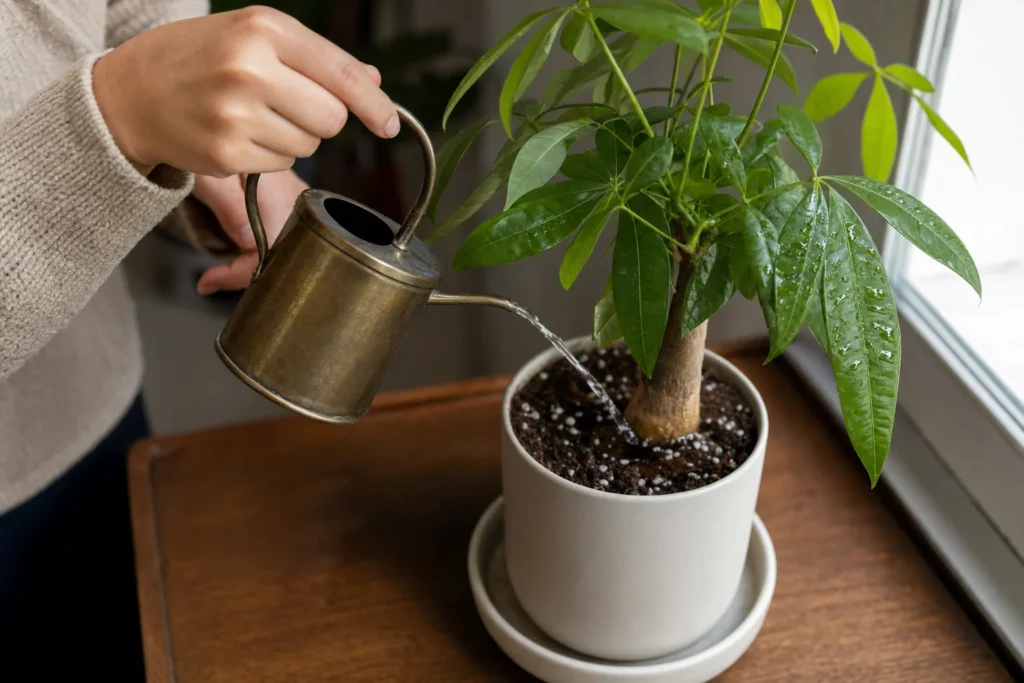
For soil, money trees want a well-draining, organic-rich mix rather than a dense potting soil that holds water around the roots. A quality houseplant mix works well, or you can blend your own from organic compost, coarse sand or perlite, and a little peat or coco fiber for moisture retention. Feed with a balanced, organic fertilizer at half strength every two weeks, but only during the active growing season from March through September; skip fertilizing entirely in fall and winter, when growth naturally slows. Many owners also find room-temperature water gentler on tropical roots than water straight from a cold tap, especially in winter.
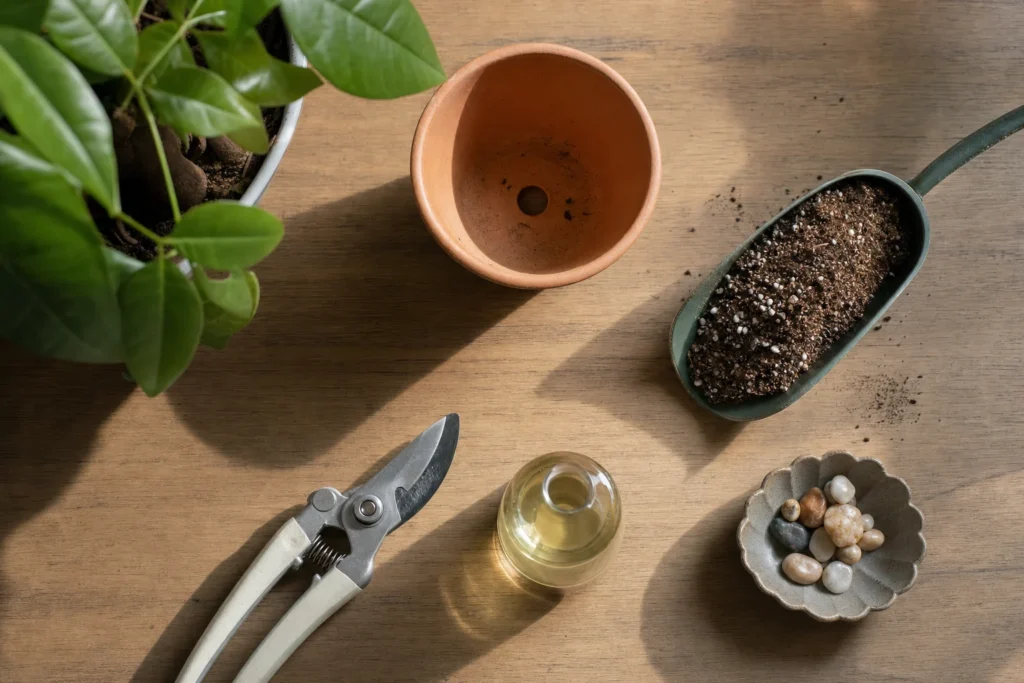
Water thoroughly whenever the soil has dried out nearly all the way through — NYBG’s plant guide describes the natural pattern for these wetland natives as heavy rain followed by a dry stretch — then let any runoff drain away completely; standing water in the saucer is one of the fastest ways to trigger root rot. Aim for roughly 50% humidity; a pebble tray or occasional misting helps prevent the crispy leaf edges that show up in dry winter air. Keep the plant somewhere warm — NYBG puts the ideal range at 65°F to 85°F — and away from drafts, air-conditioning vents, and heating registers. Repot every two to three years in spring, moving up just one pot size, and prune in spring too, using sharp, sterile shears and never cutting into the braided section of the trunk.
Feng Shui Placement for Your Money Tree
In feng shui, the money tree’s five-leaflet leaves are said to represent the five elements, making it a popular symbol of balanced fortune and prosperity. Traditional placement puts it in the southeast ‘wealth corner’ of a home or office, or near an entryway where it can ‘welcome’ positive energy inside. Practically speaking, those spots tend to work well anyway: entryways and living areas usually offer the bright, filtered light the plant needs, without the direct blasts of hot or cold air from windows, vents, or doors that money trees dislike. When choosing a feng shui spot, treat the plant’s light and draft requirements as the deciding factor, then let the symbolism guide you between equally suitable locations.
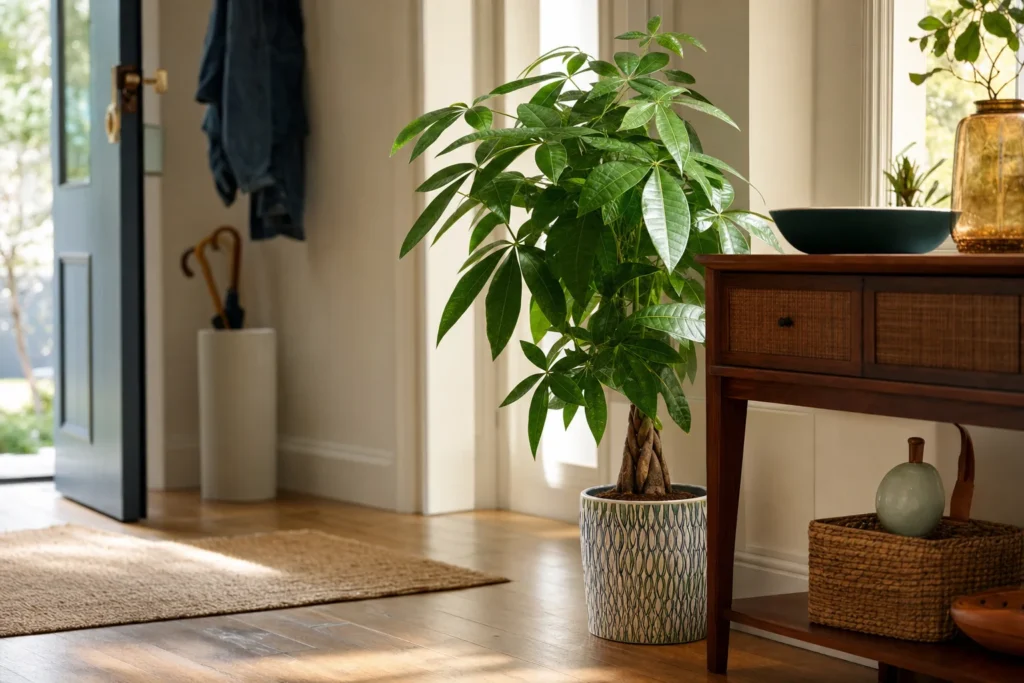
Indoor or Outdoor? Where Money Trees Really Belong
Money tree is grown almost exclusively as a houseplant across the United States, and for good reason: it’s a tropical species that struggles once temperatures drop much below the 65°F range described earlier, and it has little tolerance for frost or cold drafts. In warm, humid climates such as South Florida or Hawaii, a money tree can spend summer outdoors on a shaded patio and even be planted in the ground in frost-free zones. For nearly everyone else, though, it’s best treated as a permanent indoor plant, or moved outside only for a short summer stay in a sheltered, shaded spot — then brought back in well before nighttime temperatures dip into the 50s.
Troubleshooting Common Money Tree Problems
Most money tree problems trace back to one of three causes: light, water, or disturbance.
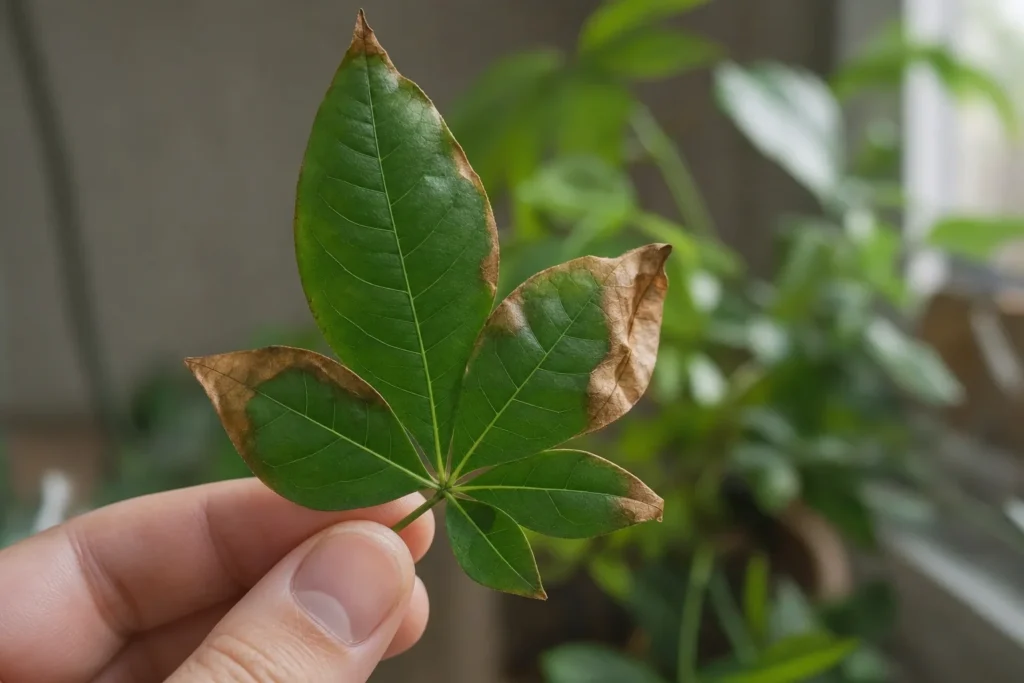
When it’s genuinely hard to tell whether a pest, a fungal issue, or ordinary stress is behind the symptoms, Plant ID by Innotent’s disease-diagnosis feature can assess how severe the problem looks from a photo and outline a treatment plan tailored to it.
- Dropped or yellowing leaves usually follow a recent move, repotting, or a temperature swing — the plant is adjusting to change, not necessarily dying. Keep conditions stable and new growth should return.
- Crispy, curling leaf edges point to low humidity, especially common in winter when heating systems dry out the air. A pebble tray or humidifier usually resolves it.
- Yellowing leaves paired with soft or rotting stems signal overwatering or poor drainage — let the soil dry out further between waterings and confirm the pot has a drainage hole.
- Scale insects are the most common pest. Treat them by dabbing each insect with a cotton swab soaked in rubbing alcohol, then rinsing the area with a strong jet of water; recheck weekly until they’re gone.
The Bottom Line on Money Tree Care
A money tree indoor plant rewards a little consistency: bright, filtered light, a water-when-dry routine, well-draining soil, and seasonal feeding are really all it asks for. Respect its dislike of drafts and sudden moves, and you’ll have an easy-care, good-luck houseplant that thrives for years. Once your money tree settles into its spot, saving it to Plant ID by Innotent’s virtual garden keeps its custom care notes and watering reminders together, so its routine holds steady even as the seasons — and your schedule — change.
Money Tree Care at a Glance
| Category | Guidance |
|---|---|
| Light | Bright, filtered light; avoid direct sun and deep shade; rotate at each watering |
| Water | Water thoroughly when soil is nearly dry throughout; ensure drainage; avoid standing water |
| Humidity | Around 50%; use a pebble tray or humidifier in dry winter air |
| Temperature | 65–85°F; keep away from drafts, AC vents, and heaters |
| Soil | Well-draining, organic-rich mix (compost plus sand/perlite, with peat or coco fiber) |
| Feeding | Balanced organic fertilizer at half strength every 2 weeks, March–September only |
| Repotting | Every 2–3 years in spring, one pot size up |
| Pruning | Spring; sharp sterile shears; never cut into the braided trunk |
Frequently Asked Questions
Where is the best place to put a money tree indoors?
Choose a spot with bright, filtered light — a few feet back from a sunny window works well — and keep it away from cold drafts, air-conditioning vents, and heating registers, which cause stress and leaf drop.
What are the disadvantages of a money tree?
The tradeoffs mirror the drawbacks above: money trees are sensitive to drafts, sudden moves, and root disturbance, and they’ll drop leaves in protest until conditions settle. None of this is a dealbreaker if you keep its environment stable.
Do coffee grounds help a money tree?
There’s no reliable evidence supporting the coffee-grounds myth for money trees. Stick with the standard schedule — a balanced organic fertilizer at half strength every two weeks during the March-to-September growing season — rather than experimenting with kitchen scraps.
Is a money tree the same plant as a Chinese money plant?
No. ‘Money tree’ usually refers to Pachira aquatica, the braided-trunk plant covered in this guide, while ‘Chinese money plant’ typically refers to Pilea peperomioides, a separate species with round, coin-shaped leaves and no braided trunk.
Can a money tree live outdoors, or is it strictly an indoor plant?
It can spend summer outdoors in warm, frost-free climates, but in most of the US it’s grown strictly as an indoor plant because it has little tolerance for temperatures much below the 65°F range described earlier in this guide.