
Malva sylvestris, commonly called common mallow or high mallow, is a short-lived perennial (often grown as a biennial) in the mallow family, Malvaceae. It forms upright, branching clumps 60–120 cm tall with rounded, shallowly lobed, softly hairy leaves on long petioles. From late spring into autumn, it produces abundant, satiny five-petaled flowers in pink to purple-magenta with conspicuous darker veining, typically 3–5 cm across, borne in leaf axils and beloved by bees and butterflies. The plant is adaptable, thriving in moderately fertile to poor soils, including calcareous sites, provided drainage is good. It tolerates drought once established and self-seeds readily, naturalizing in disturbed places. Leaves and flowers are edible, mildly mucilaginous, and traditionally used as soothing demulcents. In gardens, it suits cottage borders, meadows, and wildlife plantings, and can be grown in large containers. Regular deadheading or a midseason shear prolongs bloom and maintains a tidy habit. Expect some winter dieback in cold climates, with regrowth from the crown or self-sown seedlings the following season.
Archives: Plants
-
European pear
Pyrus communis, the European pear, is a long-lived deciduous tree in the rose family valued for its sweet, aromatic fruit and adaptable growth habit. Mature trees typically reach 8–12 m tall with a pyramidal crown when young that broadens with age. Leaves are glossy, oval, and finely serrate; spring brings white five-petaled flowers in corymbs that are highly attractive to pollinators but susceptible to frost. Fruits vary widely in shape, texture, and ripening behavior across cultivars, from melting dessert types to firmer canning pears. The species prefers deep, well-drained loams and performs best in temperate climates with cool winters that provide sufficient chilling. It’s commonly grafted onto compatible rootstocks to control vigor, soil adaptation, and disease tolerance. Cultural management focuses on pruning for light penetration, thinning for fruit size and regularity, and vigilance against fire blight and pear psylla. With appropriate site selection, sanitation, and balanced nutrition, Pyrus communis can produce reliably for decades in home orchards and commercial plantings alike.
-
Virginia spiderwort
Tradescantia virginiana is a clump-forming, herbaceous perennial native to eastern North America. It bears arching, strap-like leaves and distinctive three-petaled flowers in shades of violet-blue to purple (occasionally pink or white). Blooms open in the cool of morning and fade by afternoon, yet plants produce successive buds for weeks from late spring into early summer. Each flowering stem forms small capsules that can self-seed. The plants prefer consistently moist, well-drained soils and tolerate clay, making them useful in borders, cottage gardens, rain gardens, and naturalized plantings. In heat or after flowering, stems may sprawl; shearing to 6–8 inches encourages tidy regrowth and a lighter rebloom. This species supports pollinators—especially bees—and handles partial shade to full sun with adequate moisture. Foliage dies back in winter and re-emerges from hardy crowns in spring. It spreads slowly by short rhizomes and self-sown seedlings, allowing easy division every few years to control size and rejuvenate vigor.
-
Siberian bugloss
Brunnera macrophylla is a clump-forming, rhizomatous perennial prized for its heart-shaped, rough-textured leaves and delicate sprays of sky-blue, forget-me-not–like flowers in spring. Native to the cool, moist woodlands of the Caucasus, it thrives in shade gardens where soils remain evenly moist and rich in organic matter. Plants form tidy mounds 12–18 inches tall with a slightly wider spread; foliage persists through summer in cool climates, though it may scorch or slump in hot, dry conditions. Numerous cultivars offer silvered or variegated leaves that brighten low-light sites. Brunnera is a dependable groundcover or edging plant for woodland borders, underplantings of shrubs, and along shaded paths. It is generally deer and rabbit resistant due to its bristly leaves, and it supports early-season pollinators when few other shade perennials are in bloom. Minimal division is needed; undisturbed clumps often improve with age.
-
Doublefile viburnum
Viburnum plicatum is a deciduous, multi-stemmed shrub prized for its elegant, horizontally tiered branching and abundant spring bloom. Leaves are opposite, ovate, and conspicuously pleated (plicate), turning burgundy to wine-red in autumn. In mid to late spring, flattened, lacecap-like clusters of white florets line the “double-file” branches, creating a layered, architectural display; sterile snowball forms also exist. After flowering, fertile forms produce red drupes that mature to black, attracting birds. Mature size typically reaches 6–10 ft (1.8–3 m) tall and wide, though some cultivars grow larger. Best performance occurs in moist, well-drained, slightly acidic soil enriched with organic matter. It tolerates a range of soils, including clay, if drainage is adequate. Use as a specimen, in mixed shrub borders, or as a loose hedge where its tiered habit can be appreciated. Generally low-maintenance and cold-hardy, it responds to light pruning after bloom and benefits from mulching to conserve moisture and moderate soil temperatures.
-
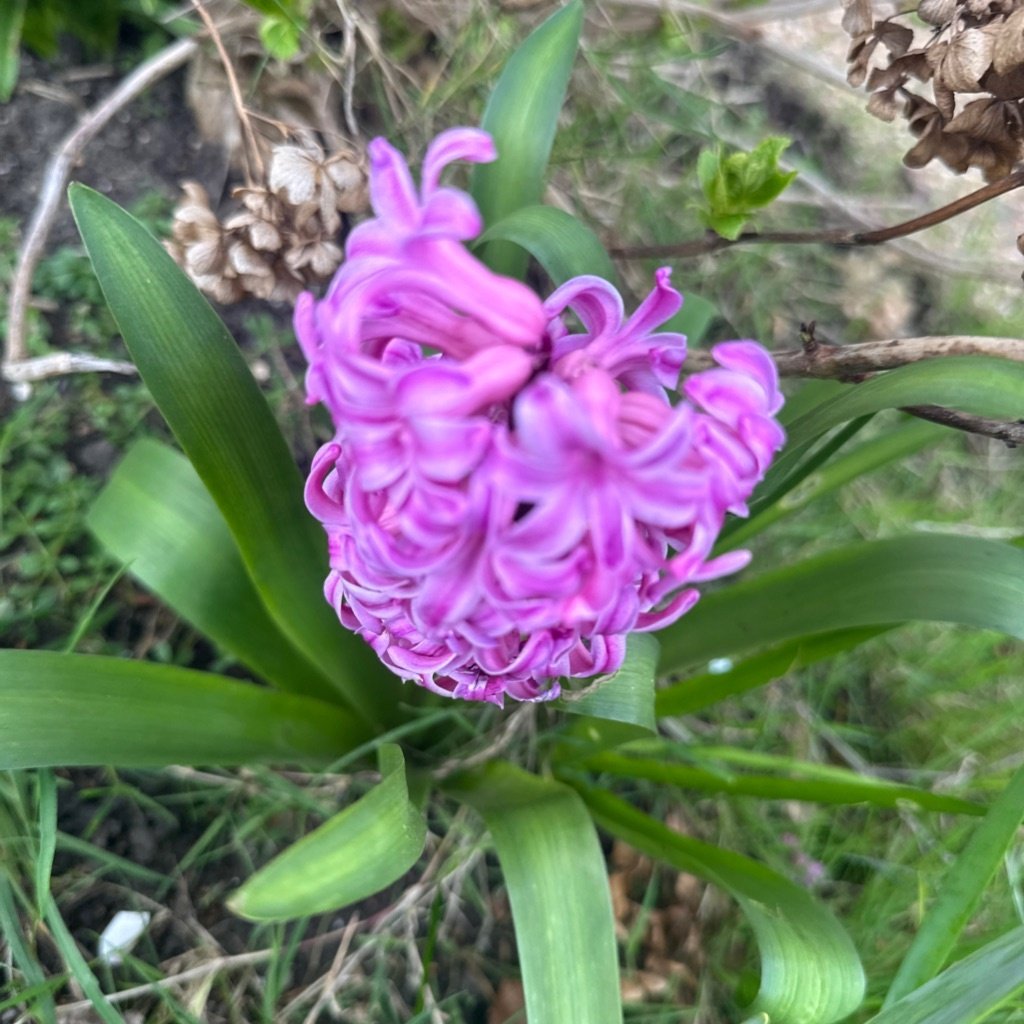
Hyacinth
Hyacinthus orientalis, commonly known as Hyacinth, is a perennial flowering plant native to the eastern Mediterranean, including parts of Turkey and the Middle East. It is renowned for its vibrant, fragrant blooms that appear in early spring. The plant typically grows from a bulb, reaching about 6-12 inches in height. The star-shaped flowers cluster along dense, upright spikes and are available in a variety of colors including pink, purple, red, white, and yellow. Hyacinth’s scent is highly aromatic, making them a popular choice for gardens and floral displays, both outdoors and indoors.
-
Tutsan
Hypericum androsaemum, commonly called tutsan, is a small, bushy, semi-evergreen shrub in the St. John’s wort family. Reaching about 0.6–1.2 m tall and wide, it bears oval, aromatic, opposite leaves and clusters of starry yellow flowers in early to mid-summer. After flowering, showy berries develop, changing from pale green to bright red and finally glossy black, making the plant highly ornamental and popular in cut-flower work. It thrives in woodland edges and hedgerows where soils remain evenly moist but well drained. Tutsan is hardy in temperate climates and tolerates a range of soils from light to moderately heavy. Birds often eat the ripe berries, aiding seed dispersal. While associated with St. John’s wort, it’s less aggressive than some congeners, though it can naturalize and is invasive in parts of New Zealand and locally elsewhere. Historically used in folk remedies, all parts—especially berries—are considered mildly toxic if ingested.
-
Brazilian joyweed
Alternanthera brasiliana is a fast-growing, tropical subshrub in the amaranth family valued for its richly colored foliage ranging from bronze-green to burgundy and magenta, depending on light and cultivar. Typically 40–100 cm tall, it forms a bushy mound with opposite, oval leaves and produces small, white to pale flowers in axillary clusters that are largely ornamental only. Native to the tropical Americas, it thrives in warmth and humidity and is commonly used as a vibrant groundcover, edging plant, or container filler. In frost-free climates it behaves as a perennial; elsewhere it’s grown as a warm-season annual or overwintered indoors. It responds well to pinching and hard pruning, which stimulate dense, colorful growth. The plant prefers well-drained, moderately fertile soil and consistent moisture, though it tolerates short dry spells once established. Easily propagated from softwood cuttings, it roots quickly in water or a light potting mix. Expect best foliage color in full sun to bright light with brief afternoon shade in very hot regions.
-
English daisy
Bellis perennis, commonly called the English or lawn daisy, is a compact, cool-season perennial in the aster family, native to Europe and widely naturalized in temperate regions. It forms low rosettes of spoon-shaped leaves and sends up short, leafless scapes topped with button-like composite flowers. Wild forms are typically white with a golden-yellow disk, often blushing pink at the tips; cultivated strains include doubles and shades of pink, red, and white. Bloom is strongest in cool weather of spring and fall, continuing in mild winters and easing during summer heat. Plants spread modestly by short stolons and self-seed, making them well suited to cottage gardens, meadows, and informal lawns. In landscape use, English daisies serve as edging, bedding, container accents, and rock garden plants. Though perennial, they are often treated as biennials in warm climates to maintain peak vigor and flower quality. Leaves and flowers are edible with a mild, slightly astringent flavor and have a history of use in folk remedies and salads.
-
Mexican fleabane
Erigeron karvinskianus is a charming, mat-forming perennial in the daisy family prized for its profuse, long-season bloom and ability to cascade over walls, steps, and containers. Fine, wiry stems carry narrow green leaves and hundreds of small composite flowers that open white and age through blush pink to rosy tones, creating a multicolored effect on the same plant from spring well into autumn. Naturally at home in cracks, rubble, and rocky slopes, it thrives in sharply drained, moderately fertile soils and is notably drought tolerant once established. It’s an ideal choice for dry gardens, coastal sites, rock gardens, and urban crevices, where it will self-seed lightly to fill gaps without demanding care. In mild climates it can be semi-evergreen and flower nearly year-round; in colder regions it may die back and resprout. Shearing after flushes of bloom encourages fresh foliage and more flowers. Tough yet airy, it softens hard edges and pairs well with Mediterranean perennials and grasses.