

Cannabis sativa is a herbaceous species native to Eastern Asia but now cultivated worldwide for both medicinal and recreational purposes due to its psychoactive and therapeutic effects. Characterized by its slender leaves spread across jagged branches, the plant can distinctly grow to towering heights under optimal conditions, even exceeding 5 meters. Hemp refers to the non-psychoactive varieties cultivated mainly for the fibers, seeds, and oils, which are used in manufacturing, food industries, and beauty products, whereas ‘marijuana’ refers to varieties harvested for the psychoactive properties of THC.
Archives: Plants
-
Common chicory
Cichorium intybus, commonly called chicory, is a hardy perennial (often grown as a biennial) in the daisy family. It forms a basal rosette of toothed, dandelion-like leaves and sends up stiff, branching stems 30–120 cm tall bearing striking sky-blue, occasionally white or pink, ray flowers that open in the morning and close by afternoon throughout summer. A deep, fleshy taproot anchors the plant and confers notable drought tolerance. Native to Europe, Western Asia, and North Africa, it thrives on poor, well-drained, often calcareous soils and readily colonizes disturbed ground. Chicory has long culinary and agricultural value: young leaves are eaten as salad greens, certain cultivated forms are blanched to make Belgian endive, and roots are roasted as a coffee substitute or source of inulin, a prebiotic fiber. It is also an excellent nectar source for pollinators. In gardens it is undemanding, but can self-seed if not deadheaded. Handle the milky sap with care, as it may irritate sensitive skin.
-
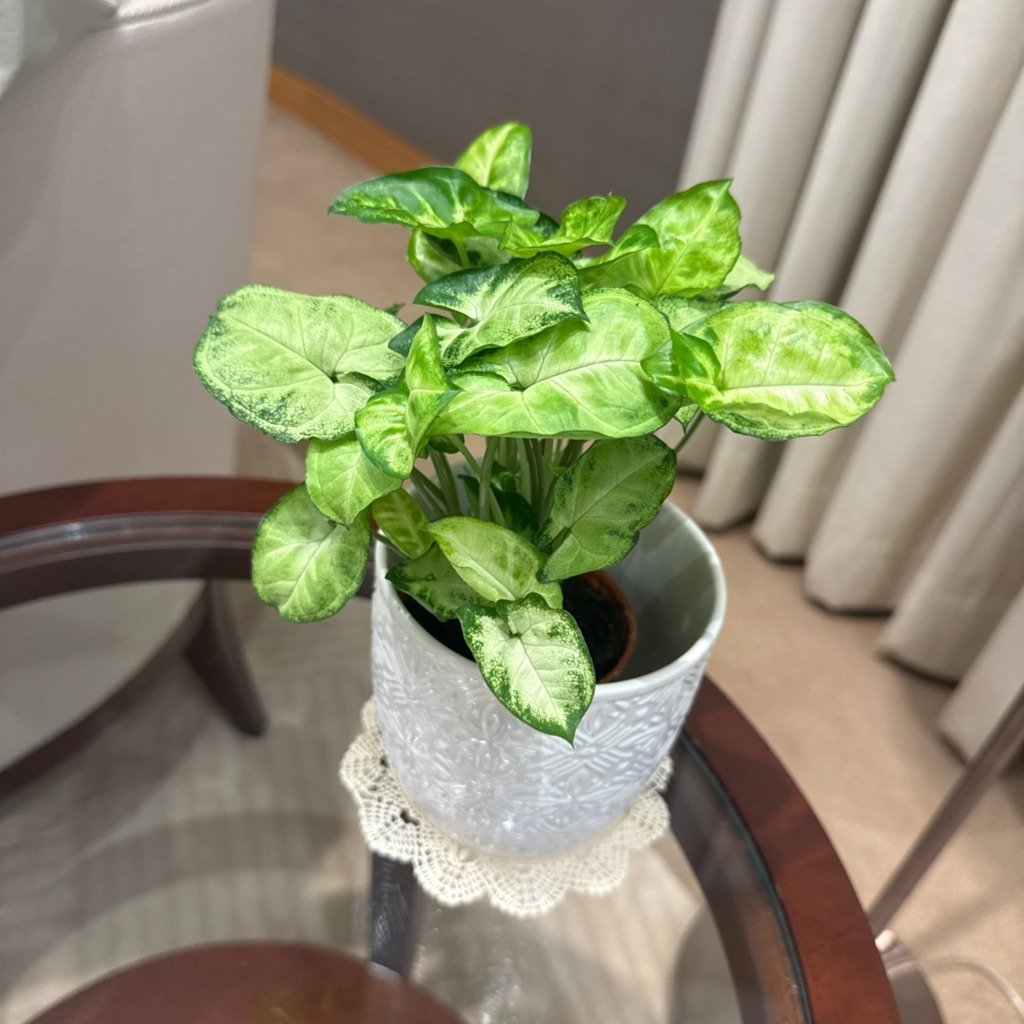
Arrowhead Plant
Syngonium podophyllum, commonly known as the Arrowhead Plant, is a versatile houseplant with arrow-shaped leaves that vary in color from green to pink, depending on the cultivar. It is a fast-growing climbing vine that often needs regular pruning to keep its growth in check. Native to tropical rain forests in Central and South America, Syngonium podophyllum thrives in warm, humid conditions and can adapt to lower light. This plant typically grows on tree trunks in its natural habitat, utilizing the tree’s structure to reach light. In homes, it can be trained on a moss stick or allowed to trail over a pot. Its adaptive nature makes it suitable for a variety of indoor environments, where it is appreciated for its decorative leaves and easy care.
-
Shield Aralia
Polyscias scutellaria, commonly called Shield Aralia, is an evergreen shrub or small tree in the Araliaceae, prized indoors for its bold, round to shield-shaped leaves that create a dense, architectural silhouette. In the tropics it forms upright, woody stems and can reach several meters outdoors, but typically stays 1–2 m in containers. Leaves are glossy, leathery, and often shallowly scalloped; cultivars may show creamy variegation. It is slower-growing and appreciates stable, warm conditions with consistent moisture and humidity. Frequently used as a hedge or specimen in tropical landscapes, it also adapts well to large indoor planters and even bonsai. Shield Aralia is sometimes confused with Polyscias balfouriana (Balfour Aralia); P. scutellaria generally bears broader, more uniformly round, “dinner-plate” leaves. Sensitive to drafts, low humidity, and overwatering, it will shed leaves if conditions swing abruptly. Given bright, filtered light, a well-aerated mix, and gentle feeding, it rewards with lush, layered foliage and a stately, upright habit.
-
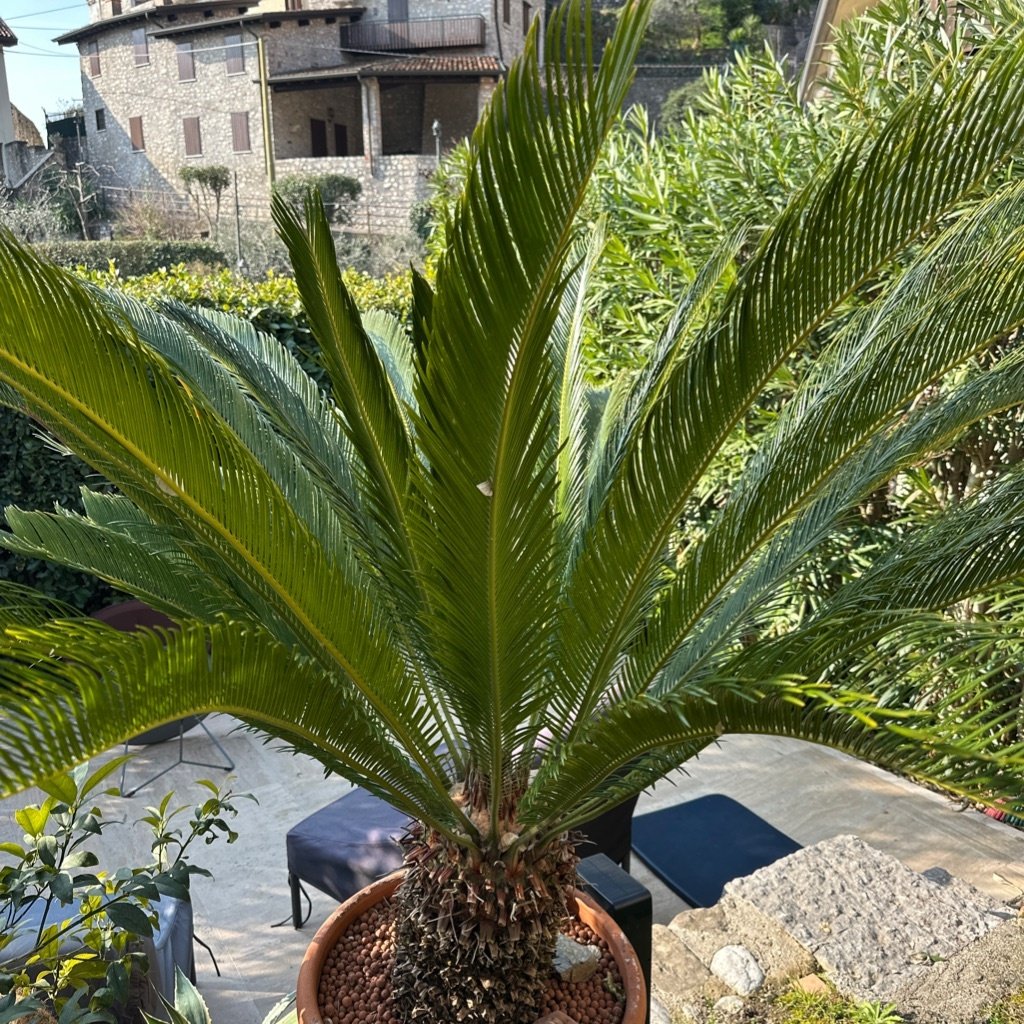
Sago Palm
Cycas revoluta, commonly known as the Sago Palm, is not a true palm but a species of gymnosperm in the Cycadaceae family, which dates back millions of years. This slow-growing plant features a rugged trunk topped with stiff, feathery leaves that are dark green in color. It is a popular ornamental plant due to its exotic and tropical appearance. Despite its name, it is native to the southern parts of Japan, especially the Ryukyu Islands. It is quite hardy once established and can survive for centuries in the right conditions. However, all parts of the plant are highly toxic if ingested.
-
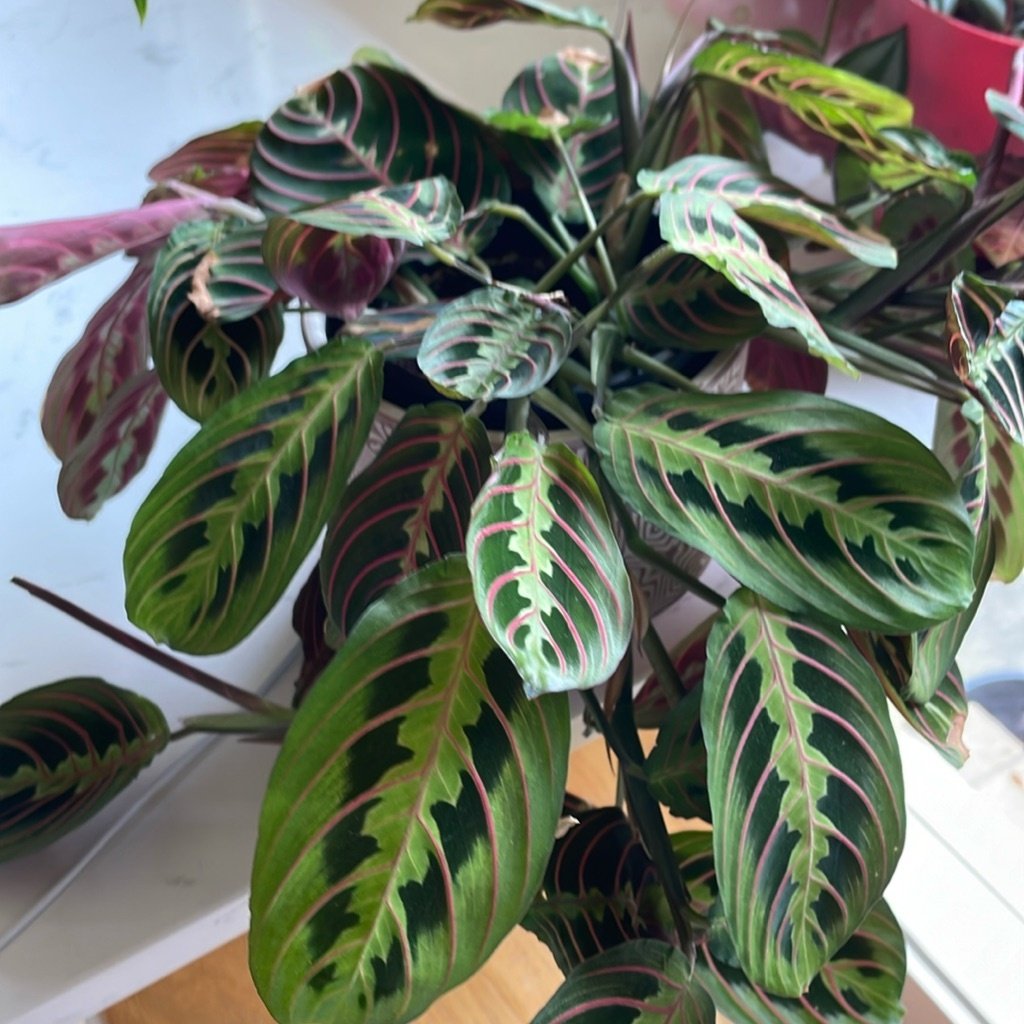
Prayer Plant
Maranta leuconeura, commonly known as the Prayer Plant, gets its name from the movement of its leaves which lie flat during the day and fold upwards resembling hands in prayer at night. Originating from the tropical forests of Brazil, this plant is well-known for its decorative leaves which display unique variegation and vibrant colors. The foliage often features a herringbone pattern and can vary in color from deep green and red to even light pink and white, depending on the variety. This functionality is an adaptation to the low-light forests where they grow, allowing them to absorb maximum light during the day.
-
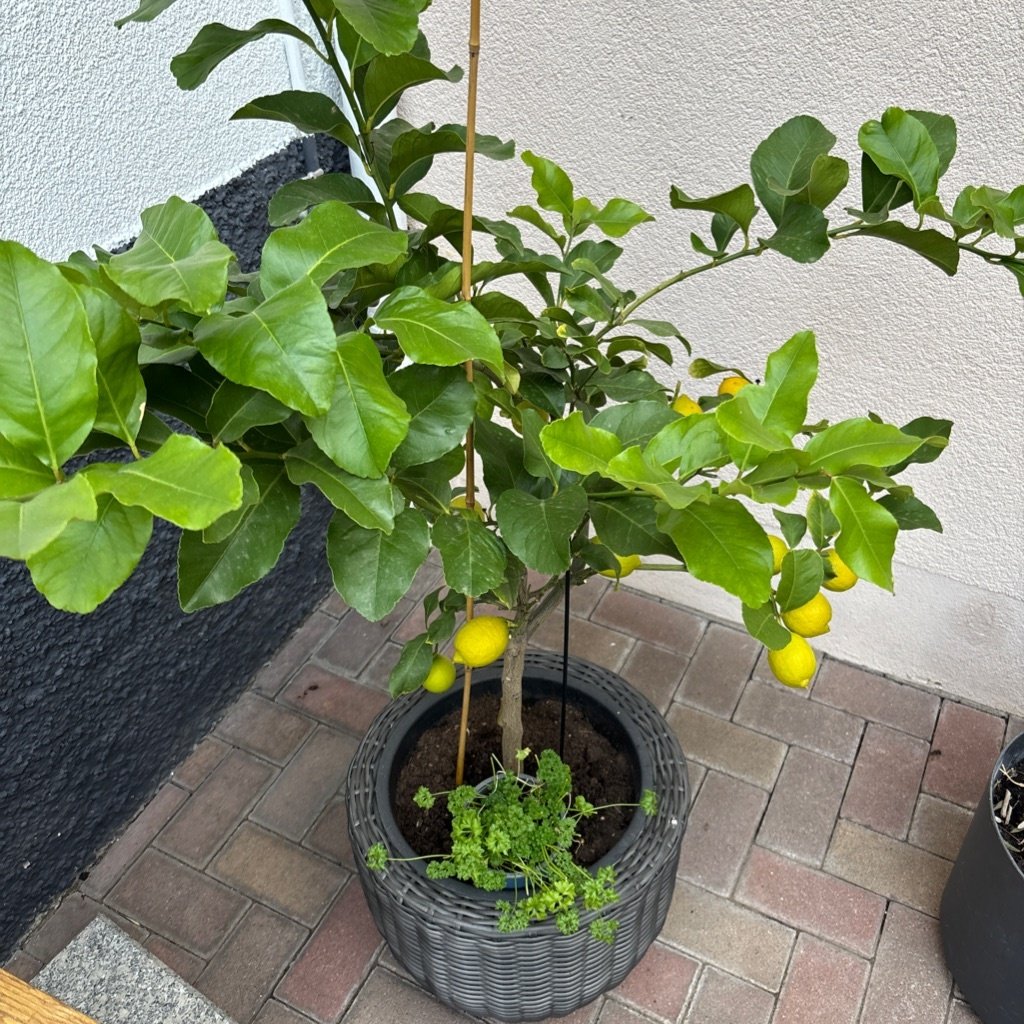
Lemon
Citrus × limon, more commonly known as the lemon, is a species of small evergreen tree in the flowering plant family Rutaceae, native to South Asia, primarily Northeast India. The lemon tree possesses a spreading, open canopy with green, glossy, elliptical leaves. Its fragrant flowers are white with a purple base and are followed by the iconic yellow fruit. The fruit is used for culinary and non-culinary purposes throughout the world, primarily for its juice, which has both culinary and cleaning uses. The pulp and peel are also used in cooking and baking. Lemons contain considerable acid, offering a distinctive sour taste.
-
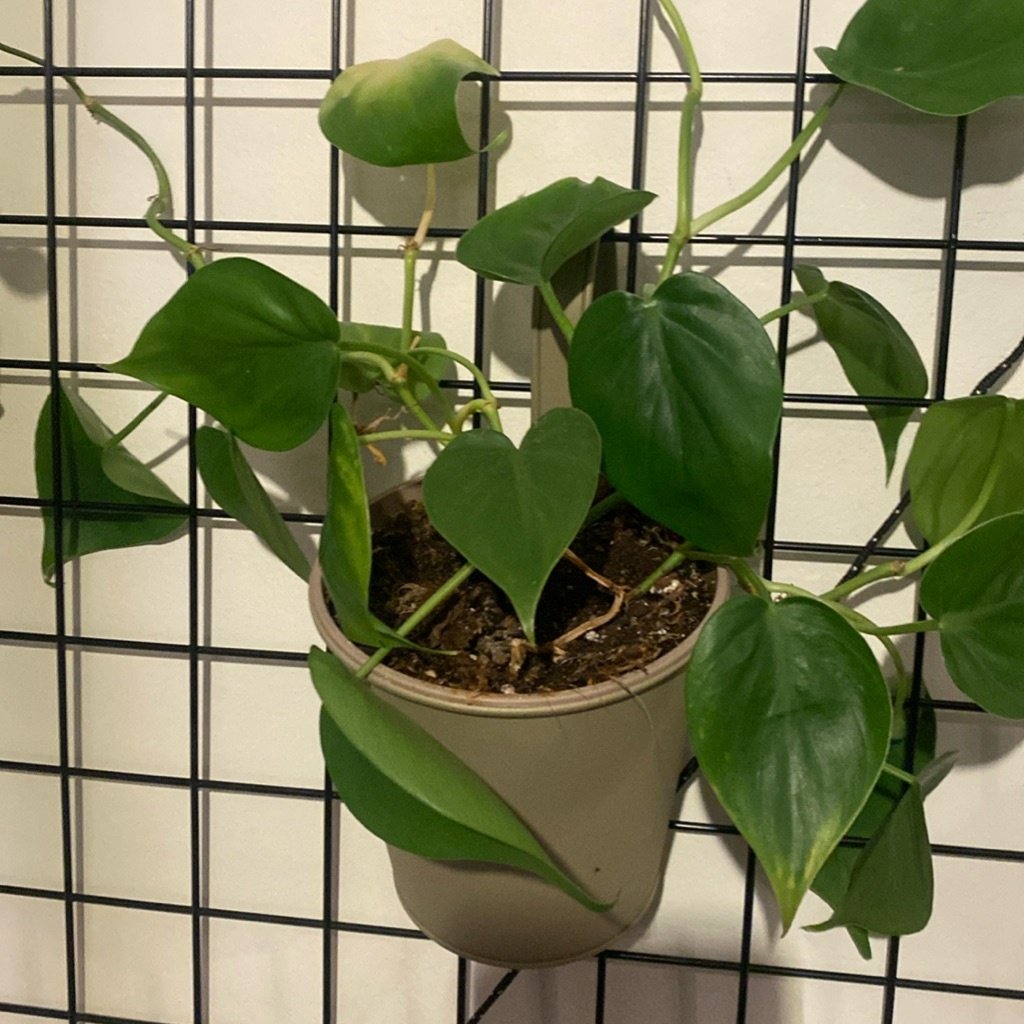
Heartleaf Philodendron
Philodendron hederaceum, commonly known as the Heartleaf Philodendron, is a popular houseplant favored for its attractive, glossy, heart-shaped leaves. It’s a trailing or climbing type of philodendron, making it an excellent choice for hanging baskets or as a climbing plant with some support. Originating from the tropical forests of Central America and the Caribbean, this plant is extremely adaptable and thrives in a variety of indoor environments. It can grow quite long, with vines reaching several feet in length, providing a lush, green aesthetic to any indoor space.
-
European privet
Ligustrum vulgare, commonly called European privet, is a hardy, fast-growing, semi-evergreen to deciduous shrub typically reaching 2–5 m tall. It bears small, opposite, elliptic leaves and produces abundant clusters of creamy-white, sweetly scented flowers in late spring to early summer that attract bees and other pollinators. Glossy black berries follow, often persisting into winter and providing food for birds (note: the fruits are toxic to humans and pets). Highly tolerant of pruning, urban pollution, and a range of soils, it has long been used for hedging and topiary. It responds well to frequent clipping, forming dense screens. While adaptable and low-maintenance, European privet can self-seed and spread; in some regions outside its native range it is considered invasive. Best performance occurs in full sun to partial shade with well-drained soil. Regular formative pruning after flowering helps maintain shape and encourages thick foliage. When grown in containers, it benefits from consistent watering and periodic feeding.
-
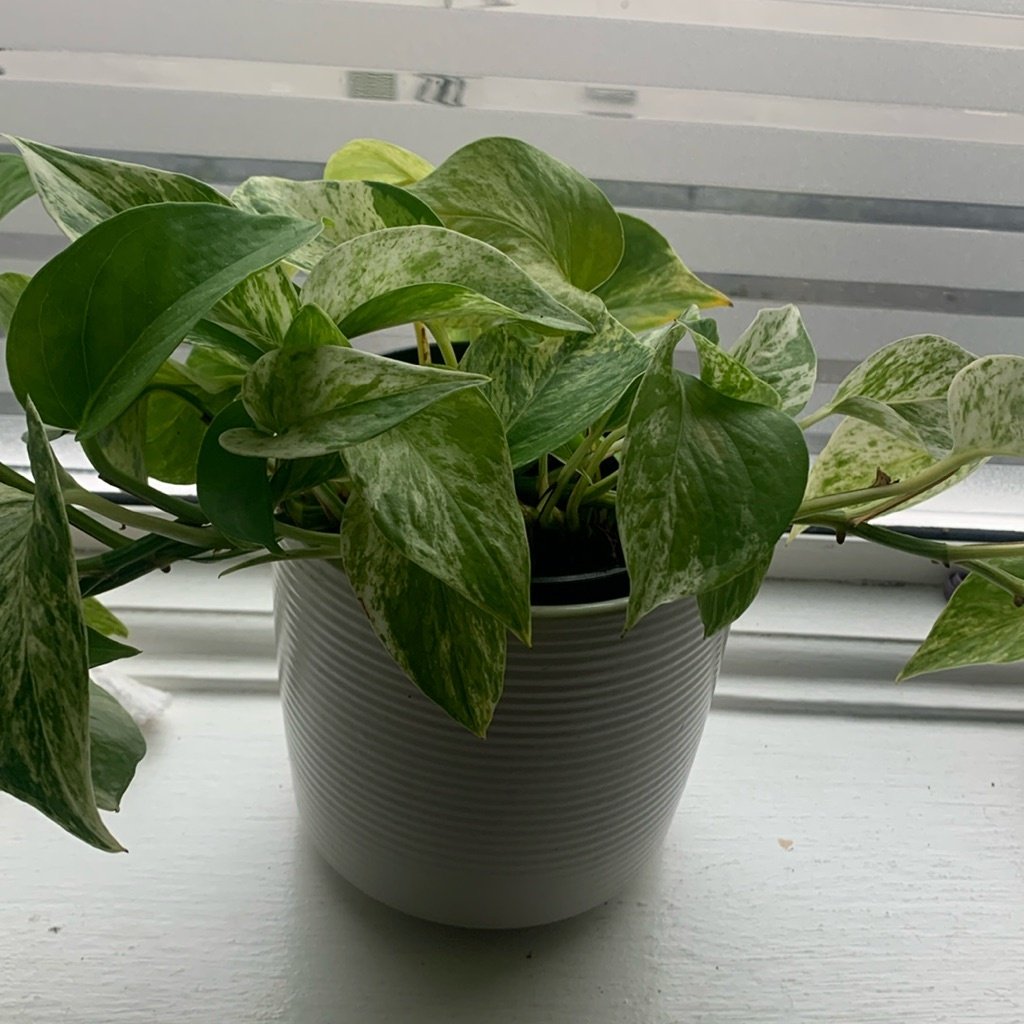
Golden Pothos
Epipremnum aureum, commonly known as Golden Pothos or Devil’s Ivy, is a highly adaptable and popular houseplant known for its heart-shaped green leaves with variegated golden-yellow patterns. It is a fast-growing vine that can thrive in a range of environments, often used in hanging baskets or as a climbing plant with support. Native to the forests of Southeast Asia, it has the ability to adapt to and purify indoor environments by removing common household toxins from the air, making it not only decorative but also functional as an air purifier.
