
Mesembryanthemum cordifolium (widely known in horticulture as Aptenia cordifolia) is a fast-growing, mat-forming succulent in the Aizoaceae. It carries glossy, heart-shaped, fleshy leaves on succulent stems that readily root at the nodes, creating a dense, weed-suppressing groundcover or a cascading houseplant in hanging baskets. In bright sun, it produces a profusion of small, starry, magenta-pink, daisy-like blooms that open in midday warmth and attract pollinators. Typically 10–20 cm tall, it can spread 60–120 cm or more under favorable conditions. Native to coastal and riverine habitats of southeastern Africa, it thrives in sandy or rocky, sharply draining soils and exhibits notable drought tolerance once established. Its low, binding growth and tolerance of wind and salt spray make it useful for erosion control near coasts. Indoors, it appreciates a bright, sunny window and lean, gritty potting mixes. Regular, light pruning maintains a tidy form and encourages branching. Protect from prolonged frost and persistent wetness, which promote root rot.
Archives: Plants
-
Cape gooseberry
Physalis peruviana, known as Cape gooseberry or goldenberry, is a bushy, fast-growing nightshade native to the Andean region of South America. Typically 0.6–1.5 m tall, it bears softly pubescent, branching stems and heart-shaped leaves. Its pale yellow, bell-shaped flowers give way to orange, marble-sized berries encased in a distinctive papery husk (calyx) that protects fruit from pests and extends shelf life. The ripe berries are aromatic with a sweet-tart, tropical flavor used fresh, dried, or in jams, desserts, and sauces. Plants are self-fertile but benefit from insect pollination for heavier set. In frost-free climates it can be a short-lived perennial; elsewhere it’s grown as a warm-season annual, fruiting 70–100 days after transplanting. It prefers well-drained, moderately fertile soil and consistent moisture, and it responds well to staking or caging. While ripe berries are edible, the leaves, husks, and unripe fruits contain glycoalkaloids and should not be consumed. With sun, warmth, and moderate feeding, Cape gooseberry is a rewarding container or garden crop.
-
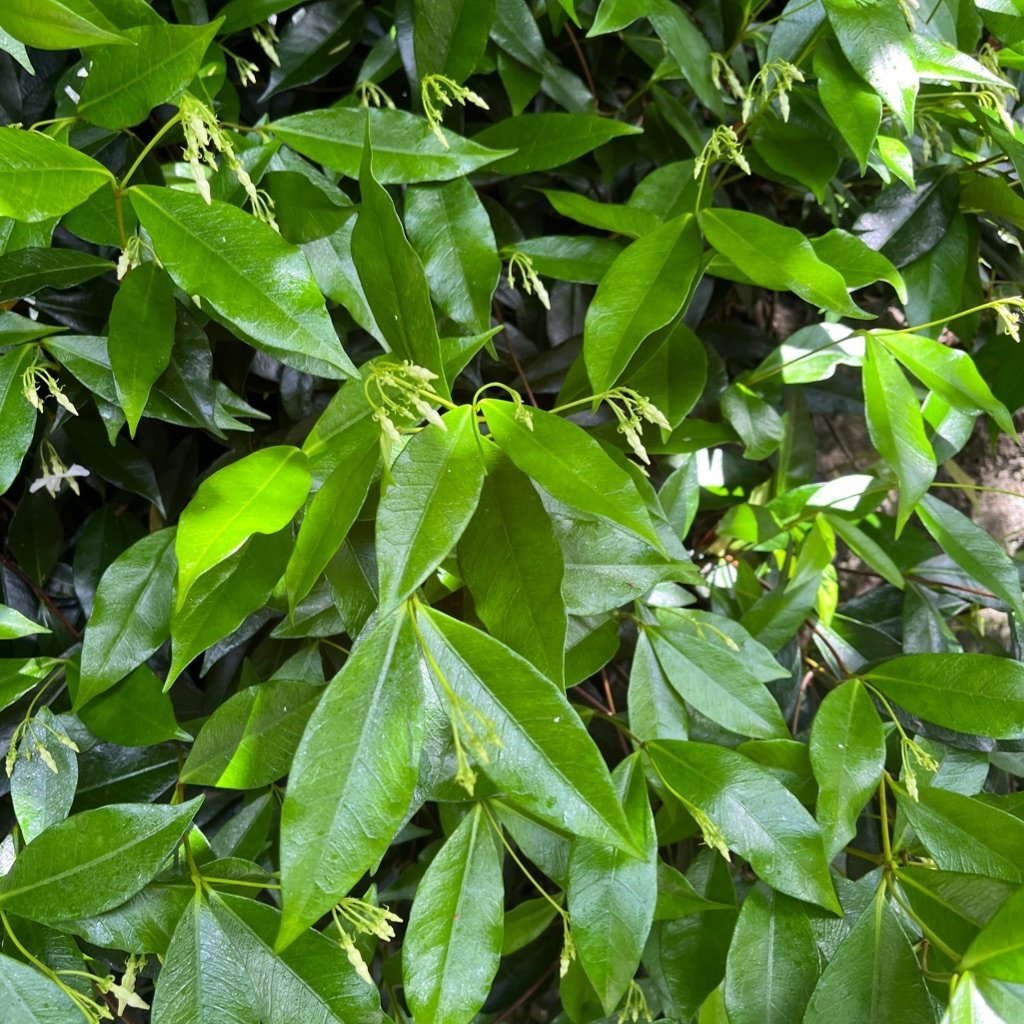
Star Jasmine
Trachelospermum jasminoides, commonly known as Star Jasmine or Confederate Jasmine, is an evergreen woody vine that originates from eastern Asia. This plant is well-loved for its ability to cover walls and fences, forming a dense mat of oval, dark green leaves. During late spring to early summer, it produces highly fragrant, star-shaped white flowers that attract bees, butterflies, and other pollinators. It is a versatile climber, often used in landscapes for ground cover, trellises, or as a fragrant, flowering component in container gardens. Despite its common name, it is not a true jasmine and belongs to the Apocynaceae family.
-
Gardenia
Gardenia jasminoides, commonly known as Gardenia, is a flowering plant in the coffee family, Rubiaceae. Native to the tropical and subtropical regions of Africa, southern Asia, Australasia, and Oceania, Gardenias are well-loved for their shiny, dark green leaves and highly fragrant, white or pale yellow flowers. They typically bloom in late spring and early summer. The plant’s ability to thrive in well-drained, humid conditions, alongside its captivating fragrance, makes it a popular choice for gardens and as a houseplant. However, it requires specific care to maintain its beauty and health, including protection from pests and diseases.
-
Heavenly bamboo
Nandina domestica, commonly called heavenly bamboo, is an evergreen to semi-evergreen shrub prized for its fine, bamboo-like canes and lacy, bipinnate foliage. Though unrelated to true bamboos, its upright clumping habit and multi-stemmed growth give a similar architectural effect. New leaves emerge coppery to pink, mature to glossy green, and often turn burgundy to scarlet in cool weather, providing four-season interest. In late spring to early summer, airy panicles of small, starry white flowers attract pollinators, followed by showy clusters of red berries that can persist through winter in fruiting cultivars. Plants typically reach 4–8 ft tall, with many dwarf selections available for containers or low hedges. Nandina tolerates a range of soils if drainage is good, and is notably drought-tolerant once established. It thrives in full sun to partial shade, coloring best with more light. In parts of the southeastern United States it can seed about and is considered invasive; choose non-fruiting or sterile cultivars where regulated, and avoid planting near natural areas.
-
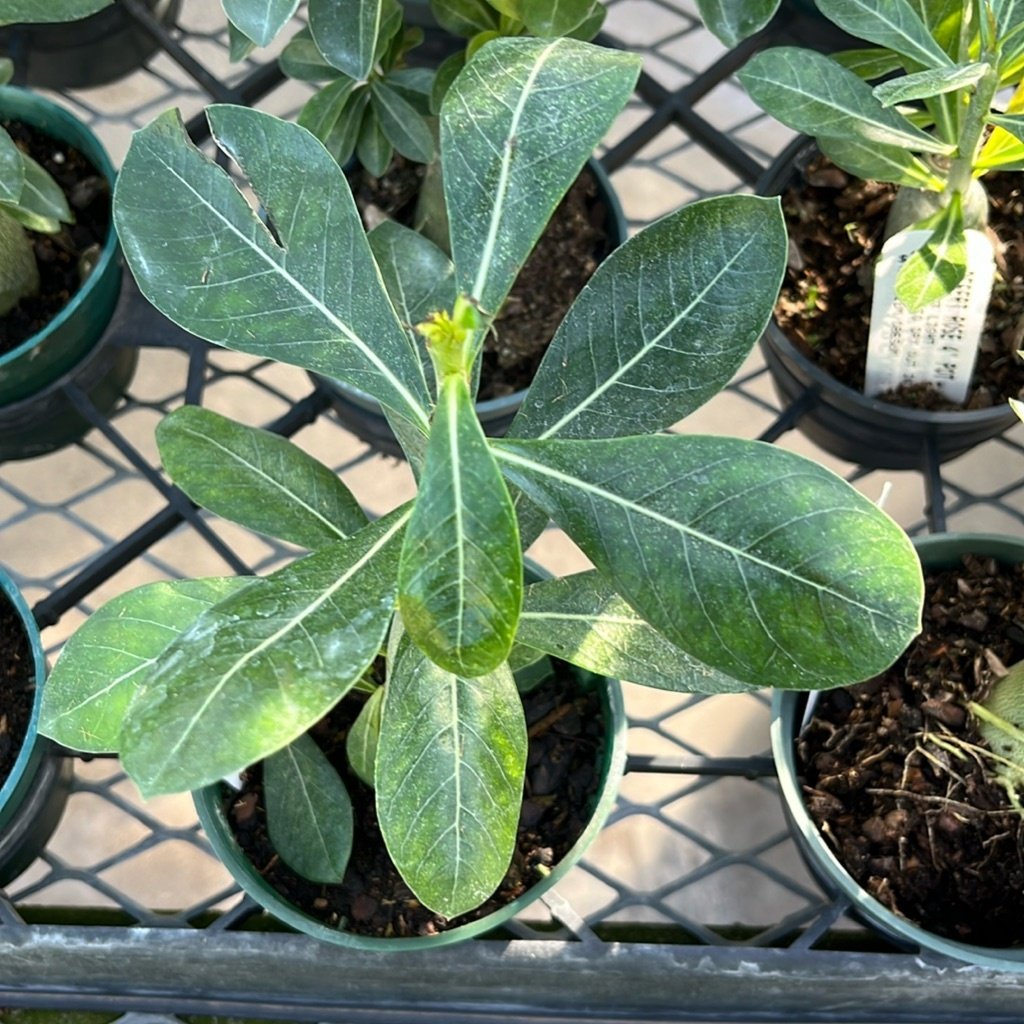
Desert Rose
Adenium obesum, commonly called Desert Rose, is a caudiciform succulent shrub prized for its sculptural, swollen trunk (caudex) and showy, funnel-shaped flowers. Native to arid regions of East Africa and the Arabian Peninsula, it evolved to store water in its bulbous base and smooth, succulent stems, allowing survival through long dry seasons. Leaves are glossy, obovate to spatulate and emerge in flushes; the plant may shed them during drought or cool weather. Blossoms appear in warm months, ranging from white to deep crimson with bicolors and picotee edges, borne at stem tips in clusters. In cultivation, it is often trained as a bonsai, exposing and shaping the caudex above the soil. Its latex sap is toxic, containing cardiac glycosides; handle with care and keep away from children and pets. Adenium demands warmth, abundant light, and a fast-draining, mineral-rich substrate to avoid root rot. With thoughtful watering and seasonal rest in winter, it rewards growers with long-lasting blooms and distinctive architecture.
-
Peruvian lily
Alstroemeria aurea, commonly called Peruvian lily or golden alstroemeria, is a hardy, clump-forming perennial native to the temperate Andes of Chile and Argentina. It grows from fleshy rhizomes that send up upright, leafy stems 60–120 cm tall. Leaves are lanceolate and characteristically resupinate, twisting so the undersides face upward. In late spring to summer, branched umbels carry multiple funnel-shaped flowers in warm shades of golden yellow to orange, often with brown or red speckling on the inner tepals. Blooms are long-lasting both in the garden and as cut flowers, attracting pollinators. The plant spreads by rhizomes to form robust clumps in well-drained, fertile soils and prefers cool root conditions with mild to moderate summer heat. In favorable climates it may self-seed and lightly naturalize, so site thoughtfully and manage spread where necessary. With suitable siting and routine maintenance, Alstroemeria aurea delivers months of color, returns reliably year after year, and provides excellent stems for arrangements.
-
Japanese skimmia
Skimmia japonica is a compact, shade-loving, evergreen shrub valued for glossy, aromatic leaves, fragrant spring blossom, and bright winter berries. Typically 0.8–1.5 m tall and wide, it bears dense clusters of creamy-white to pink-tinged buds that open in spring, attracting pollinators. Plants are usually dioecious: female cultivars produce showy red berries through winter when a compatible male is nearby; some selections are self-fertile but berry more heavily with a pollinator. Skimmia thrives in humus-rich, acidic, well-drained soil and dislikes lime; foliage often yellows (chlorosis) in alkaline conditions. It performs best in partial to full shade, protected from harsh wind and hot afternoon sun, making it an excellent choice for woodland borders, shaded foundations, and containers with ericaceous compost. Slow-growing and low-maintenance once established, it appreciates consistent moisture without waterlogging and annual mulching to conserve moisture and maintain soil acidity. Its year-round structure and winter interest make it a staple in temperate gardens.
-
Big sheath mushroom
Volvopluteus gloiocephalus (formerly Volvariella gloiocephala) is a large, saprotrophic mushroom recognized by its sac-like volva at the base of the stem and salmon-pink spore print. The cap is typically 5–15 cm across, whitish to grey-brown with a darker center, and often viscid (slimy) when moist; margins may become slightly striate with age. Gills are free from the stem, starting white and turning pink as spores mature. The slender, white stipe lacks a ring and arises from a prominent, membranous sheath (volva) in the soil. It favors nutrient-rich, disturbed sites such as compost heaps, straw or stubble fields, manure-enriched lawns, and woodchip beds, fruiting from late spring through autumn in temperate regions. Although regarded as edible in some sources, it is easily confused at the button stage with deadly white Amanita species; identification should be made only when gills have pinked and traits are clear. In cultivation, it thrives on well-pasteurized, nitrogen-complemented straw or compost with high humidity and good fresh-air exchange.
-
Bilberry
Vaccinium myrtillus, commonly called bilberry, is a low-growing deciduous shrub in the heath family (Ericaceae), native to cool, acidic soils across northern and montane Europe and parts of Asia. It forms clonal colonies of wiry stems 10–40 cm tall with small, bright-green, serrulate leaves that turn crimson in autumn. In late spring, urn-shaped pale pink to greenish flowers appear in leaf axils, followed by solitary deep blue-black berries with intensely colored crimson-purple flesh. Unlike highbush blueberries, bilberries typically fruit on one-year-old wood and bear individually rather than in clusters. The species is adapted to dappled forest light and nutrient-poor, humus-rich substrates where it relies on ericoid mycorrhizae for nutrient uptake. Fruits are prized for fresh eating, preserves, and traditional herbal uses due to high anthocyanins. In cultivation, success hinges on maintaining very acidic, well-drained yet consistently moist soil, avoiding lime or hard, alkaline water, and protecting ripening fruit from birds. It is cold-hardy, prefers cool summers, and benefits from periodic renewal pruning to sustain productive young shoots.