
Stephanotis floribunda is an evergreen, woody climber native to Madagascar, prized for its intensely fragrant, waxy white tubular flowers borne in clusters from spring to late summer. Glossy, leathery, opposite leaves clothe long twining stems that readily climb trellises, hoops, or supports, making it ideal for conservatories and bright indoor spaces. The flowers, often used in bridal bouquets and leis, open pure white and slowly cream with age, releasing a rich, jasmine-like perfume most noticeable in the evening. Plants prefer evenly warm conditions, high but gentle light, and steady humidity; they are sensitive to abrupt environmental changes and dislike cold, waterlogged soils, or being moved while in bud. Given a porous, slightly acidic mix, regular feeding, and careful watering, established vines can bloom annually. The plant exudes a milky latex sap typical of Apocynaceae; handle gently when pruning and provide a firm support for training. Indoors, it is considered a moderately demanding but rewarding flowering vine when its light, temperature, and humidity needs are met.
Archives: Plants
-
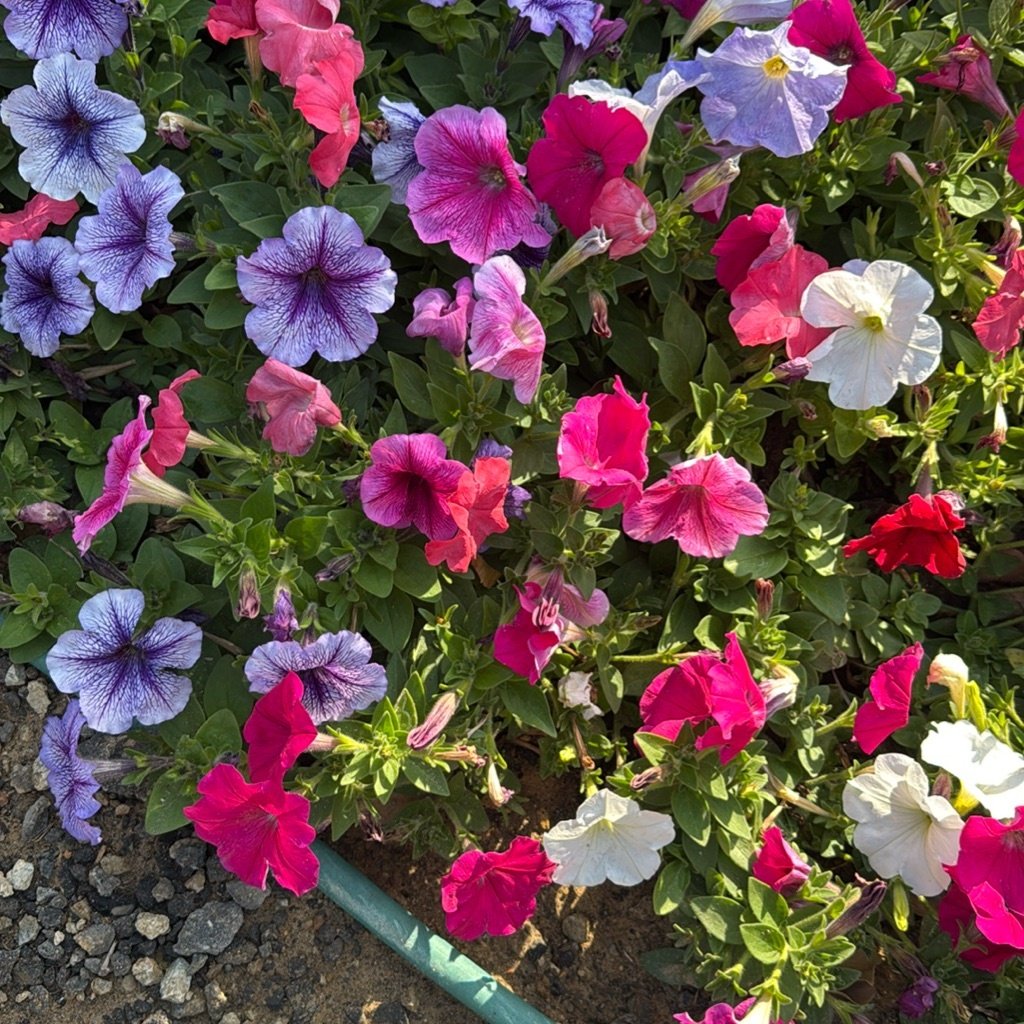
Garden Petunia
Petunia × atkinsiana, commonly known as the Garden Petunia, is a widely popular garden plant belonging to the nightshade family, Solanaceae. This hybrid species is renowned for its vividly colored flowers, which may include shades of pink, red, blue, purple, and white. It’s a showy plant that typically features a profuse bloom from spring until fall, making it a favorite for flower beds, containers, and as border plants. The flowers can be single or double, with a trumpet-like structure that attracts pollinators such as bees and hummingbirds. Petunias are relatively low-maintenance but offer high decorative value, truly enlivening any garden space where they thrive.
-
Chinese elm
Ulmus parvifolia, commonly called Chinese elm or lacebark elm, is a small to medium tree admired for its distinctive, mottled bark that exfoliates in patches of gray, orange, and brown. Native to East Asia, it bears small, glossy, serrated leaves and forms a graceful, vase-shaped canopy. In warm climates it can be semi-evergreen; in colder regions it is fully deciduous. Inconspicuous late-summer flowers are followed by papery samaras in autumn, with occasional additional seeding in mild areas. Highly adaptable, it tolerates urban pollution, wind, pruning, heat, and drought once established, and it accepts a wide range of soils provided drainage is adequate. The species shows strong resistance—though not complete immunity—to Dutch elm disease and elm leaf beetle, contributing to its popularity as a street tree and as a classic bonsai subject. Mature trees typically reach 9–18 m (30–60 ft) with arching branches and fine twigging that provide winter interest. Best performance occurs in full sun with moderate moisture and a mulch to keep roots cool.
-
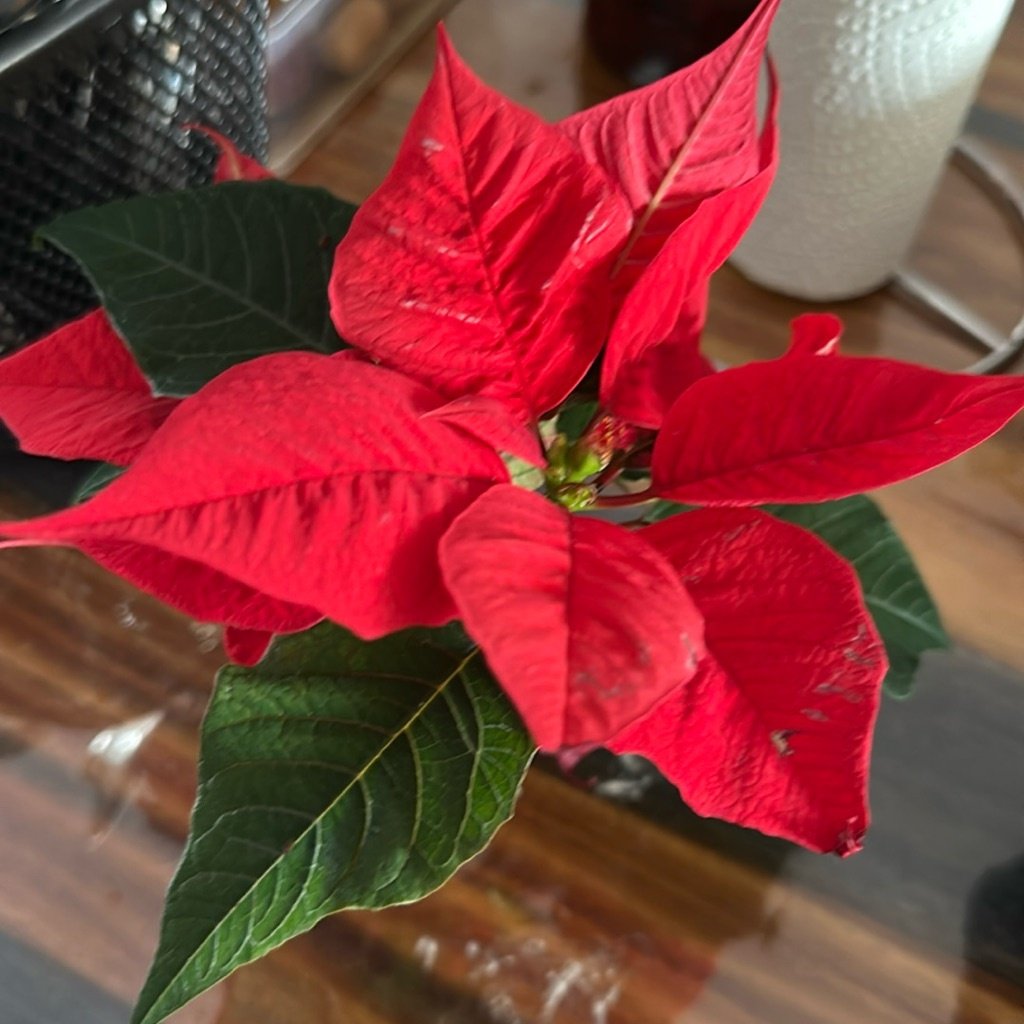
Poinsettia
Euphorbia pulcherrima, commonly known as Poinsettia, is a culturally and commercially important plant species familiar for its red and green foliage and is widely used in Christmas floral displays. It originates from Mexico and Central America where it was used by the Aztecs for decorative and medicinal purposes. Poinsettias are part of the Euphorbiaceae family and feature large, showy bracts, which are often mistaken for flower petals but actually serve to attract insects to the tiny yellow flowers at their center.
-
Sunflower
Helianthus annuus, commonly known as the Sunflower, is distinguished by its large, bright yellow flowers and towering heights, which can reach up to 3 meters. Each flower is actually a composite of numerous small flowers or florets, which are centrally clustered and surrounded by large, petal-like rays. Sunflowers are renowned for their heliotropism; young flowers track the sun from east to west, which maximizes their energy absorption. Originally native to North America, sunflowers are now cultivated globally, primarily for their seeds, which are a source of oil and snack food. Beyond their agricultural value, sunflowers are also popular in gardens and as cut flowers due to their vibrant appearance and large size.
-
California poppy
Eschscholzia californica, the California poppy, is a short-lived perennial often grown as an annual, prized for its satiny, four-petaled blooms in shades of orange, yellow, cream, and occasionally red. Finely divided, blue-green, glaucous foliage forms a low rosette from which wiry stems carry cuplike flowers that open in sun and close at night or in cool, cloudy weather. Native to the western United States and Baja California, it thrives in lean, well-drained soils and is exceptionally drought tolerant once established. A long taproot helps it access deep moisture, but also makes it resent disturbance and transplanting. Flowers attract bees and other pollinators, and plants readily self-seed to naturalize in suitable sites, creating seasonal carpets of color from spring into early summer, with possible rebloom in fall where summers are not excessively hot. It is a signature species of water-wise meadows, roadside restorations, and coastal gardens.
-
Horse chestnut
Aesculus hippocastanum, commonly called horse chestnut, is a large deciduous tree native to the Balkan Peninsula. It typically reaches 20–30 m tall with a broad, domed crown and stout, gray-brown bark that becomes scaly with age. Leaves are opposite and palmately compound, usually with 5–7 serrated leaflets that unfold in spring, followed by showy upright panicles (20–30 cm) of white flowers whose yellow markings turn red after pollination. In autumn, spiny green capsules split to reveal one to three glossy brown seeds known as “conkers.” It thrives in deep, fertile, moist but well-drained loams, especially over limestone, and is widely planted across temperate regions for shade and ornament. The species is hardy yet susceptible to Guignardia leaf blotch and Cameraria leaf miner, which cause early browning but seldom kill established trees. All parts contain aesculin/escin and are toxic if ingested raw. Its nectar supports pollinators, and processed seed extracts are used medicinally, though raw plant material is unsafe to consume.
-
Glossy privet
Ligustrum lucidum is an evergreen, fast-growing shrub to small tree native to subtropical China, commonly used as a hedge, screen, or specimen. It typically reaches 6–12 m tall, with opposite, leathery, glossy dark-green leaves 6–15 cm long that provide a dense, year-round canopy. In late spring to summer, it bears large panicles of small, creamy-white, fragrant flowers that attract pollinators, followed by abundant blue-black drupes that persist into winter and are readily dispersed by birds. Bark is gray-brown and smooth, becoming slightly fissured with age. The plant is adaptable to a wide range of soils, tolerating urban pollution, pruning, heat, and periods of drought once established. However, it can be invasive in many warm-temperate regions, forming dense thickets that outcompete native vegetation. All parts—especially the berries—are mildly toxic if ingested. Its vigorous response to clipping makes it suitable for formal hedges and topiary, though regular management is essential to curb unwanted spread and maintain structure.
-
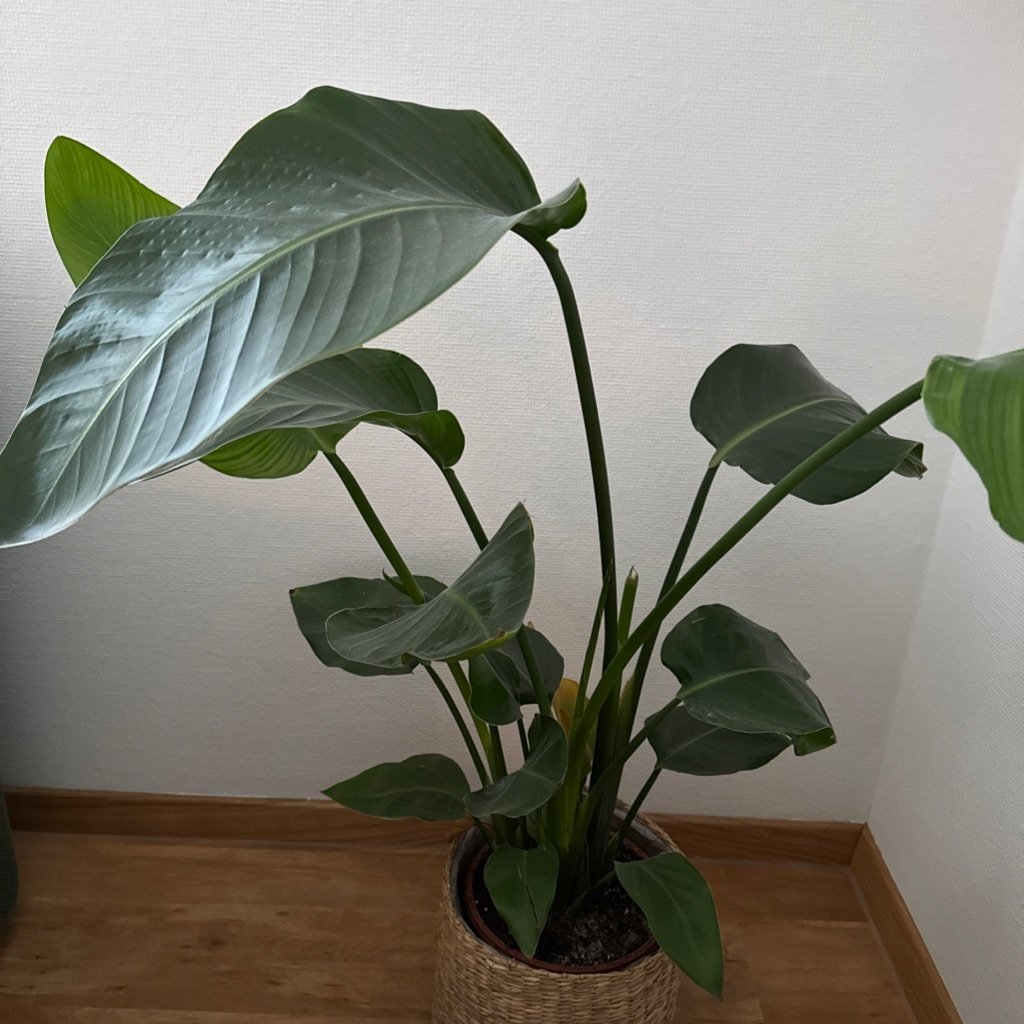
Giant White Bird of Paradise
Strelitzia nicolai is a dramatic, clump-forming perennial from southern Africa prized for its architectural foliage and occasional white-and-indigo, bird-like blooms. Resembling a banana plant, it forms stout trunks of overlapping leaf bases and produces paddle-shaped leaves that can reach over a meter long indoors and much larger outdoors. Mature clumps can exceed 6–10 meters outside in frost-free climates, while indoor specimens typically grow 1.5–3 meters with age. Leaves naturally tear along veins in wind or low humidity—an adaptation rather than a health issue. Flowering indoors is uncommon but possible with abundant light, warmth, and a slightly snug pot. It develops a robust, water-demanding root system that prefers a chunky, well-aerated medium. In homes, it’s a statement plant needing bright light, regular watering during active growth, and periodic feeding. Outdoors, it thrives in coastal, frost-free areas, tolerating salt-laden breezes and bright sun. With proper space, light, and steady care, S. nicolai delivers bold, tropical presence for years.
-
Callery pear
Pyrus calleryana, commonly called Callery pear, is a fast-growing ornamental tree native to China and Vietnam and widely planted for its profuse white spring blossoms and glossy green foliage that turns red to purple in autumn. The flowers, though showy, have a characteristic musky odor and are followed by small, hard, bird-dispersed fruits (pomes). Many cultivated forms, such as ‘Bradford’, develop weak, narrow branch crotches that are prone to storm breakage as trees age. The species tolerates urban conditions, compacted clay, heat, drought (once established), and a broad soil pH range, which explains its popularity and spread. However, it has escaped cultivation in many regions, particularly in the eastern and midwestern United States, where it forms dense, thorny thickets that displace native plants—prompting restrictions in some jurisdictions. While not recommended for new plantings in areas where invasive, existing trees benefit from early structural pruning, proper siting in full sun, and careful establishment watering. Fruits are generally unpalatable to humans but are relished by birds, aiding spread.