
Daucus carota is a biennial member of the carrot family (Apiaceae) known for its delicate, lace-like flower umbels and aromatic foliage. In its first year it forms a low rosette of finely divided, hairy leaves and a taproot—orange and thick in the cultivated subspecies (sativus), slender and whitish in the wild form. In the second year, tall, ridged, bristly stems bear broad, flat clusters of tiny white flowers, often featuring a single dark purple floret at the center. As seeds ripen, the umbel curls inward into a distinctive “bird’s nest.” Native to Europe and western Asia, it thrives in open, well-drained, moderately fertile soils and cool to mild conditions, and has naturalized across temperate regions worldwide. Beyond its value as a vegetable in cultivation, it provides nectar and habitat for pollinators and beneficial insects. Note: the plant can be confused with toxic look-alikes such as poison hemlock (Conium maculatum) and water hemlock (Cicuta spp.); confirm identification before foraging or handling.
Archives: Plants
-
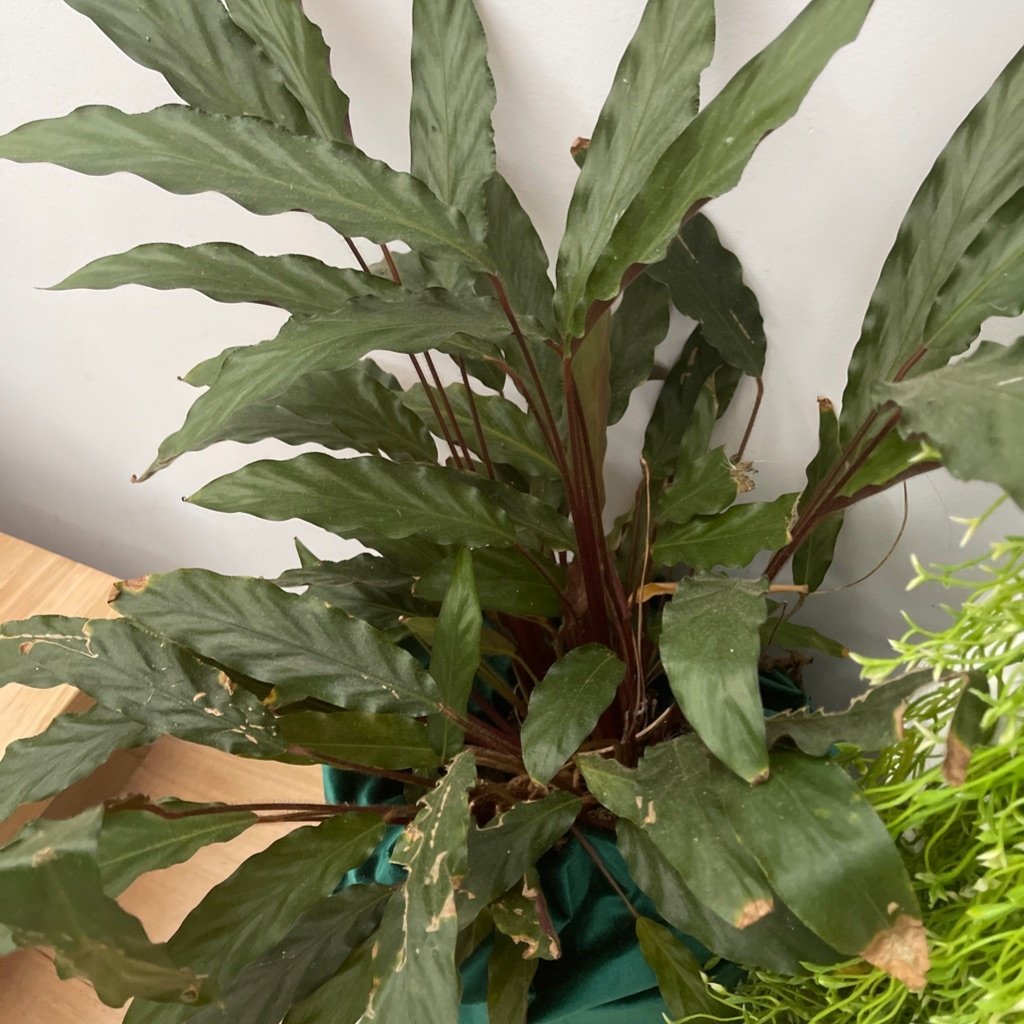
Velvet Calathea
Goeppertia rufibarba, commonly known as Velvet Calathea, is a striking tropical plant known for its unique velvety foliage. This plant features long, wavy green leaves with a distinctive purple or burgundy color on the undersides. It typically grows to a height of about 60 cm, making it an ideal houseplant for creating lush, tropical vibes indoors. Native to the rainforests of Brazil, Velvet Calathea thrives in high humidity and low light conditions, mimicking its natural understory environment. The plant’s leaves fold up slightly during the night, revealing their colorful undersides, which adds to their appeal.
-
Apricot
Prunus armeniaca, commonly known as apricot, is a deciduous fruit tree in the Rosaceae native to Central Asia and China, widely cultivated across temperate regions. Typically 4–8 m tall with a spreading canopy, it bears early spring blossoms ranging from white to pale pink on bare spurs, making it highly susceptible to late frosts. Leaves are broadly ovate with serrated margins; fruit are velvety drupes maturing to golden-orange with sweet, aromatic flesh and a single stony pit. Many cultivars are self-fertile, though cross-pollination by bees improves set. Apricots prefer well-drained loams, slightly alkaline to neutral soils, hot, dry summers, and cool winters with adequate chilling hours. While somewhat drought tolerant once established, consistent moisture during fruit development enhances size and quality. Common challenges include brown rot, bacterial canker, shot hole, aphids, and borers; careful pruning for light and airflow is essential. In frost-prone sites, choose later-blooming cultivars or aspects that delay bloom.
-
Red raspberry
Rubus idaeus, commonly called European red raspberry, is a deciduous, suckering bramble native to Europe and northern Asia. It forms a perennial crown and rhizomes that produce biennial canes: vigorous first-year primocanes bear leaves, then flower and fruit as floricanes the second year before dying. Canes are arching and armed with fine prickles; compound leaves have 3–7 serrated leaflets, pale and tomentose beneath. In late spring to early summer, clusters of white, five-petaled flowers attract pollinators, maturing into hollow, red aggregate fruits composed of many drupelets. Plants typically reach 1.5–2 m tall and spread by underground suckers, creating productive hedgerows in open, well-drained sites. Raspberries prefer slightly acidic, humus-rich soils and consistent moisture. They are valued for flavorful fruit eaten fresh, frozen, or processed, and for wildlife forage. Management involves pruning out spent floricanes, thinning new shoots, and trellising for light and airflow, which helps limit diseases such as cane blight and Botrytis.
-
Queen Amaryllis
Hippeastrum reginae, commonly sold as an amaryllis, is a bulbous geophyte native to tropical South America. It produces a thick, hollow flower stalk (scape) bearing several large, trumpet-shaped blooms—typically vivid scarlet to orange-red with a green throat—followed by or accompanied by strap-like, arching leaves. The bulb stores energy to power a dramatic flowering display each season. Unlike true Amaryllis (Amaryllis belladonna from South Africa), Hippeastrum reginae grows and flowers indoors reliably when given bright light, a snug pot, and excellent drainage. After flowering, the plant channels energy back into the bulb; maintaining healthy leaves for weeks to months is essential to support next year’s bloom. A brief dry rest period mimics its native seasonal cycle and helps reset the bulb. Grow in a fast-draining, gritty mix with one-third of the bulb exposed above the medium. Rotate for even growth, stake if needed, and protect from cold drafts. With proper light, careful watering, and a sensible feed-rest rhythm, it rewards with spectacular, long-lasting blooms.
-
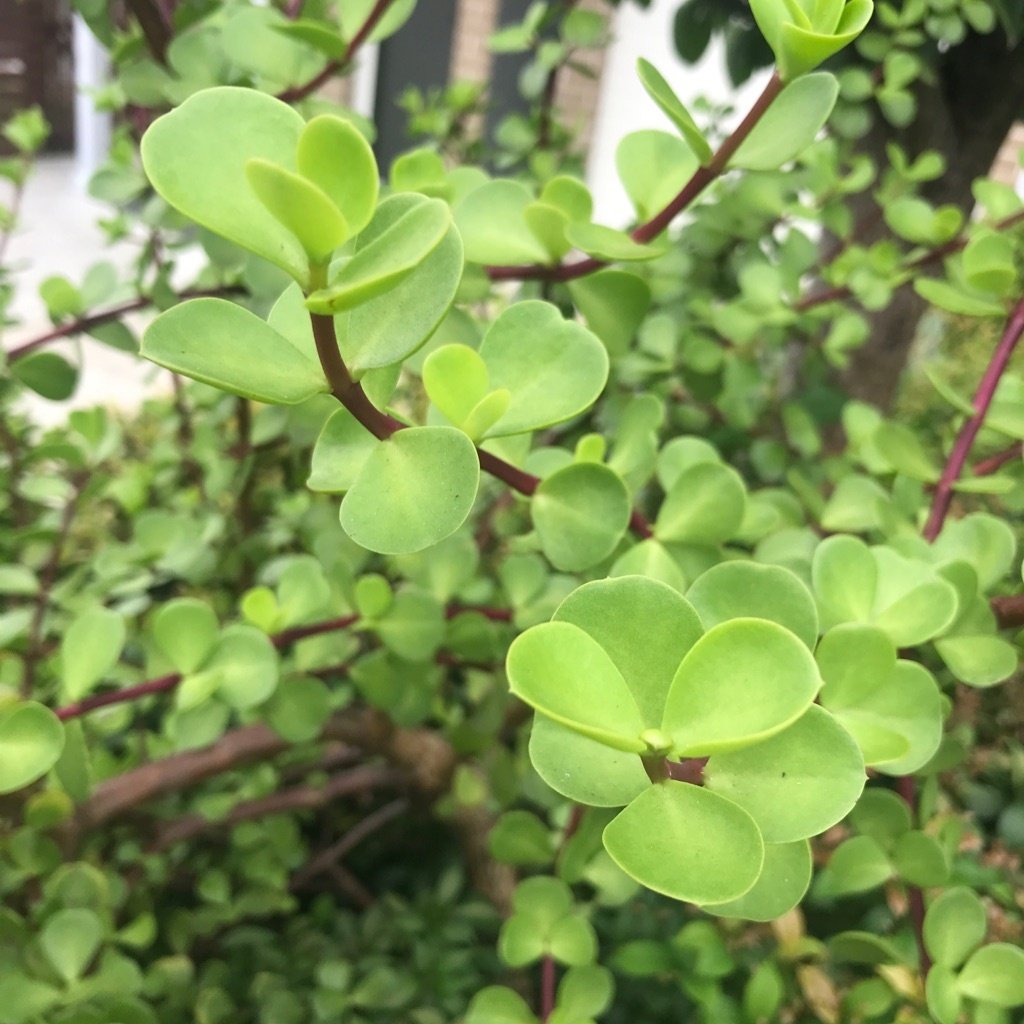
Elephant Bush
Portulacaria afra, commonly known as Elephant Bush, is a succulent native to South Africa. It resembles the Jade Plant but is distinguished by its smaller, reddish-brown stems and vibrant green leaves. This hardy plant can grow up to 8 feet tall in the wild but typically remains smaller in home gardens. It is often used in rock gardens and as a bonsai plant due to its shape and manageable size. The plant is drought-tolerant, making it popular among novice gardeners and those interested in water-wise gardening.
-
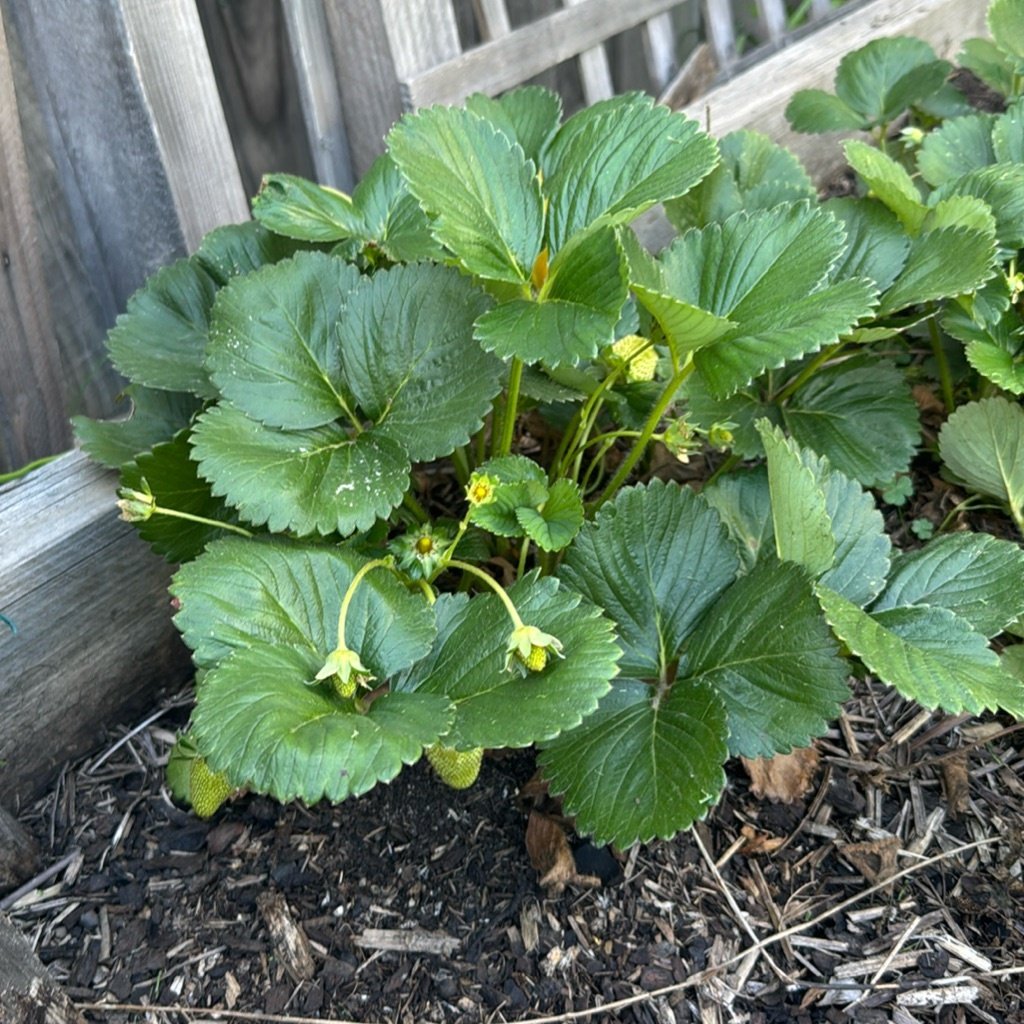
Garden Strawberry
Fragaria × ananassa, commonly known as the Garden Strawberry, is a widely cultivated hybrid species of the genus Fragaria. It is known for its distinctive red fruit which is aromatic, juicy, and sweet. Originating in the 18th century in Europe through the crossbreeding of Fragaria virginiana from North America and Fragaria chiloensis from Chile, this plant is now grown globally. Strawberry plants are perennial and grow well in milder climates. They feature a rosette of leaves at the base, white flowers, and runners that help in vegetative propagation. The fruit is rich in vitamins, especially vitamin C, and has numerous culinary uses from fresh consumption to being processed into jams and desserts.
-
Wintercreeper
Euonymus fortunei, commonly called wintercreeper, is a versatile, evergreen woody vine or subshrub native to East Asia. It grows as a dense groundcover, mounding shrub, or climbing vine using adventitious rootlets to adhere to rough surfaces. Opposite, oval to elliptic leaves are leathery and often finely serrate; many cultivars feature striking variegation in cream, gold, or silver. Insignificant greenish flowers may appear in late spring, sometimes followed by pinkish capsules with orange arils, though flowering is uncommon in frequently sheared plantings. Mature height ranges from 0.3–0.6 m as a groundcover, but it can climb 6–9 m or more with support. Tough and adaptable, it tolerates a wide range of soils, salinity, urban pollution, and pruning. Its vigor makes it useful for erosion control and difficult sites, but in some regions it behaves invasively and should be managed responsibly.
-
Japanese andromeda
Pieris japonica, commonly known as Japanese andromeda, is a broadleaf evergreen shrub that features cascading clusters of bell-shaped white flowers in early spring. The floral display beautifully contrasts with the glossy evergreen foliage, which may change from green to a striking red or bronze. This plant typically grows from 9 to 12 feet tall, making it a splendid choice for a foundational planting or woodland garden. The foliage itself is quite toxic if ingested and can be harmful to both humans and pets. Pieris japonica is also appreciated for its resistance to pests and disease when properly cared for.
-
Dusty miller
Jacobaea maritima, widely known as dusty miller, is a short-lived, evergreen subshrub prized for its striking, felted silver foliage. Native to the Mediterranean coastline, it forms a compact mound 30–60 cm tall, with deeply lobed, tomentose leaves that reflect intense sun and salt spray. Small, yellow, daisy-like flowers appear in late spring to summer, but many gardeners shear them off to keep the plant dense and conserve the silvery look. Exceptionally tolerant of drought, wind, and poor, alkaline, sharply drained soils, it excels in seaside gardens, rockeries, edging, and containers where contrast and texture are needed. In colder regions it is often grown as an annual; in mild climates it behaves as a perennial or short-lived subshrub. Good drainage is essential to prevent root rot in wet winters or poorly aerated pots. Deer and rabbits typically avoid it. Formerly known in horticulture as Senecio cineraria, this species remains a dependable, low-maintenance foliage plant for sunny exposures and heat, provided watering is infrequent and soils are not overly rich.
