
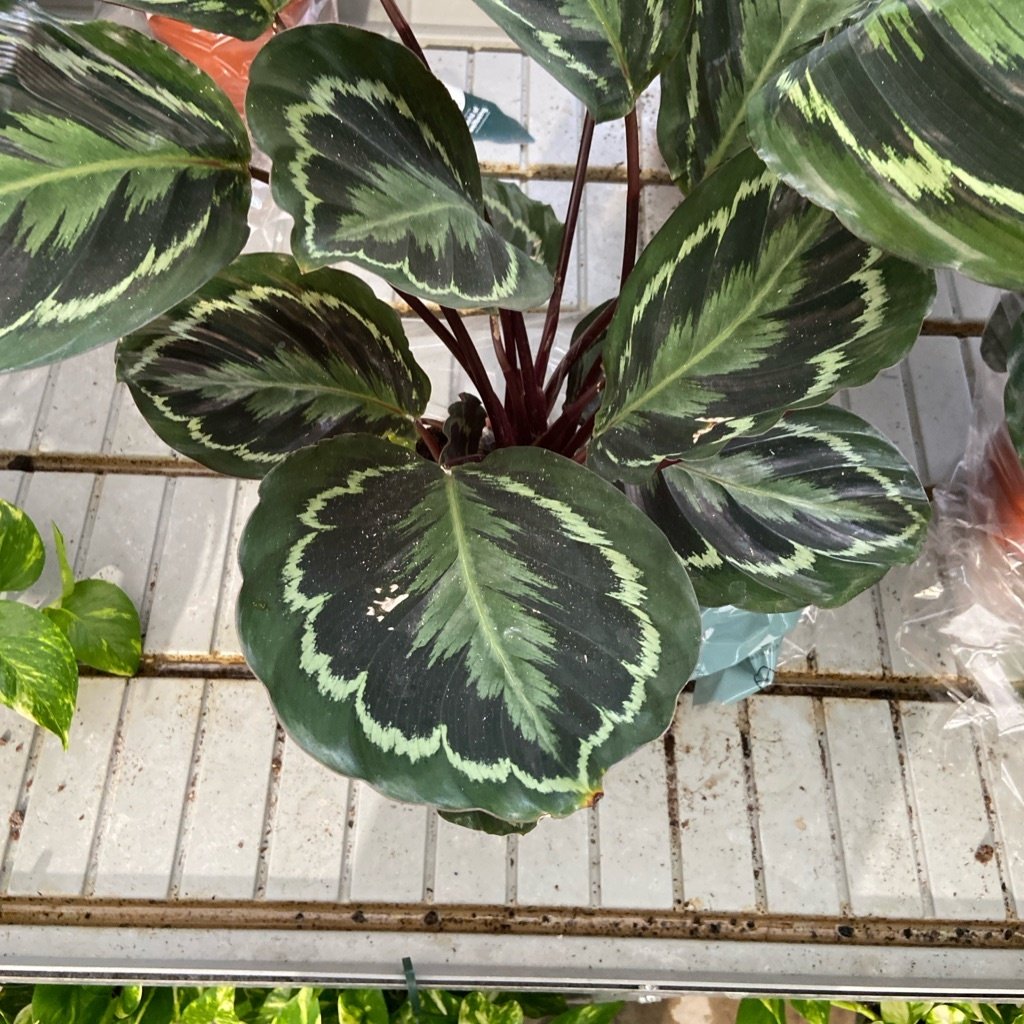
Goeppertia roseopicta, commonly known as Calathea roseopicta, is a tropical plant native to the rainforests of Brazil. It is renowned for its striking foliage. The leaves are glossy, with a deep green color and decorated with pink or red strokes around the leaf margin; some varieties feature a deep purple underside. This is a moderately fast-growing plant that forms clumps and can reach up to 12-20 inches in height. Calatheas are cherished indoor houseplants due to their unique patterned leaves and their ability to purify the air. However, they require a bit more care and attention compared to other houseplants.
Archives: Plants
-
Mugwort
Artemisia vulgaris, commonly known as mugwort, is a hardy, rhizomatous perennial in the daisy family (Asteraceae). It forms upright, often reddish-tinged stems 60–150 cm tall, with deeply lobed, aromatic leaves that are dark green on top and silvery-white beneath due to fine hairs. Small, inconspicuous yellowish to purplish flower heads form in late summer in loose panicles. The plant spreads vigorously by creeping rhizomes and can self-seed, making it a robust colonizer of disturbed ground and, in some regions, an invasive weed. Mugwort tolerates lean, well-drained soils and drought once established, thriving in full sun to light shade. Historically valued as a culinary and medicinal herb and for moxibustion, it nevertheless can cause allergic reactions, especially in individuals sensitive to ragweed relatives. Its strong growth and resilience make it easy to cultivate, but containment and periodic pruning are advisable to prevent unwanted spread.
-
Lenten rose
Helleborus orientalis, commonly called the Lenten rose, is a long-lived, clump-forming, semi-evergreen perennial prized for its late winter to early spring bloom. Arising from leathery, palmate, serrated leaves, nodding, cup-shaped flowers appear in shades of white, cream, green, pink, burgundy, and plum, often speckled or veined. The showy parts are actually sepals surrounding a ring of nectaries, which persist for weeks, providing rare color and nectar for early pollinators. Mature plants reach 12–18 inches (30–45 cm) tall and wide, slowly expanding into handsome mounds. H. orientalis thrives in humus-rich, well-drained soil with consistent moisture and protection from harsh afternoon sun. Once established, it is drought-tolerant, deer- and rabbit-resistant, and excellent for woodland gardens, shade borders, and underplanting deciduous shrubs. Remove old foliage in late winter to display the flowers and reduce disease. All parts are toxic if ingested and sap may irritate skin, so wear gloves when handling.
-
Madagascar periwinkle
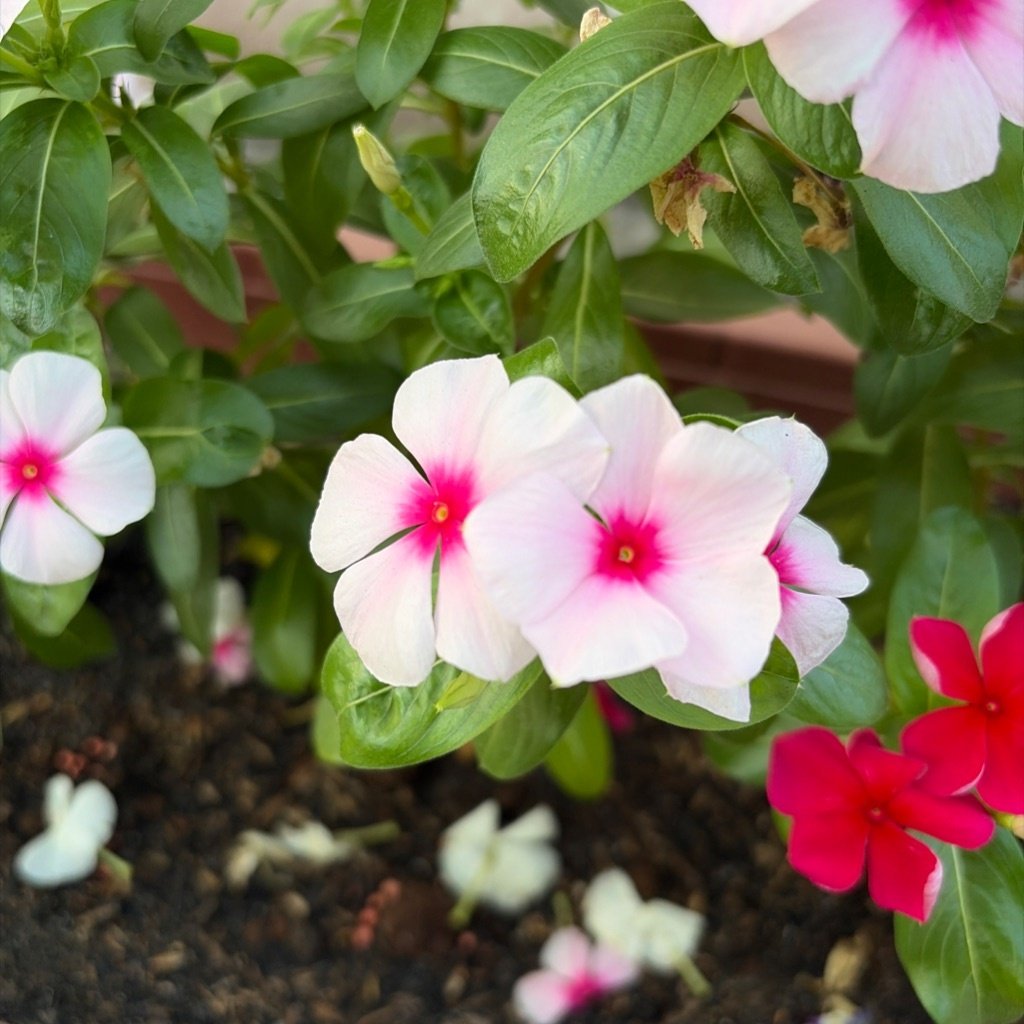
Catharanthus roseus, commonly known as Madagascar periwinkle, is a charming small shrub native to Madagascar. This species has glossy, oval leaves and beautiful flowers that bloom throughout the summer in shades of white, pink, and red. Growing typically to 1 m (3 ft) tall and wide, it thrives in sunny conditions. It is widely used as a bedding plant in tropical and subtropical areas and has gained popularity for its medicinal properties, particularly in treating certain types of cancer due to its alkaloid content.
-
Golden dewdrop
Duranta erecta, commonly called golden dewdrop, is a fast-growing evergreen or semi-evergreen shrub to small tree native to the tropical Americas. It forms arching, often lightly spiny branches clothed in opposite, glossy green leaves; many cultivars show golden or variegated foliage. In warm seasons it bears showy, lightly fragrant racemes of lavender-blue to white flowers that attract butterflies and hummingbirds, followed by pendant strings of ornamental, orange-gold berries that persist into winter. The plant is widely used for hedges, screening, topiary, and patio containers, responding well to clipping. It thrives in heat and full sun, tolerates coastal exposure and brief dry spells once established, yet prefers regular moisture and sharp drainage. While beautiful, it can self-seed aggressively and is invasive in some subtropical regions. All parts, especially the berries, are toxic if ingested by people and pets. Propagation is easy from semi-hardwood cuttings; occasional pruning after bloom maintains form and encourages dense, floriferous growth.
-
Egyptian starcluster
Pentas lanceolata, commonly called Egyptian starcluster, is a heat-loving, evergreen subshrub native to tropical East Africa and Yemen. It forms rounded clumps 30–120 cm tall depending on climate and cultivar. Opposite, lance-shaped leaves are softly pubescent, helping the plant tolerate intense sun and heat. Showy terminal umbels hold dozens of narrow-tubed, five-pointed star flowers in red, pink, magenta, lavender, or white, blooming for months in warm conditions. Rich nectar makes it a magnet for butterflies, bees, and hummingbirds, so it is prized in pollinator gardens. In frost-free zones it grows as a short-lived perennial; elsewhere it is used as a summer annual or container plant. Pentas prefers well-drained, moderately fertile soil and steady moisture without waterlogging. Light pinching and regular deadheading encourage branching and continuous bloom. Remarkably tolerant of heat and humidity, it outperforms many bedding plants in sultry summers and is excellent for borders, mixed containers, and coastal sites.
-
Century plant
Agave americana, commonly called the century plant, is a striking, monocarpic succulent native to Mexico but naturalized across warm, dry regions worldwide. It forms an architectural rosette 1.5–3 m across of thick, blue-gray to green leaves armed with recurved marginal teeth and a formidable terminal spine. Extremely drought tolerant and adapted to poor, fast-draining soils, it uses CAM photosynthesis to conserve water. Plants mature slowly; after 10–30+ years they send up a dramatic branched flower stalk 6–8 m tall bearing nectar-rich yellow blossoms that attract hummingbirds, bats, and insects. The parent rosette dies after flowering, but offsets (pups) around the base perpetuate the colony. Historically valued for fiber and fermented beverages, A. americana is also a signature xeriscape specimen in coastal and desert gardens. It thrives in full sun, wind, and heat, yet requires careful handling: the sap can irritate skin and the armature can injure. Provide space, superb drainage, and minimal watering to keep it healthy.
-
Guava
Psidium guajava, commonly known as guava, is a fast-growing, evergreen to semi-deciduous small tree or large shrub native to tropical Mesoamerica. It forms a low, spreading canopy with smooth, mottled bark and opposite, aromatic leaves that release a resinous scent when crushed. Fragrant white flowers with prominent stamens give way to round or pear-shaped fruits whose thin rind encloses sweet to tart, musky flesh in shades from white to deep pink, rich in vitamin C and edible seeds. Guava is adaptable, tolerating varied soils and periodic drought, and begins bearing heavily within 2–4 years. It thrives in warm, frost-free climates but can be container-grown and pruned to size in subtropical zones. Beyond fresh eating, the fruit is prized for juices, jams, and confections, while young leaves are used in traditional herbal infusions. Its resilience, productivity, and culinary versatility make guava a rewarding fruit tree for home gardens and small orchards.
-
String of Pearls
Curio rowleyanus, commonly called String of Pearls, is a trailing succulent from southwestern Africa. Its distinctive pea-like leaves are modified water-storage spheres with translucent windows that allow light into the interior for photosynthesis while minimizing surface area and water loss. Slender, creeping stems can reach 60–90 cm or more, forming cascades from hanging containers or rooting along the soil as a groundcover. The plant bears small, white, cinnamon-scented, daisy-like flowers primarily in late winter to spring when given a cool, bright, dry rest. In habitat it threads through rocky, sandy soils beneath nurse shrubs, enjoying bright light but protection from scorching midday sun. Indoors it thrives in a fast-draining cactus mix, careful watering, and good airflow. Overwatering is the most common cause of failure; pearls that turn mushy indicate excess moisture, while shriveling signals thirst. With proper light, infrequent feeding, and occasional pruning to maintain fullness, this species provides elegant, bead-like texture in living spaces.
-
Herb Robert
Geranium robertianum, commonly known as Herb Robert, is a delicate annual or biennial cranesbill native to Europe, western Asia, and North Africa, and widely naturalized elsewhere. It typically grows 10–50 cm tall with slender, reddish, branching stems and finely divided, ferny leaves that emit a strong musky aroma when crushed. Leaves often redden in cool weather or strong light. From spring to autumn it bears small, five-petaled, bright pink flowers (about 1–1.5 cm across) that are followed by the characteristic beaked seed capsules of cranesbills. The seeds are dispersed by an elastic, catapult-like mechanism. Herb Robert thrives in semi-shade and lean, well-drained soils, commonly colonizing woodland edges, hedgebanks, rocky crevices, old walls, and other disturbed, base-rich sites. It is a quick grower and prolific self-seeder, sometimes behaving like a benign garden weed. Ecologically, it supports small bees, hoverflies, and other pollinators. Historically, it has been used as an astringent herb in folk medicine, though it is primarily valued today for its shade tolerance and naturalizing habit.
