
Gynura aurantiaca, commonly called the Purple Passion Plant, is a fast-growing, trailing perennial prized for its luminous purple, velvety foliage. Dense, silky hairs cloak the leaves and stems, creating an iridescent sheen that glows under bright, indirect light. The leaves are deeply green beneath the purple trichomes, with softly toothed margins and a plush texture that invites attention but should be handled gently. Indoors, it performs well in hanging baskets or as a tabletop spiller, where frequent pinching encourages branching and a fuller silhouette. In maturity it may produce orange, thistle-like flowers with a pungent scent many growers remove to conserve energy and preserve aesthetics. As a houseplant, it is relatively short-lived, tending to become leggy after two to three years, but it propagates readily from cuttings, making refreshment simple. Provide porous, slightly acidic, well-drained media, avoid wetting the fuzzy foliage, and maintain steady warmth and moderate humidity to keep color vivid and growth compact.
Archives: Plants
-
American pokeweed
Phytolacca americana, commonly called American pokeweed, is a vigorous herbaceous perennial native to eastern North America. It emerges in spring from a massive taproot, producing robust reddish-purple stems and large, alternate leaves. In summer, elongated racemes of small greenish-white flowers give way to drooping clusters of glossy, ink-dark berries that stain purple. Plants often reach 1.5–3 m tall in fertile soils and can form thickets. Birds relish the fruit and disperse seeds widely, contributing to naturalization and weedy behavior. The plant dies back to the root after frost and resprouts strongly each spring. While striking and wildlife-friendly, all parts—especially roots, mature leaves, stems, and raw berries—are poisonous to humans and pets. Historically, the berries were used for dyes and the very young shoots were consumed after repeated boiling, but ingestion is risky and not recommended. In gardens, it thrives with minimal care but can self-seed aggressively; site thoughtfully and manage fruiting if spread is a concern.
-
London plane
Platanus × hispanica, the London plane, is a vigorous, long-lived deciduous shade tree widely planted in cities for its exceptional tolerance of pollution, soil compaction, pruning, and drought. A natural hybrid of Platanus orientalis and P. occidentalis, it typically reaches 20–35 m tall with a broad, domed crown. Distinctive mottled bark exfoliates in plates to reveal green, cream, and gray patches. Large, maple-like leaves with five lobes cast dense shade, and pendant spherical seed clusters often persist into winter. Growth is fast when young, slowing with maturity. It thrives in deep, moist, well-drained loams yet adapts to a wide soil pH, including alkaline urban fill. While generally resilient, it can show anthracnose in cool, wet springs and is vulnerable to canker stain (Ceratocystis platani) in some regions. Fine leaf hairs and dust on foliage may irritate sensitive individuals during pruning or cleanup. Its durability, handsome bark, and expansive canopy make it an outstanding street and park tree where space allows.
-
American Sweetgum
Liquidambar styraciflua, commonly called American sweetgum, is a large, deciduous tree prized for its star-shaped, palmately lobed leaves and spectacular autumn color ranging from gold and orange to crimson and deep purple. Native to eastern North America and parts of Mexico and Central America, it typically reaches 18–25 m (60–80 ft), occasionally exceeding 30 m (100 ft), with a strong central leader and a broadly pyramidal to oval crown. Leaves are glossy green, aromatic when crushed, and turn vibrantly in fall. Woody, spherical, spiny fruiting heads (“gumballs”) persist into winter and can create litter. Bark becomes gray-brown and deeply furrowed with age; younger twigs may bear corky wings. Sweetgum prefers deep, moist, well-drained, slightly acidic soils and full sun, but tolerates seasonal flooding and brief drought once established. Surface roots can become prominent in compacted or shallow soils. It is valued in urban and park plantings where space allows, and its wood is used for furniture and veneer; the aromatic resin has historical uses.
-
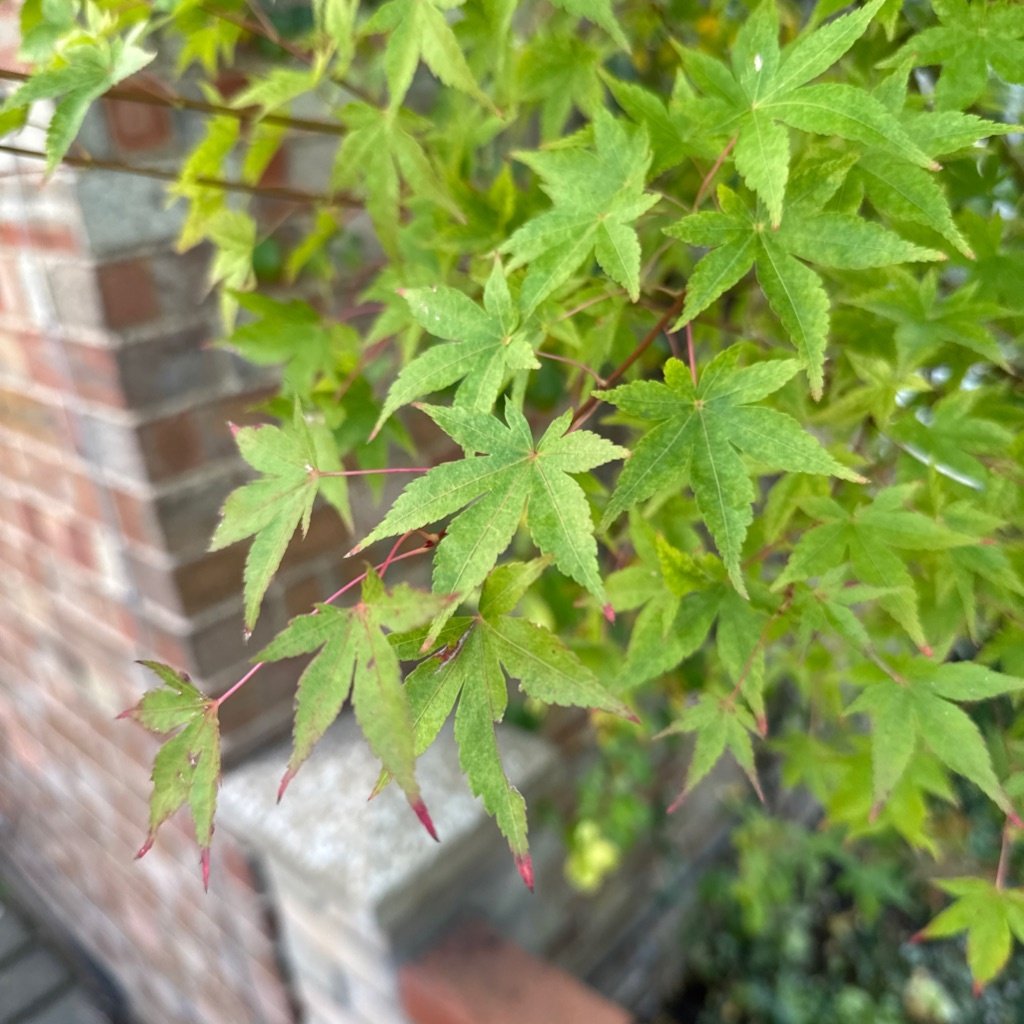
Japanese Maple
Acer palmatum, commonly known as Japanese Maple, is a deciduous shrub or small tree reaching heights of 6 to 10 meters, often growing as an understory plant in shady woodlands. It is well-known for its beautifully shaped and distinctly colored leaves. The leaves are usually 5 to 10 cm long and wide, with five to seven pointed lobes, and range in color from green to red, purple, and bronze, often with exquisite autumn coloring. Japanese Maples are prized for their range of leaf shapes and stunning fall colors, making them popular in garden landscapes and bonsai cultivation.
-
Rugosa rose
Rosa rugosa is a cold-hardy, suckering shrub rose native to Northeast Asia, prized for its deeply wrinkled, glossy foliage and intensely fragrant, single to semi-double blooms. Flowers, typically magenta-pink but also white, appear from late spring well into autumn, followed by large, tomato-like hips exceptionally rich in vitamin C. Stems bristle with prickles, forming a dense, wildlife-friendly barrier hedge that offers nesting cover and winter food for birds. Remarkably tolerant of salt spray, wind, drought, and lean, sandy soils, it thrives in coastal conditions where many roses fail. It also shows strong resistance to common rose diseases such as black spot and powdery mildew. The plant’s robust root system stabilizes dunes and banks, though its vigorous suckering can lead to spread beyond intended areas and it is invasive in parts of Europe and North America. In gardens, it excels as a low-maintenance hedge or specimen when given full sun, well-drained soil, and space to expand.
-
Red tip photinia
Photinia × fraseri is a vigorous evergreen shrub or small tree prized for its striking flushes of bright red new growth that mature to glossy dark green. A hybrid between Photinia glabra and P. serratifolia, it forms dense, upright screens and hedges, typically reaching 3–5 m (10–16 ft) if unpruned. Small white spring flowers attract pollinators, followed by red berries, though some gardeners remove flower buds to avoid scent and fruit. It performs best in well-drained, moderately fertile soil with consistent moisture, and its richest color occurs in full sun. The plant responds well to clipping, making it ideal for formal hedging and topiary. In humid or shaded conditions it can be prone to Entomosporium leaf spot; good air movement, sanitation, and base-watering help prevent this. Common cultivars, notably ‘Red Robin’, are widely planted in urban and suburban landscapes for year-round structure and seasonal color, and the shrub develops improved drought tolerance once established.
-
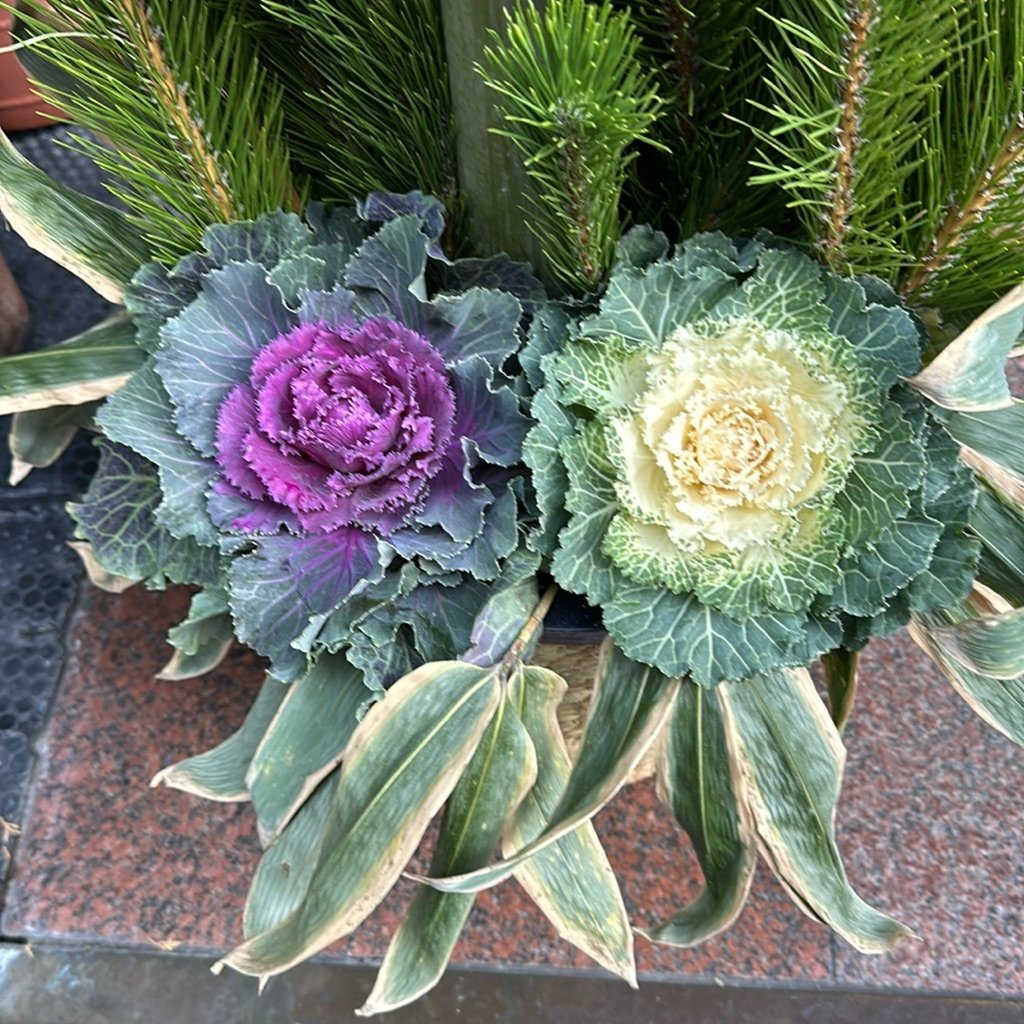
Wild Cabbage
Brassica oleracea, commonly known as wild cabbage, is a species of the Brassica genus in the mustard family. It is the ancestor of many common vegetables including cabbage, broccoli, cauliflower, kale, Brussels sprouts, collard greens, savoy, and kohlrabi. This perennial plant features broad, green leaves that may form a loose rosette at the base. It is native to coastal parts of western and southern Europe where it adapts well to the high salt content in the soil. Brassica oleracea has been widely cultivated around the world for its edible leaves, buds, and stems.
-
Italian arum
Arum italicum, commonly known as Italian arum, is a winter-green aroid native to the Mediterranean. It grows from a fleshy tuber, producing arrow-shaped, glossy leaves often handsomely marbled silver (var. marmoratum). Foliage emerges in autumn, persists through winter, and withers in late spring as the plant flowers. The inflorescence comprises a pale greenish spathe surrounding a creamy spadix, followed by showy upright clusters of orange‑red berries in early summer when the leaves are gone. Plants typically reach 25–45 cm tall in leaf; fruiting stems may be taller. Best in humus‑rich, moist but well‑drained soils, it excels in shade to part shade, brightening dormant winter borders and woodland gardens. Italian arum is adaptable, long‑lived, and can self‑sow; in some regions it becomes invasive, so site it responsibly and deadhead after bloom. All parts are toxic if ingested and may irritate skin, so wear gloves and keep away from children and pets.
-
Marguerite daisy
Argyranthemum frutescens, commonly known as Marguerite daisy, is a woody-based, short-lived perennial subshrub native to the Canary Islands. It forms a rounded mound 30–90 cm tall, with finely dissected, somewhat aromatic gray-green foliage. From spring through autumn in mild climates, it bears profuse daisy-like flower heads: yellow central discs surrounded by white, pink, or yellow rays, including many single, semi-double, and double cultivars. It thrives in cool, maritime conditions, performing best in moderately fertile, sharply drained soils and containers with excellent drainage. In hot-summer regions it’s often grown as a seasonal annual because high heat suppresses flowering and shortens lifespan. Regular deadheading and periodic trimming keep plants compact and blooming. The plant tolerates wind and coastal exposure, attracts pollinators, and excels in sunny borders, patio pots, and mixed baskets. Though evergreen where frost-free, it is typically replaced after 2–3 years as vigor declines.
