
Begonia cucullata is a fibrous-rooted, evergreen perennial native to subtropical South America and the primary wild parent of the familiar wax begonia bedding hybrids. It forms compact, mounding plants with fleshy, branching stems and glossy, asymmetrical, ovate leaves with finely serrated margins. In warm conditions it flowers freely, bearing clusters of single, four-tepaled blooms from white to soft pink; male flowers show golden stamens while female flowers develop three-winged seed capsules. The species thrives in evenly moist, well-drained, humus-rich, slightly acidic substrates and appreciates good air circulation to reduce fungal issues. It tolerates heat and brief dry spells better than many begonias but performs best with consistent moisture and partial sun. In frost-free climates it can flower most of the year; in cooler regions it is often grown as a warm-season annual or overwintered indoors in bright light. Useful for edging, containers, and mass plantings, B. cucullata remains tidy with occasional pinching and deadheading, and it attracts small pollinators without becoming invasive under typical garden care.
Archives: Plants
-
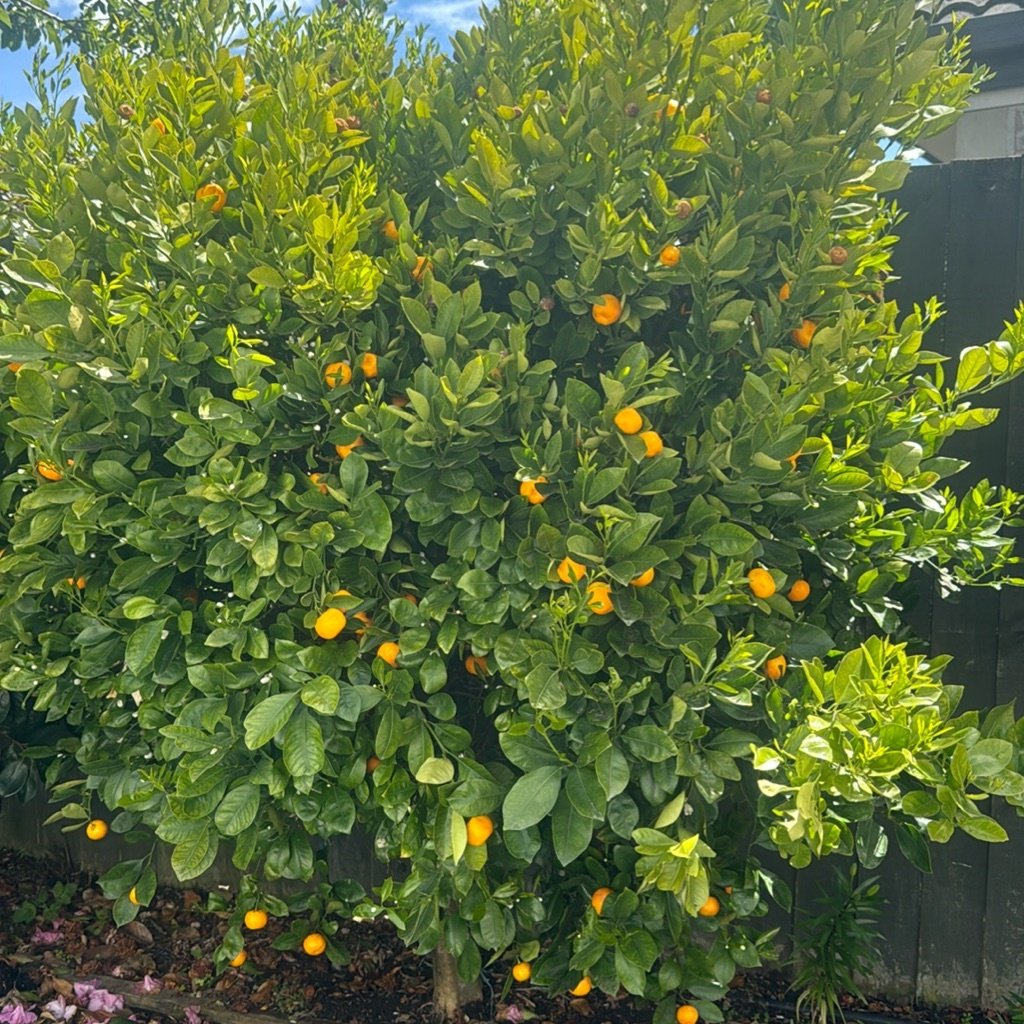
Bitter orange
Citrus × aurantium, commonly called bitter orange or Seville orange, is an evergreen citrus tree valued for its fragrant blossoms and aromatic, bitter peel. A hybrid of pomelo (C. maxima) and mandarin (C. reticulata), it grows 3–10 m tall, with glossy, dark green leaves bearing distinctly winged petioles and stout spines on twigs. Spring flowers are intensely perfumed (orange blossom) and distilled for neroli oil; leaves and young twigs yield petitgrain. The fruit is round to slightly flattened, with a thick, pebbled rind rich in essential oils and a sour, bitter pulp. While too bitter for fresh eating, it is prized for marmalades, candied peel, marinades, and liqueurs, and as a traditional citrus rootstock. Compared with sweet orange, it is relatively cold-tolerant and amenable to container culture given strong light and free-draining, slightly acidic soil. Outdoors it suits warm-temperate to subtropical climates; indoors, it needs bright sun and regular pruning to maintain shape and encourage flowering.
-
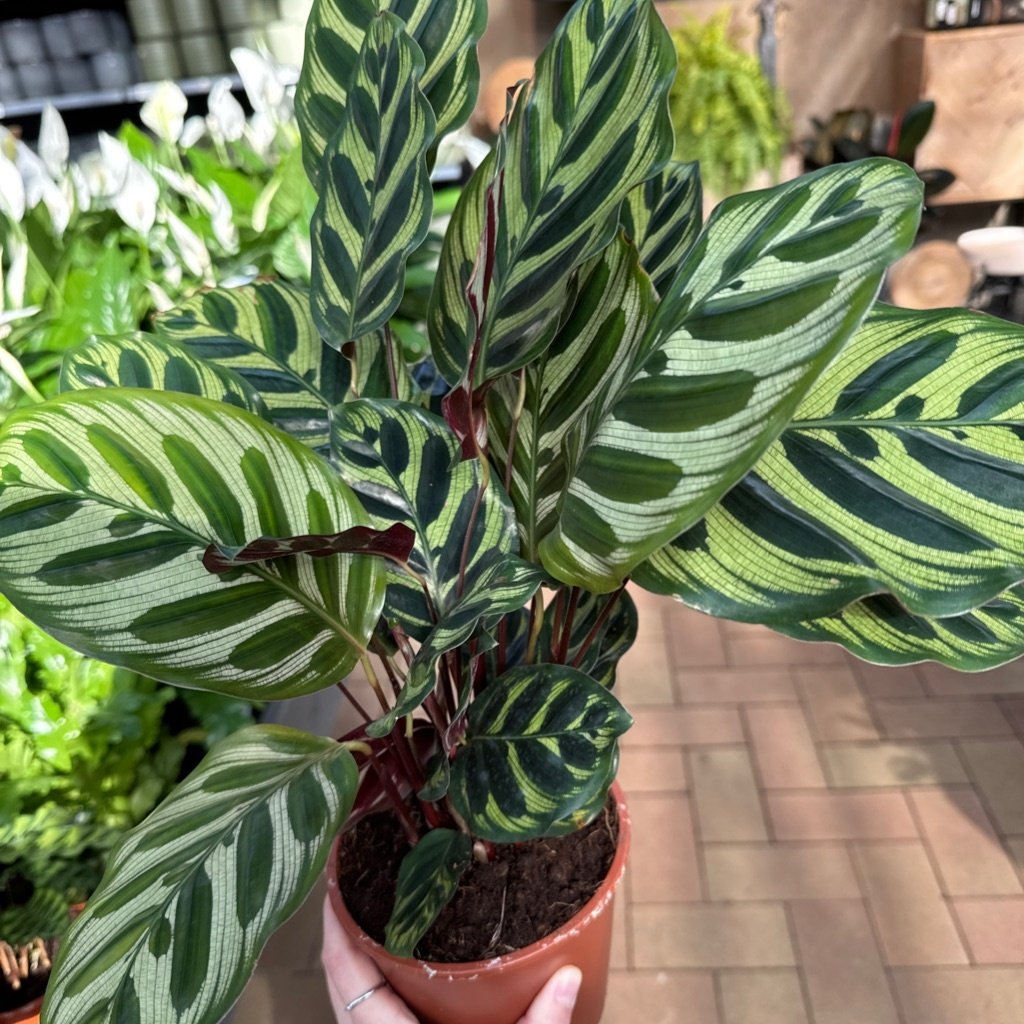
Calathea Makoyana
Goeppertia makoyana, commonly known as the Peacock Plant, is a decorative tropical houseplant famed for its beautifully patterned leaves, which resemble a peacock’s tail. Native to the Brazilian rainforest, this plant is under 2 feet tall and spreads out with wide, graceful leaves. The topsides display an intricate pattern of pale green lines radially spreading from the midrib, with spaces filled by dark green and feathered edges. The undersides of the leaves are a striking purple, accentuating its visual appeal.
-
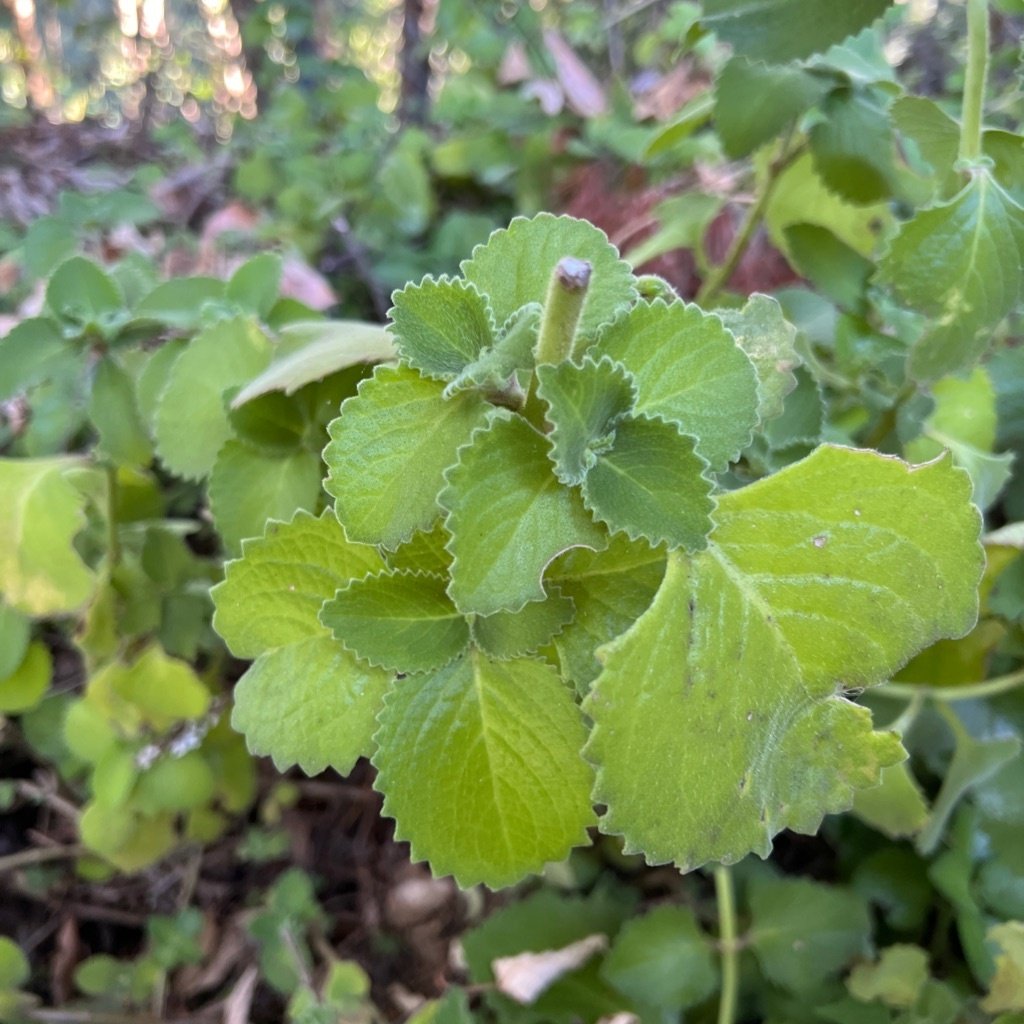
Cuban Oregano
Coleus amboinicus, commonly known as Cuban Oregano, is a perennial succulent known for its robust aroma and medicinal properties. It features thick, fleshy leaves that are furry on the surface and possess a strong, pungent odor reminiscent of oregano when crushed. The plant’s sprawling growth habit makes it suitable for hanging baskets and ground covers. It blooms sporadically, producing small, lavender-pink flowers. Originally from the warm climates of Southern Africa, it is now widespread in tropical and subtropical regions worldwide and is often used in cooking and traditional medicine.
-
Bougainvillea
Bougainvillea glabra is a vigorous, thorny, evergreen to semi-deciduous climber native to Brazil, prized for its papery, brilliantly colored bracts that surround small, tubular, cream-white flowers. The species name “glabra” refers to its smooth, hairless leaves and bracts, distinguishing it from the fuzzier Bougainvillea spectabilis. It scrambles with hooked thorns rather than twining, making it ideal for training on trellises, pergolas, walls, and as a standard or bonsai. Bract colors range from magenta and purple to red, orange, and white, with peak displays in warm, bright seasons and lighter flushes thereafter. Bougainvillea thrives in lean, sharply draining soil and flowers best under high light and mild stress; excess water or nitrogen encourages foliage at the expense of bloom. Once established, it is drought-tolerant and moderately tolerant of coastal conditions. In cooler climates, it can be grown in containers and overwintered frost-free. Handle with care: spines are sharp and latex-like sap may irritate sensitive skin.
-
Rattlesnake Plant
Goeppertia insignis (formerly Calathea lancifolia) is a rhizomatous, evergreen member of the Marantaceae prized for its striking lanceolate leaves. The foliage features wavy margins and alternating dark green oval blotches on a light green background, with a deep purple-maroon underside. Like other ‘prayer plants,’ its leaves exhibit nyctinasty, lifting or folding with daily light changes. In cultivation it typically reaches 45–75 cm (18–30 in) tall, forming a dense clump over time. Native to Brazilian rainforest understories, it thrives in warm, humid, shaded environments with consistently moist, airy, organic-rich substrates. Indoors, it’s valued for decorative foliage and rhythmic leaf movement, but can be sensitive to low humidity, hard water, salt buildup, and temperature swings. Provide gentle, filtered light, soft water, and stable warmth for best color and growth. Flowers are rare indoors and inconspicuous compared to the foliage. With attentive care, it rewards growers with long-lived, dramatic leaves and steady, moderate growth.
-
Siam tulip
Curcuma alismatifolia, commonly called Siam tulip, is a rhizomatous perennial in the ginger family (Zingiberaceae) prized for its long-lasting, tulip-like bracts. Native to seasonally wet, open habitats of northeastern Thailand, Cambodia, and Laos, it forms upright clumps of lanceolate leaves from underground rhizomes in spring, followed by colorful summer inflorescences. The true flowers are small, nestled within tiers of pink to magenta bracts that persist for weeks, making it an excellent pot plant and cut flower. Plants typically reach 30–60 cm tall and enter dormancy as days shorten and soils dry, shedding foliage until the next warm, moist season. In cultivation it thrives in warm temperatures, bright filtered light, evenly moist yet sharply draining, humus-rich substrates, and moderate to high humidity. While closely related to culinary turmeric, this species is cultivated primarily for ornament. In temperate regions it is treated as a tender summer bulb outdoors or as a seasonal indoor accent, with rhizomes lifted or kept dry through winter.
-
Passion fruit
Passiflora edulis is a vigorous, tendril-climbing vine native to subtropical South America, prized for its ornate purple-and-white flowers and aromatic, edible fruit. The plant bears three-lobed, glossy leaves and flowers that attract large bees, which are the most effective pollinators. Two main horticultural forms exist: the purple type (typically sweeter, more cold-tolerant) and the yellow type (more heat- and disease-tolerant, often larger fruit). It grows rapidly, requires a sturdy trellis or fence, and can reach 5–10 m when well supported. Passion fruit thrives in warm, frost-free climates with ample sun, fertile, well-drained soil, and consistent moisture. Fruiting commonly begins within 12–18 months from planting under good conditions. While many purple selections are self-fertile, cross-pollination improves fruit set and size; yellow forms are frequently self-incompatible. The vine’s shallow roots appreciate mulch and steady irrigation. In containers, it needs frequent feeding and pruning to manage vigor. Expect seasonal flushes of flowers, followed by round to ovoid, purple or yellow fruits with a tart-sweet, intensely fragrant pulp.
-
Creeping fig
Ficus pumila, commonly called creeping fig, is a vigorous, self-clinging evergreen climber in the mulberry family (Moraceae). In its juvenile form it bears small, thin, heart-shaped leaves on fast-growing, wiry stems that adhere to bark and rock with fine, adhesive aerial roots. With age and strong light, growth can shift to a woody adult phase with larger, thicker leaves and a shrubbier habit; regular pruning maintains the dense juvenile texture prized for indoor topiaries, terraria, and green walls. Native to warm, humid forests of East Asia (China, Taiwan, southern Japan, and northern Vietnam), it naturally carpets ground, ascends tree trunks, and explores crevices on cliffs. As a houseplant, it thrives in bright, filtered light, evenly moist but well-drained, slightly acidic media, and elevated humidity. It resents prolonged drought and waterlogged soil, and its vigorous growth benefits from routine trimming to prevent invasion into cracks or neighboring plants. Durable yet responsive to care, creeping fig offers a lush, fine-textured foliage display when provided stable moisture, moderate warmth, and regular shaping.
-
Noble Dendrobium
Dendrobium nobile is a sympodial, epiphytic to lithophytic orchid famed for profuse, fragrant blooms that line its cane-like pseudobulbs. Native to cool to warm montane forests of the Himalayas and Southeast Asia, it grows on tree trunks and rocks where air movement is strong and moisture is intermittent. Slender, segmented canes store water and nutrients; leaves are borne toward the upper nodes and may be partially deciduous in winter. Flowers appear late winter to spring on mature canes, typically white to pink with a contrasting purple-magenta throat, and can last several weeks in good conditions. This species has a strongly seasonal rhythm: rapid vegetative growth in spring–summer, maturation in late summer–autumn, and a cool, drier rest in late autumn–winter to initiate buds. In cultivation it thrives in coarse, free-draining orchid media (bark with added sphagnum/charcoal) under bright, filtered light, high humidity with good airflow, and a pronounced day–night temperature differential. Proper winter rest and restrained feeding are key to reliable flowering.
