
Dionaea muscipula, commonly known as the Venus flytrap, is a small, perennial, carnivorous plant endemic to the nutrient-poor wetlands of the Carolina coastal plain in the southeastern United States. It forms a ground-hugging rosette of petioles tipped with hinged traps 1–3 inches (2.5–7.5 cm) across, each lined with interlocking marginal cilia (“teeth”). Inside the lobes, two to three sensitive trigger hairs detect struggling prey; when touched twice within ~20 seconds, the trap snaps shut, then seals and digests insects with enzymes over days. The plant’s summer growth produces upright traps; winter induces a cool dormancy with compact leaves. In spring it sends up a tall scape bearing white, nectar-rich flowers, spatially separated from the traps to avoid capturing pollinators. In habitat it grows in open, sunny, fire-maintained savannas with saturated, acidic, sandy-peat soils low in dissolved minerals. Its specialized nutrition strategy allows survival where competitors are limited, but it remains threatened in the wild by habitat loss, poaching, hydrologic alteration, and fire suppression.
Archives: Plants
-
Mexican snowball
Echeveria elegans, widely known as Mexican snowball, is a compact, rosette-forming succulent in the Crassulaceae native to central Mexico. Its tight rosettes, typically 8–15 cm wide, feature spoon-shaped, blue‑green leaves coated with a powdery, protective farina that imparts a silvery sheen and reduces moisture loss. Plants freely offset to form attractive, low mounds or mats, making them excellent for rock gardens, containers, and xeriscapes. In late winter to spring, arching flower stalks rise bearing urn‑ to bell‑shaped pink to coral flowers with yellow interiors that attract pollinators. Like many xeric species, it thrives in gritty, fast‑draining soils and bright light, and prefers thorough drying between waterings. While relatively tolerant of brief cool snaps when kept dry, prolonged frost and saturated media can cause rot. Minimal grooming is needed; remove spent bloom stalks and detached leaves. Avoid rubbing the farina, as it does not regenerate quickly and serves as a natural sunscreen and water barrier.
-
Black locust
Robinia pseudoacacia, commonly called black locust, is a fast-growing, deciduous leguminous tree native to the Appalachian and Ozark regions of the eastern United States. It typically reaches 12–25 m (40–80 ft) tall with deeply furrowed dark bark, paired short spines on young shoots, and pinnate leaves that fold at dusk. In late spring, it bears showy, pendulous racemes of fragrant, white, pea-like flowers rich in nectar, valuable to pollinators and honey production. The tree fixes atmospheric nitrogen, enabling it to thrive on poor, sandy, or rocky soils and to colonize disturbed sites via root suckers. Its dense, rot-resistant heartwood was historically prized for fence posts and shipbuilding. While durable and drought-tolerant once established, the species can be brittle in storms and is considered invasive in many regions outside its native range, where it spreads aggressively and alters soil chemistry. All parts—especially bark, seeds, and young shoots—are toxic if ingested.
-
Blushing Philodendron
Philodendron erubescens is a vigorous, climbing aroid native to Colombia’s humid tropical forests. A hemi-epiphyte by habit, it roots into substrate while also attaching to tree trunks with aerial roots, ascending toward brighter canopy light. Its elongated, sagittate to ovate leaves emerge with striking burgundy to copper tones before maturing to deep green, often with red-tinged petioles and undersides. In cultivation it performs best when allowed to climb a moss pole or bark support, which promotes larger leaves and tighter internodes. The plant’s adaptable nature and lush, glossy foliage make it a favorite for interior landscapes and collectors alike. While tolerant of average household conditions, it excels with warm temperatures, steady moisture, and above-average humidity. Numerous named selections exist, many emphasizing red pigments, though the species itself is admired for its elegant form and steady growth. Like most philodendrons, it contains insoluble calcium oxalate and should be kept away from pets and children who may chew on leaves.
-
Common bean
Phaseolus vulgaris, commonly called the common bean, is a warm-season annual legume domesticated independently in Mesoamerica and the Andes. It includes bush and pole growth habits, with trifoliate leaves, slender twining stems in climbing types, and papilionaceous white to purple flowers borne in racemes. Pods range from tender, stringless snap types to fibrous shells for dry seed harvest, maturing in roughly 50–100 days depending on cultivar and climate. As a nitrogen fixer, it forms nodules with Rhizobium species, enriching soil while growing. Plants are primarily self-pollinating, though bees may visit flowers. Seeds display exceptional diversity in size, shape, and color (black, pinto, kidney, navy). Widely cultivated for fresh pods, shellies, and dry grain, it thrives in fertile, well-drained loams with consistent moisture. While highly nutritious when properly cooked, raw or undercooked seeds can contain lectins that cause gastrointestinal distress. Compact habit, rapid maturity, and high productivity make it an excellent choice for gardens and containers, especially when trellised for pole varieties.
-
Kousa dogwood
Cornus kousa is a small, deciduous, flowering tree prized for four-season interest and reliable disease resistance. Typically 15–30 ft (4.5–9 m) tall with a similar spread, it develops a graceful, horizontally tiered branching pattern. Opposite, ovate leaves emerge medium green and turn rich crimson, orange, or burgundy in autumn. In late spring to early summer—after the foliage has expanded—it bears showy, star-like “flowers” composed of four pointed, creamy-white to pinkish bracts surrounding a tight cluster of true, greenish flowers. Summer brings abundant, raspberry-like red drupes that are edible and attractive to birds. Bark exfoliates with age into mottled gray, tan, and brown patches, adding winter appeal. Compared with the North American flowering dogwood (Cornus florida), Kousa dogwood tends to be more tolerant of heat, urban conditions, and diseases such as anthracnose and powdery mildew. It thrives in well-drained, slightly acidic soils and is widely used as a specimen, along woodland edges, or in mixed borders.
-
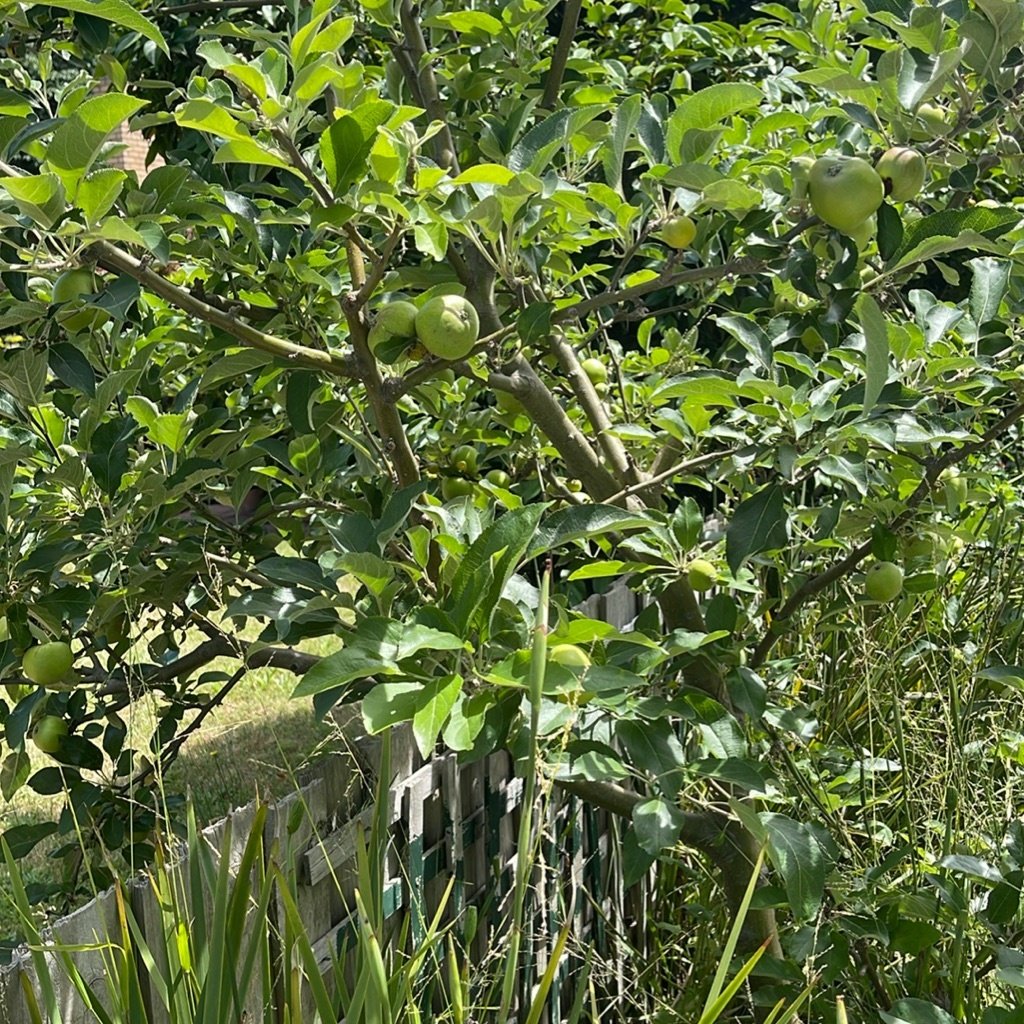
Apple Tree
Malus domestica, commonly known as the apple tree, is a deciduous tree in the rose family best known for its sweet, pomaceous fruit, the apple. It is cultivated worldwide as a fruit tree, and is the most widely grown species in the genus Malus. The tree originated in Central Asia, where its wild ancestor, Malus sieversii, is still found today. Apple trees are large if grown from seed, but small if grafted onto roots (rootstock). They blossom in spring with flowers that are white with a pink tinge that gradually fade. There are more than 7,500 known cultivars of apples, resulting in a range of desired characteristics.
-
Loquat
Rhaphiolepis bibas, widely known as loquat, is an evergreen fruiting tree in the rose family (Rosaceae). Native to southeastern China and long cultivated in Japan, it forms a dense, rounded crown and typically reaches 3–7 m tall (larger in ideal conditions). Leaves are large, leathery, glossy dark green above and whitish-tomentose beneath when young, with prominent venation and serrated margins. In autumn to early winter, terminal panicles of small, white, intensely fragrant flowers appear and are attractive to pollinators. Fruit ripens late winter to spring: clusters of oval to pear-shaped, yellow to orange drupes with juicy, sweet-tart flesh and several large, glossy brown seeds. Loquat prefers well-drained, slightly acidic soils and full sun, and shows good tolerance to coastal conditions and periodic drought once established. It is grown both as an ornamental for its handsome foliage and as a productive backyard fruit tree in warm-temperate and subtropical regions.
-
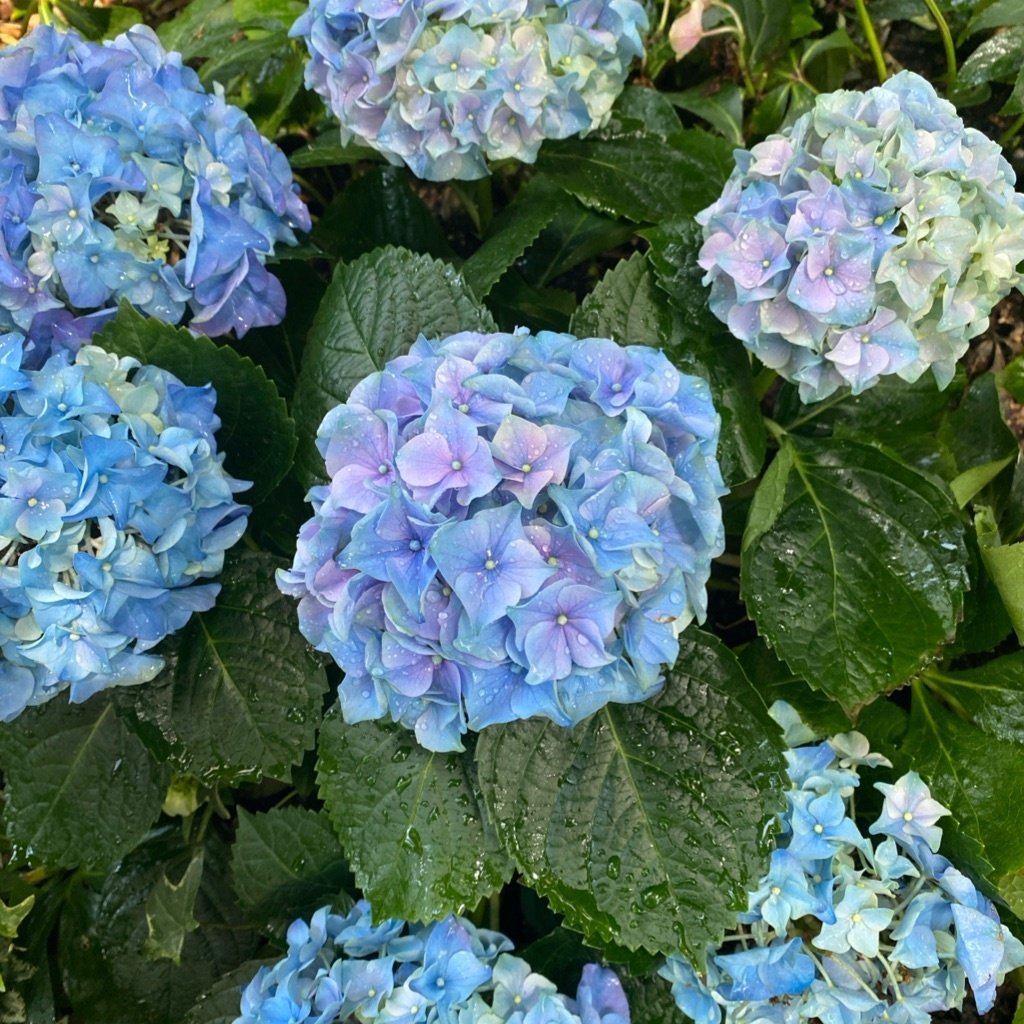
Bigleaf hydrangea
Hydrangea macrophylla, commonly known as Bigleaf hydrangea, is a deciduous shrub renowned for its large, showy flowers that bloom from early spring to late autumn. The plant features rounded flower heads consisting of vibrant flowers that vary in color from pink to blue, depending on the soil pH. It typically grows 3-6 feet tall and wide, with glossy, ovate leaves that offer a lush backdrop to the dramatic blooms. This species is particularly noted for its ability to change flower color based on the soil conditions, making it a favorite among gardeners who enjoy experimenting with the visual dynamics of their landscaping.
-
Scarlet Firethorn
Pyracantha coccinea, commonly called scarlet firethorn, is a dense, evergreen to semi-evergreen shrub prized for its abundant clusters of vivid orange to red berries that persist well into winter. Stout, thorny branches form a formidable, bird-friendly barrier hedge and can be trained on walls or trellises as an espalier. Leaves are small, glossy, and dark green; late-spring corymbs of white, lightly fragrant flowers attract pollinators. Tough and adaptable, it tolerates a range of soils so long as drainage is good, and it fruits best in full sun. Once established, it is notably drought-tolerant and low-maintenance, though pruning is recommended to manage size and encourage flowering wood. Common issues include scab and fire blight in humid or poorly ventilated conditions, which can be minimized by proper spacing, sun exposure, and sanitation. Its berries are valued by birds; raw ingestion by people or pets may cause mild gastrointestinal upset. The sharp thorns warrant careful placement and handling.