
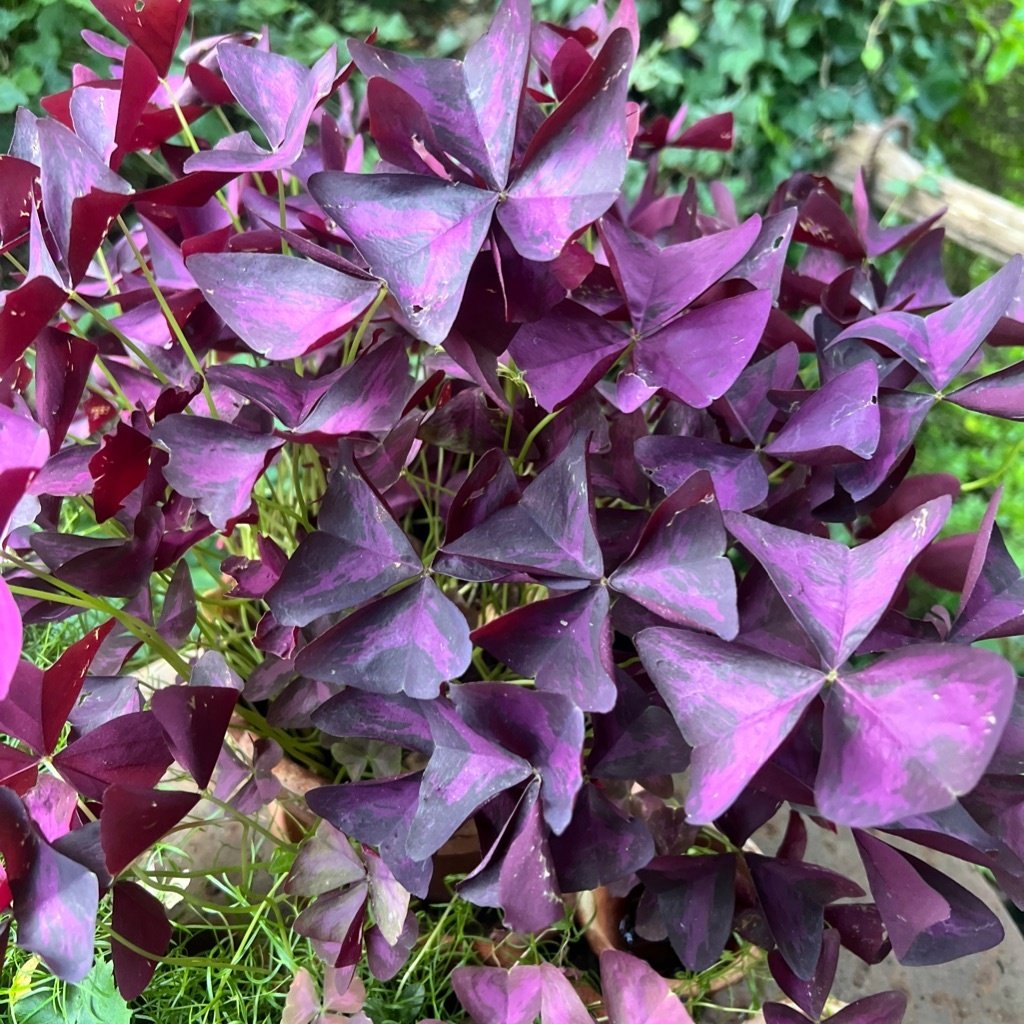
Oxalis triangularis, commonly known as the Purple shamrock, is a striking ornamental plant recognized for its vibrant purple, triangular leaves which fold down at night and open in light. Native to Brazil, it belongs to the Oxalidaceae family and is perfect for adding a pop of color indoors. It produces small, delicate pinkish-white flowers during the spring and summer. This plant’s photophilic movements make it particularly interesting, as it adjusts its leaves in response to light levels, showcasing a charm akin to a ‘living plant’.
Archives: Plants
-
Bird cherry
Prunus padus, commonly known as bird cherry, is a hardy deciduous small tree or large shrub native to Europe and northern Asia. Typically 8–15 m tall with a rounded, often suckering habit, it bears glossy, serrate, ovate leaves that color yellow in autumn. In late spring (April–May), it produces long, pendulous racemes of almond-scented, nectar-rich white flowers that attract pollinators. These give way to small, glossy black drupes, unpalatably astringent to many people but eagerly eaten by birds and wildlife. The bark is dark, bitter, and aromatic due to cyanogenic compounds. Bird cherry thrives on moist, fertile, moderately acidic to neutral soils, tolerating clay and periodic flooding, and is common along rivers, lake margins, and cool woodland edges. It prefers cool-summer climates and is very cold-hardy. In cultivation it is valued for spring bloom, wildlife support, and bank stabilization; however, it can sucker and, in some regions where introduced (e.g., parts of Alaska), it behaves invasively. Prune after flowering to maintain form and reduce disease risk.
-
Border forsythia
Forsythia × intermedia, commonly known as border forsythia, is a vigorous, deciduous shrub prized for its profuse, canary-yellow flowers that open in late winter to very early spring, often before most plants leaf out. A hybrid between Forsythia suspensa and F. viridissima, it forms an upright to arching mound 6–10 feet tall and wide, with opposite, medium-green leaves that emerge after bloom and turn muted yellow to purplish in fall. It thrives in average, well-drained soils and is notably adaptable—tolerant of urban conditions, clay, and periodic drought once established. Forsythia flowers on previous year’s wood, making correct timing of pruning essential for good displays. It is widely planted as a hedge, mass, or specimen to signal the start of spring, and is generally low-maintenance and long-lived. Numerous cultivars vary in size, hardiness, and bloom abundance. While very cold winters can reduce bud survival, the plant itself is reliably hardy across much of the temperate world.
-
Portuguese laurel
Prunus lusitanica, commonly known as Portuguese laurel, is an elegant evergreen large shrub or small tree prized for its dense, glossy foliage and refined texture. Typically 4–8 m tall when maintained as a hedge or screen, it can reach 10–15 m if allowed to mature as a specimen. Leaves are elliptic, leathery, and dark green, 7–15 cm long, often with striking red petioles and reddish new growth. In late spring to early summer, it bears numerous fragrant, creamy-white flowers on slender, upright to slightly arching racemes 10–20 cm long that attract pollinators. These are followed by small cherry-like drupes that turn from red to black, a food source for birds. Portuguese laurel is valued for its tolerance of pruning, making it ideal for formal hedges, topiary, and privacy planting in urban or coastal gardens. It prefers moist, well-drained, slightly acidic to neutral soils, with moderate drought resilience once established. Compared with the broadly grown cherry laurel (Prunus laurocerasus), it has narrower leaves and a finer, more architectural habit.
-
Laurustinus
Viburnum tinus, commonly called Laurustinus, is an evergreen shrub from the Mediterranean Basin prized for its year-round structure and winter flowers. It forms dense, rounded mounds 2–4 m tall with glossy, leathery, dark-green leaves. Pink to rose-tinted buds develop in late autumn and open to clusters of small, fragrant white to pale pink blooms through winter into early spring, providing valuable nectar in the off-season. Metallic blue-black berries follow, extending ornamental interest and feeding birds. Adaptable and resilient, it tolerates coastal exposure, light shade, alkaline-leaning soils, and periodic drought once established. It’s widely used as a hedge, screen, or specimen, responding well to pruning after flowering to maintain shape and encourage bushy growth. While relatively low-maintenance, best performance comes with deep, infrequent watering, mulching, and modest feeding. Hardy to about −10 °C in sheltered sites, it thrives in regions with mild winters and warm summers.
-
Common houseleek
Sempervivum tectorum, commonly called common houseleek or hens-and-chicks, is a cold-hardy, rosette-forming succulent native to mountainous and rocky parts of Europe. It forms tight, symmetrical rosettes 5–15 cm across of fleshy, pointed leaves, often tipped or flushed red in strong sun or cool weather. Mature rosettes (the “hens”) produce numerous offsets (“chicks”) on short stolons, creating expanding mats. In summer, a mature rosette sends up a sturdy, 15–30 cm flower stalk topped with starry pink to reddish blooms; the flowering rosette is monocarpic and dies afterward, but offsets quickly fill the gap. Adapted to extreme drought and thin, mineral soils, S. tectorum thrives where many plants fail—on walls, rock gardens, and even rooftops, as its species name (“of roofs”) suggests. Its shallow, fibrous roots and waxy leaves store water efficiently, while excellent drainage prevents rot. Easy, durable, and architectural, it excels in containers, troughs, xeriscapes, and green roofs.
-
Ribwort plantain
Plantago lanceolata is a hardy, cool-season perennial herb known for its narrow, ribbed leaves arranged in a basal rosette and slender, leafless stalks bearing compact, cylindrical flower spikes with prominent white stamens. Native to Europe and western Asia, it has naturalized widely across temperate regions worldwide. The leaves are fibrous with strong parallel veins, and the plant forms a low clump that tolerates mowing and foot traffic, making it common in lawns, pastures, and roadsides. Flowers appear from spring through autumn, producing small seeds favored by wildlife. It thrives in a range of soils, including poor, compacted, or gravelly substrates, provided drainage is adequate. Drought tolerant once established, it also withstands cold and wind. Edible young leaves have a mild, slightly bitter flavor, and the species is notable in traditional herbal use for soothing minor skin and respiratory irritations. In cultivation, it requires minimal inputs, making it an easy-care plant for wildflower meadows, pollinator strips, and low-maintenance borders.
-
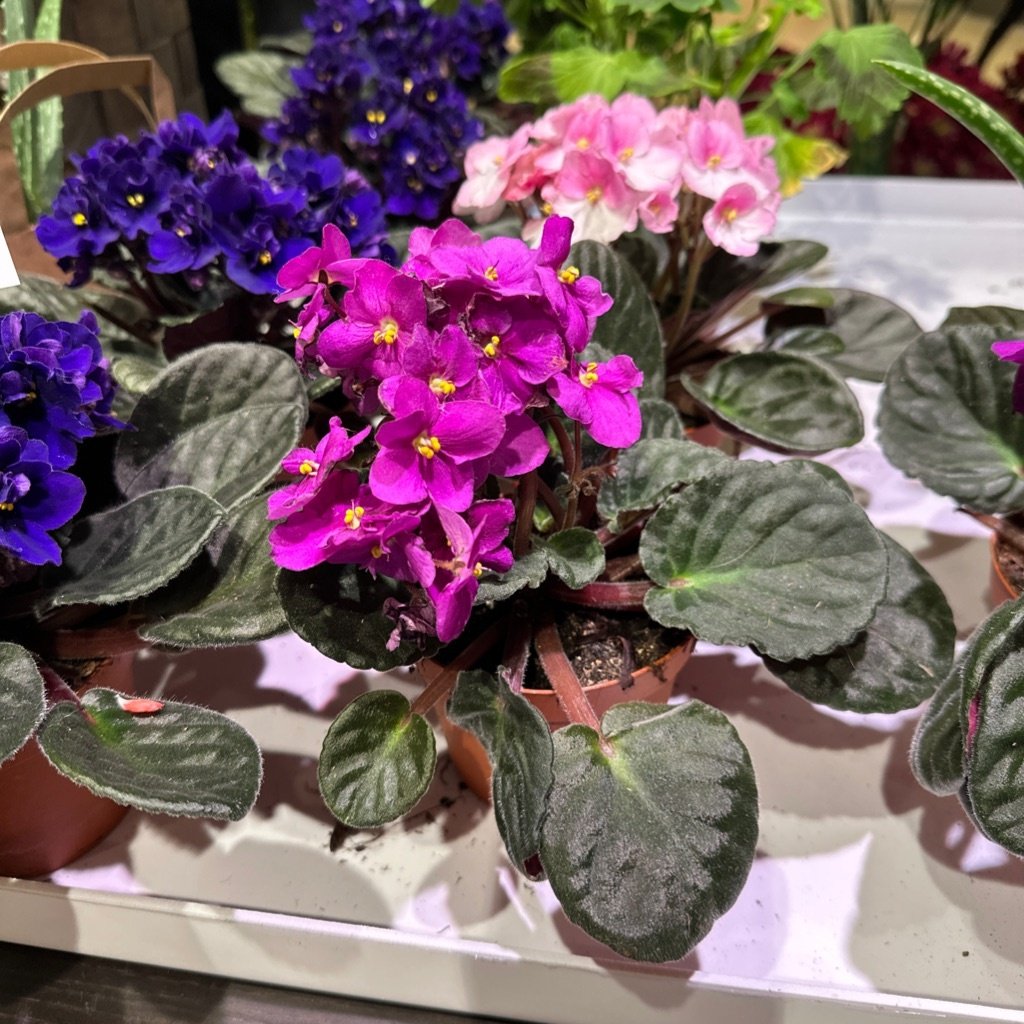
Ladyslipper Streptocarpus
Streptocarpus ionanthus, commonly known as the Ladyslipper Streptocarpus, is an attractive flowering plant from the Gesneriaceae family. Native to Tanzania, this species thrives in shaded, humid environments typical of African tropical regions. It features elongated, velvety leaves and produces striking, tubular flowers which can range in color from deep violet to bright blue. The flowers often display intricate patterns which add to its decorative appeal. Streptocarpus ionanthus has a relatively compact growth habit, making it ideal for indoor cultivation as a houseplant.
-
Pot marigold
Calendula officinalis, commonly known as pot marigold, is a cool-season herbaceous annual in the Asteraceae. Native to the Mediterranean, it forms bushy clumps 30–60 cm tall with softly hairy, aromatic foliage and branched stems. Daisy-like flower heads, 5–7 cm across, range from single to fully double forms in shades of butter yellow to deep orange, often with a contrasting darker disc. It blooms most freely in mild weather, flowering from spring through early summer and again in autumn where summers are hot; in cool or coastal climates it may continue until hard frost. The edible petals lend a saffron-like color to foods and have a long history in herbal and skincare uses for their soothing, anti-inflammatory properties. Calendula attracts pollinators and beneficial insects, self-seeds modestly without becoming invasive, and thrives in lean, well-drained soils. Tolerant of light frost and generally pest-resistant, it is an easy, rewarding choice for borders, cottage gardens, vegetable beds, and containers.
-
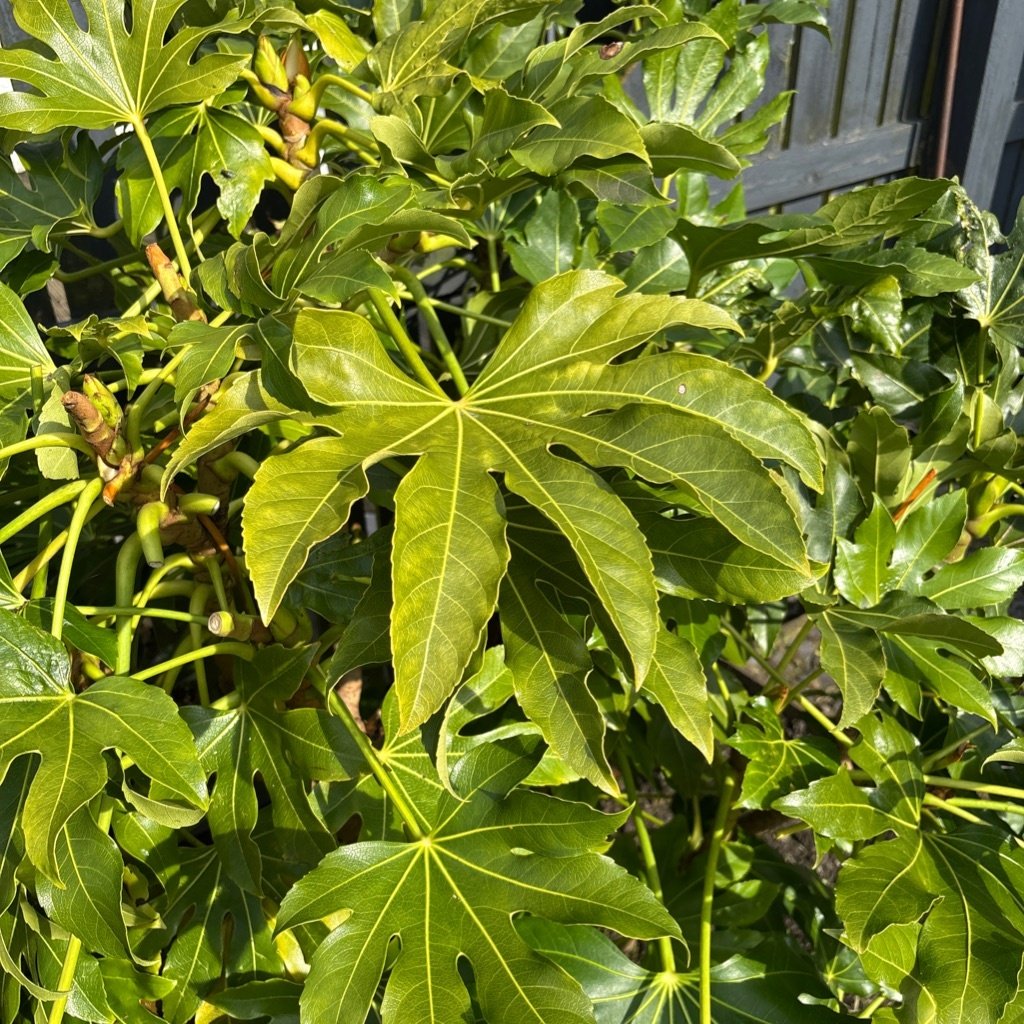
Japanese Aralia
Fatsia japonica, commonly known as Japanese Aralia, is a robust evergreen shrub native to the forests of Japan, South Korea, and Taiwan. Characterized by large, glossy, dark green leaves that can reach up to 16 inches in width, the plant adds a tropical feel to any setting. In late fall to winter, it produces small white flowers in clusters, followed by black, non-edible berries. Its stature and striking foliage make it an excellent choice for both indoor and outdoor ornamental use, thriving under various light conditions and tolerant of neglect.