
Viola × wittrockiana, commonly known as the garden pansy, is a cool-season hybrid derived primarily from Viola tricolor alongside several European Viola species. Compact and mounding, it typically grows 6–9 inches (15–23 cm) tall with a similar spread, forming neat clumps ideal for bedding, edging, and containers. Its five-petaled blooms, often marked with distinctive dark “faces,” come in a vast array of colors including violet, blue, yellow, white, orange, and near-black. Flowers are generous in cool weather, peaking in early spring and autumn, and continuing through mild winters in suitable climates. Pansies prefer fertile, well-drained, moisture-retentive soil and benefit from regular deadheading to prolong flowering. The foliage is oval, slightly toothed, and evergreen in mild conditions. While heat quickly shortens the bloom season, careful siting with afternoon shade in warmer regions extends performance. Edible flowers and their cheerful, cold-tolerant displays make pansies favorites for seasonal color in landscapes, window boxes, and patio planters.
Archives: Plants
-
Chinese fringe flower
Loropetalum chinense, commonly known as Chinese fringe flower, is an evergreen shrub in the witch-hazel family, valued for arching branches, layered habit, and bursts of tassel-like, fringed flowers. The species bears white blooms, while var. rubrum cultivars range from pink to vivid fuchsia, flowering heavily from late winter to spring with occasional reblooms. Foliage is typically green in the species and burgundy to purple in many cultivars, intensifying in cool weather and bright light. Mature size is usually 4–10 feet tall and wide, though dwarf and larger forms exist. It prefers acidic, organic, well-drained soils; alkaline conditions can induce chlorosis. Hardy in USDA Zones 7–10, it remains evergreen in mild winters and semi-evergreen where colder. Native to woodlands and thickets of southern China, Taiwan, and Japan’s Ryukyu Islands, it thrives on rocky slopes, streambanks, and evergreen forest edges. Lightly fragrant, nectar-rich flowers support early pollinators. With moderate growth, graceful form, and colorful foliage, it provides four-season interest and responds well to post-bloom pruning. Once established, it tolerates some drought but dislikes waterlogging.
-
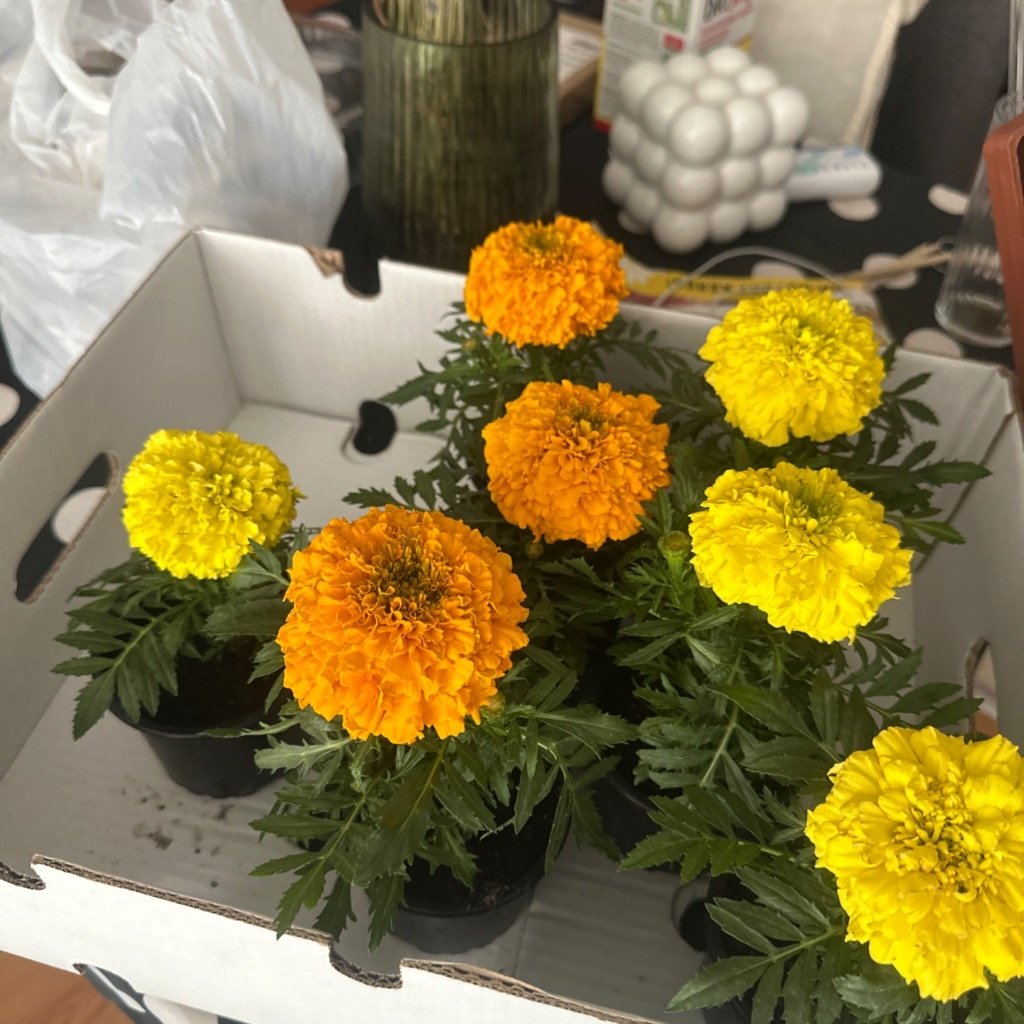
Mexican marigold
Tagetes erecta, commonly known as Mexican marigold or African marigold, is a robust annual plant native to Mexico and Central America. Characterized by its bright orange, yellow, and gold blooms, it can reach heights of up to 120 cm. The flowers are large and often pompom-shaped, making them popular in ornamental gardens. They are also used in religious and cultural ceremonies, especially in Day of the Dead celebrations. Besides its ornamental use, Tagetes erecta is also recognized for its use in traditional medicine and as a natural insect repellent, thanks to its powerful aroma.
-
Gaura
Oenothera lindheimeri, commonly known as gaura or whirling butterflies, is a short-lived herbaceous perennial native to the south-central United States and northern Mexico. It forms a loose basal clump with narrow, lanceolate leaves often flushed red, sending up wiry, branching stems 2–4 ft tall. From late spring to frost, four-petaled white blossoms, aging to pink, open sequentially along the wands, creating a cloud of movement in the slightest breeze. Plants are exceptionally tolerant of heat, drought, and poor, sandy or gravelly soils, provided drainage is sharp; winter wet is their main foe. The airy habit blends well in naturalistic and prairie-style plantings, gravel gardens, and containers, and flowers attract bees and butterflies. Though typically short-lived (2–3 years), gaura blooms for an impressively long season, may self-sow modestly, and can be rejuvenated by midseason shearing. Many compact cultivars offer improved form while retaining the species’ effortless charm.
-
Common columbine
Aquilegia vulgaris, commonly known as common columbine or granny’s bonnet, is a clump-forming, short-lived herbaceous perennial prized for its delicate, nodding flowers and ferny, blue-green foliage. Typically 45–90 cm tall, it blooms in late spring to early summer with distinctive spurred flowers in shades of blue, purple, pink, white, or bicolors. The finely divided leaves form attractive mounds that complement cottage and woodland plantings. A. vulgaris is adaptable to many garden soils provided drainage is good, and it thrives in partial shade, especially where summers are warm. Though individual plants often persist 3–5 years, it readily self-seeds, naturalizing gently without becoming aggressive if spent blooms are left in place. The flowers attract long-tongued bees and moths; in some regions, hummingbirds visit related columbines. Plants benefit from even moisture, mulch, and good air circulation to reduce foliar issues such as leaf miners and powdery mildew. Deer and rabbits usually browse lightly, making it a dependable, low-maintenance choice for mixed borders and woodland edges.
-
Boxelder
Acer negundo, commonly called boxelder, is a fast-growing, short-lived maple native to much of North America. Unlike most maples, it bears pinnate leaves with three to seven coarsely toothed leaflets, a trait that often leads to confusion with ashes. The tree is typically dioecious, with separate male and female individuals; clusters of winged samaras ripen in late summer to fall and can persist into winter. Mature trees reach 10–25 m (35–80 ft) with a broad, often irregular crown, gray to light-brown furrowed bark, and greenish twigs that may be waxy or glaucous. Boxelder thrives in riparian corridors, floodplains, and disturbed soils, tolerating seasonal inundation, drought, compacted urban sites, and a wide range of pH. Its adaptability and prolific seeding make it valuable for quick shade and erosion control, though it is sometimes considered weedy or invasive outside its native range. Wood is relatively soft and prone to storm breakage; the tree can harbor boxelder bugs. Several ornamental cultivars exist, including variegated forms that offer improved landscape appeal.
-
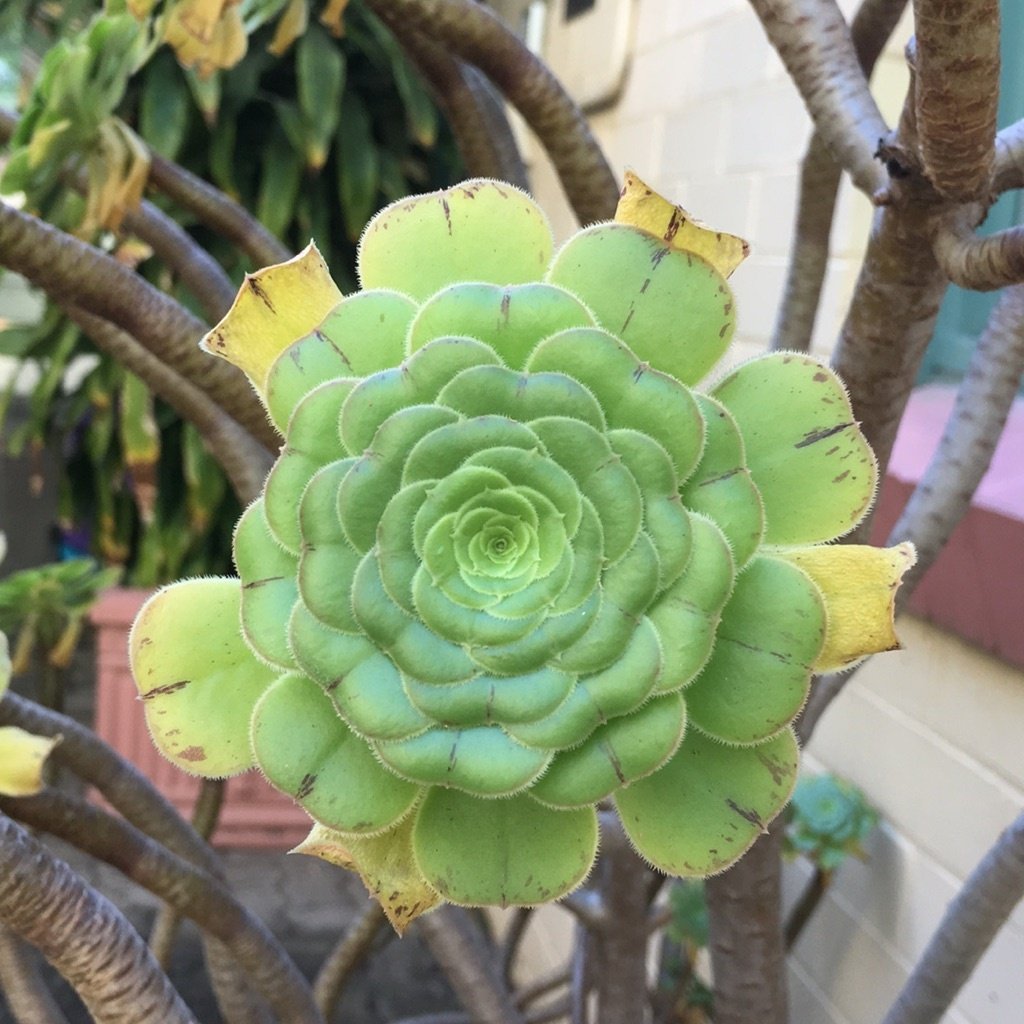
Tree Aeonium
Aeonium arboreum, commonly known as Tree Aeonium or Houseleek Tree, is a striking succulent native to the Canary Islands. This perennial plant forms branched stems up to 3 feet tall, topped with rosettes of fleshy, spoon-shaped leaves. The leaves are often green but can become reddish or purplish during cooler temperatures, providing vibrant color. During late winter or spring, it blooms with pyramidal panicles of small, star-shaped yellow flowers, attracting various pollinators. Aeonium arboreum is popular in ornamental horticulture, used in containers, rockeries, and succulent gardens.
-
Nasturtium
Tropaeolum majus, commonly called nasturtium, is a fast-growing annual (or short-lived perennial in frost-free climates) prized for its rounded, shield-shaped leaves and spurred, funnel-shaped flowers in vivid oranges, yellows, reds, and creams. Stems trail or climb with support, making it excellent for groundcover, edging, hanging baskets, and trellises. Leaves and flowers are edible with a peppery, watercress-like bite; unripe seeds can be pickled as “poor man’s capers.” It thrives in lean, well-drained soil and blooms best when not overfertilized. Plants attract bees, butterflies, and hummingbirds and often serve as sacrificial trap crops for aphids, sparing nearby vegetables. Nasturtiums are frost-sensitive but tolerate variable conditions once established, frequently self-seeding to reappear in mild regions. Large seeds are easy to direct-sow after frost danger, germinating quickly in cool spring soils. Numerous compact bedding selections and vigorous climbing cultivars expand their garden uses, offering months of color with minimal care when given sufficient sun, moderate water, and good air circulation.
-
Spanish lavender
Lavandula stoechas, commonly called Spanish or French lavender, is an evergreen Mediterranean subshrub prized for its distinctive pinecone-like flower heads topped with showy, petal-like bracts that resemble butterfly wings. Typically 30–60 cm tall, it has narrow, gray-green, aromatic foliage covered in fine hairs that reduce water loss and reflect intense sunlight. Blooming mainly in spring to early summer, it attracts bees and other pollinators with its resinous, camphoraceous scent. Unlike English lavender, L. stoechas is less cold-hardy but excels in hot, dry conditions with excellent drainage. In nature it inhabits poor, sandy or rocky, often acidic soils, thriving where competition is low and air movement is high. Gardeners value it for compact growth, long flowering in mild climates, and suitability for containers, coastal gardens, and xeriscapes. It responds well to light, timely pruning but resents heavy feeding or wet feet. Indoors, it requires maximum sun, lean, sharply drained media, and restrained watering to avoid root and stem rots.
-
African Spear
Dracaena angolensis, formerly known as Sansevieria cylindrica, is a drought-tolerant, rhizomatous succulent prized for its architectural, upright, cylindrical leaves. Native to arid regions of Angola, it grows in fans or solitary spears from underground rhizomes, each leaf smooth, dark to grey-green with subtle, transverse banding. Mature plants can produce tall, slender inflorescences carrying greenish-white, tubular flowers that are strongly fragrant in the evening, a trait linked to pollination by nocturnal insects. Adapted to high light and poor, fast-draining substrates, it uses CAM photosynthesis to conserve water, making it exceptionally forgiving indoors. Its tough, fiber-rich leaves and tolerance of neglect suit minimal-care homes and offices, where it serves as a sculptural accent or living “spear” arrangement (often braided when young). With proper drainage, infrequent watering, and moderate feeding during the growing season, it will slowly clump and fill its container. It is moderately long-lived, resists most pests, and thrives across a broad humidity range typical of conditioned interiors.